Yoga Plus Magazine Logo with white border
Rooted In Our Roots: A Black Hair Journey

Rooted In Our Roots: A Black Hair Journey
Rooted In Our Roots: A Black Hair Journey

By: Sara Clark
BEAUTY
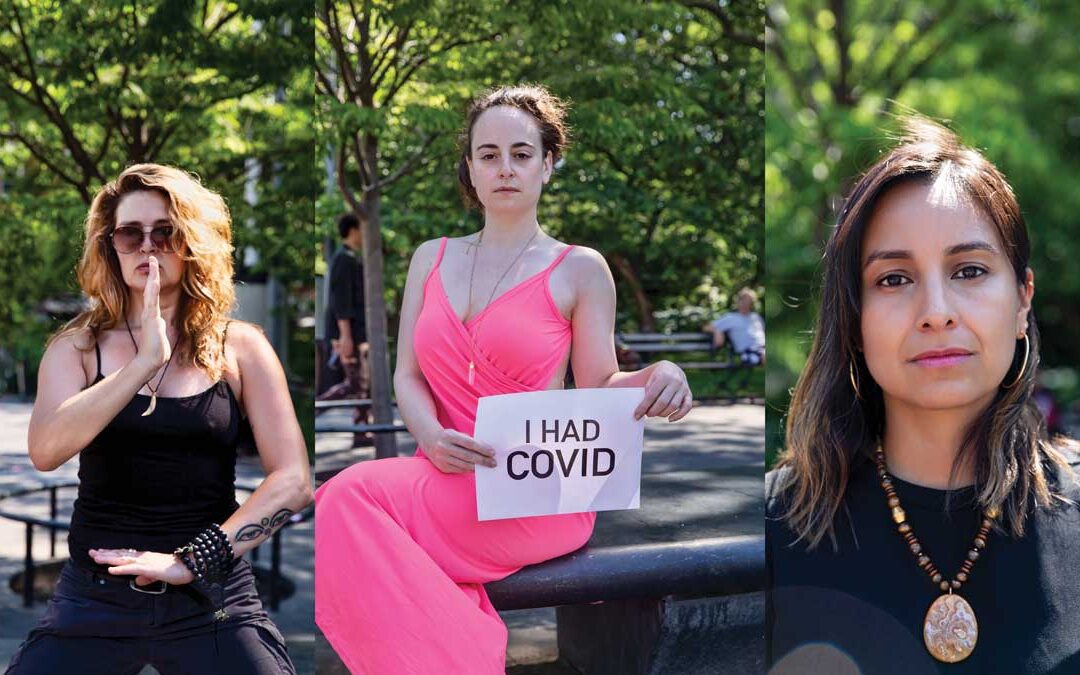
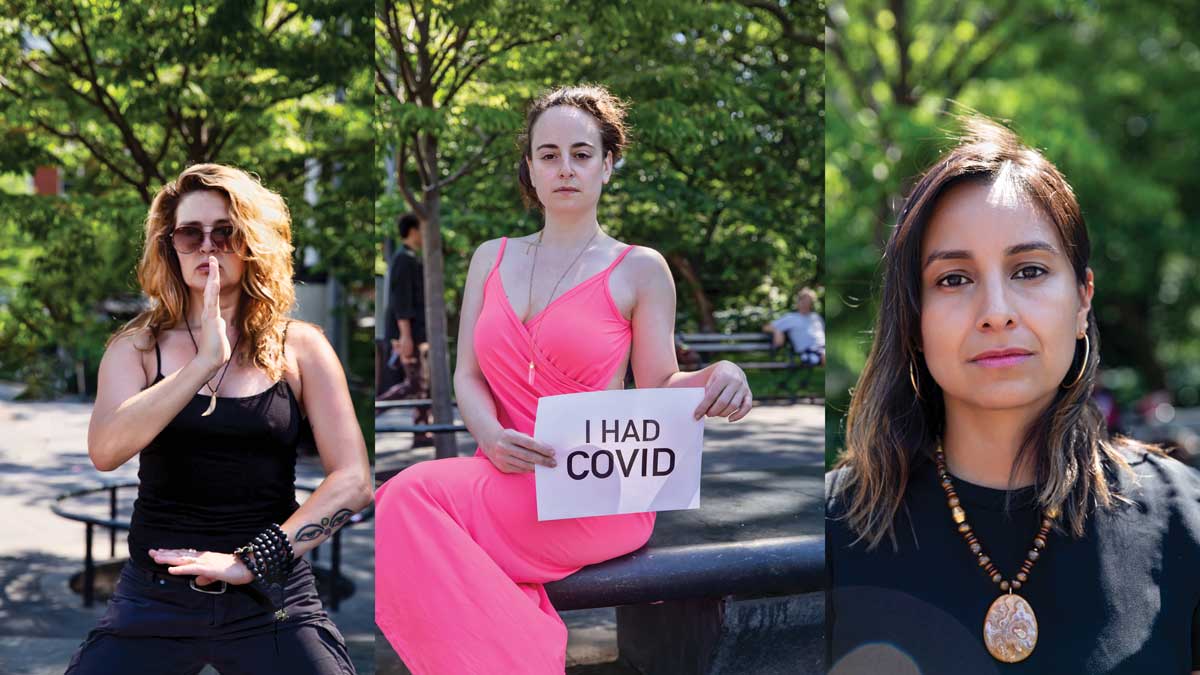
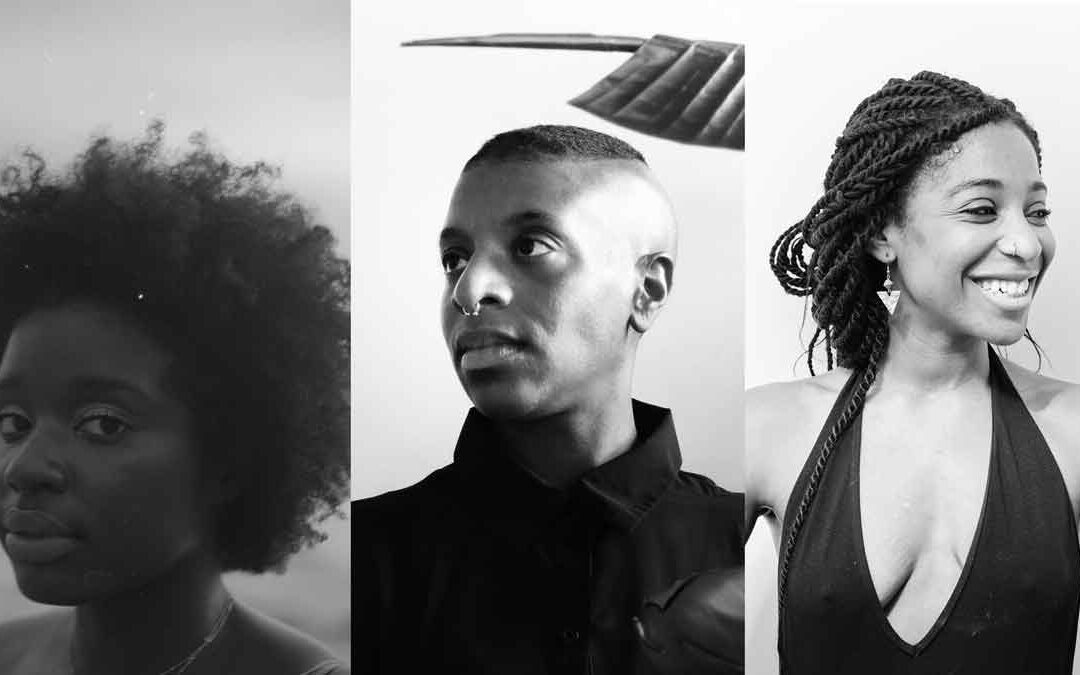
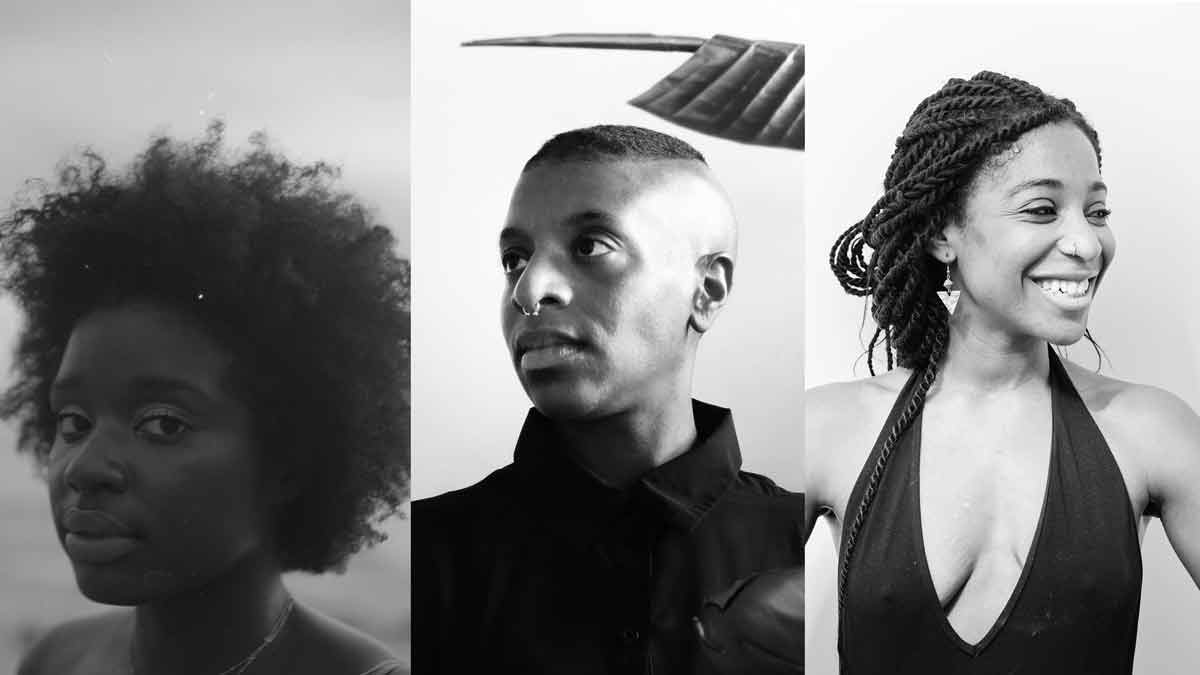
Yoga Plus Magazine - Rooted In Our Roots- A Black Hair Journey - portraits of 3 young people and their haircuts

I grew up in a home where black history permeated the air. From art on our walls to curated books on our shelves to my mother’s proud afro, reminders of black beauty were present. My first Barbie didn’t arrive until I was older and my parents mindfully monitored our mostly PBS television consumption. Yet as far back as I can remember and well before I entered a predominantly white public school system, I still found myself influenced by Eurocentric features as the basis for beauty. By the age of nine I rallied hard to get my hair permed much to my parent’s disapproval. Even with all the black love around me, I desperately wanted long, straight hair. How could this be?

As I step back and look at how history informs the present, I can’t help but to reflect on the Tignon Laws of the 1700s, which forced black women to cover their hair with fabric. Their hairstyles were deemed too distracting and elaborate. The laws were an attempt to stop white men from pursuing women of color while also separating the women into a lower social class, whether they were free or enslaved. Just this one historical account of the policing of black hair let alone black bodies has called forth great empathy for my own journey towards self-acceptance along with that of my ancestors. As I reflect, I can’t help but to wonder: could the negative relationship with my hair that I experienced at such a young age be in my DNA?

As research on epigenetics continues to expand, it has been confirmed that historical trauma passed down through generations affects the expression or suppression of genes. Any outside stimulus that can be detected by the body has the potential to cause epigenetic modifications. Shame can be inherited. So it’s no wonder that even with very little outside influence as a young child I still had a desperate yearning to change the way I looked. It was if my body sent signals alerting me that wearing my hair in it’s natural state could cause me harm.

From the workplace to the classroom black adults and children to this day are denied jobs, school admittance and even athletic pursuits due to their hair. The discrimination of black hair has been so disturbing that The CROWN Act of 2019 was passed first in California followed by New York, New Jersey and recently Colorado. It’s a step in the right direction in protecting natural hair in the workplace. And while pop culture continues to appropriate black hairstyles while discrediting it’s African origins such as when Kim Kardashian referred to her cornrows as “Bo Derek braids,” the black hair movement is still alive and thriving. Black women are rising in power while rocking their natural roots such U.S. Congresswoman Ayanna Pressley who wore Senegalese twists while running for office to Academy Award winning actress Lupita Nyong’o to Miss Universe, Zozibini Tunzi who said “I came into this competition with my natural hair as a symbol of my firm belief in being yourself.” Just as the women oppressed by the Tignon laws still found a way to express their beauty and artistry by adorning their headwraps with ribbons, jewels and feathers, black culture always finds a way to defy the odds and influence the world. I can also proudly say that determination has also been inherited; to learning to love my hair, our hair despite the constant attacks. As you will read in the short essays below, we all have a story about our hair and how it is not only political but also one of the deepest acts of self love.

PORTRAITS
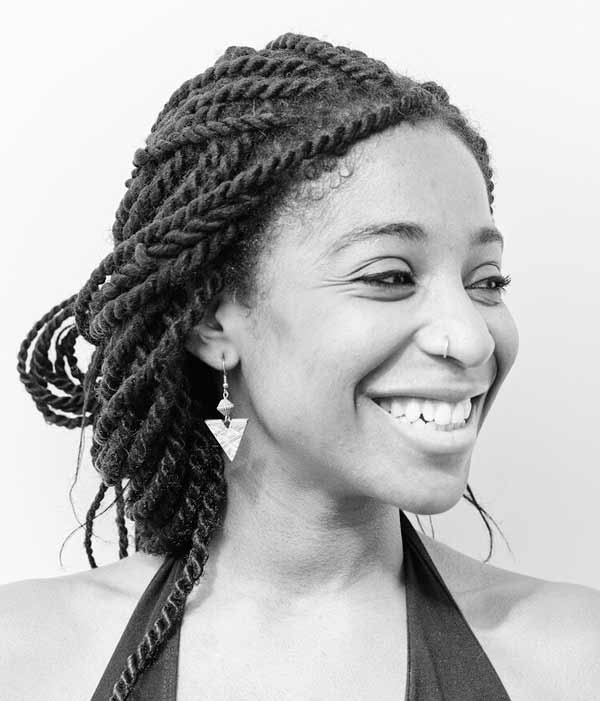
Bio Photo

Brittany Simone
@Brittanysimone

I am a Sound and Breath facilitator, yoga teacher, and Transformational coach.
My relationship with my hair is still evolving. I have parents who have always told me how beautiful my hair was but as I grew up and began to compare myself to others I started to doubt it. I never saw my hair texture reflected anywhere as an example of beauty. I begged my mom to relax my hair and used to really wish it was straight or in ringlets. Somewhere in the process of moving more deeply towards myself, I fell in love with my hair. I heard someone once say, “How divine you are… that your hair reaches for the heavens.” And now I’m considering how I’d like to express myself through my hair next. To see our own beauty and truth is a political statement. To understand our hair is symbolic of our divinity is undoing the indoctrination. It’s rebellion. So let’s get rebellious. If my hair could share wisdom with the world it would say, “self love baby.”
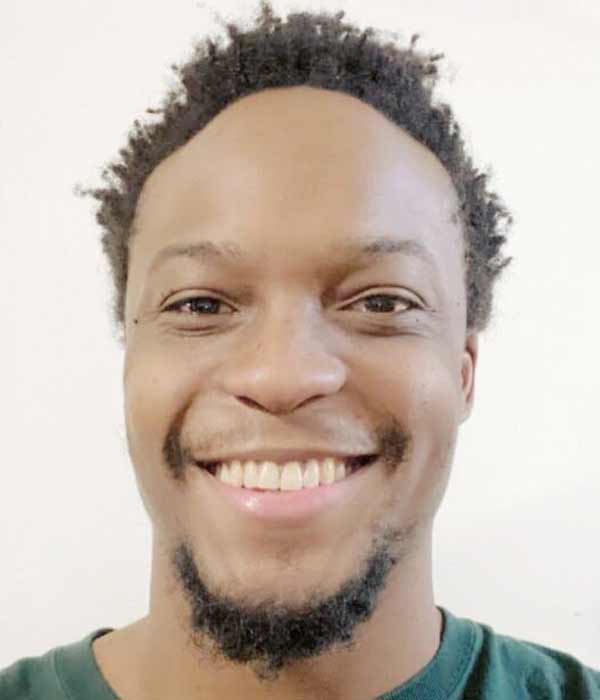
Bio Photo

Kyle Somersault
@Kylesomersall

I’m a Bronx native, music lover and founder of the meditation community, Innerglow. Much of my recent work has been at the intersection of culture, wellness and community building. From a young age I internalized that my hair wasn’t beautiful. I wouldn’t let my hair get too long because that led to criticism from my parents. I spent a lot of my life in majority white spaces and through the conditioning of society and the environments I was in, I internalized that blackness meant “less than.” Allowing my hair to grow has been a part of my commitment to taking up space and letting my presence be felt. There’s a black hair revolution currently taking place which is super inspiring to me. It feels like a revolutionary act to embrace something I was conditioned to hate. I’ve had to unlearn this conditioning, and in the process I’ve made a commitment to be my full self in whatever room I walk into. If my hair could share wisdom with the world it would say, “you’re already enough.”
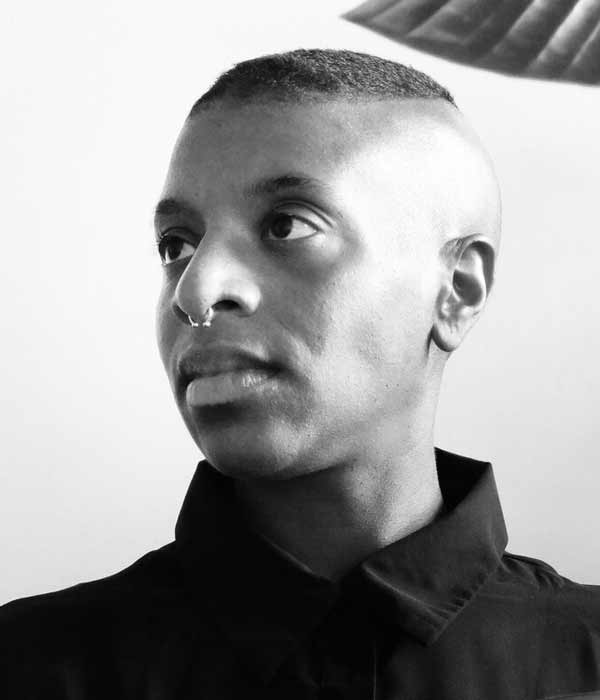
Bio Photo

Regina
@wolfmedicinemagic

I’m an Ayurvedic Wellness Counselor, 500hr certified yoga teacher, fitness instructor and Breathwork healer. I grew up in a majority white community with very few black people and even fewer black females. Every racist comment that could be said to me has been said but the Universe blessed me with an aries moon so I always come out on top. When I think of my hair I think of it as a journey towards looking as androgynous as possible. By high school I was doing as little maintenance on my hair as possible; I basically wore a bun or ponytail for four years. In college I had locs that grew from 2000-2010. Fed up with being seen as a straight woman I cut it all off and haven’t looked back. I get hit on by cis men a lot less and most people assume I’m queer or gay or something ambiguous and I prefer it that way. I feel like I have an entire mood going on. If my hair could share wisdom with the world it would say, “Worry less about what others think.”
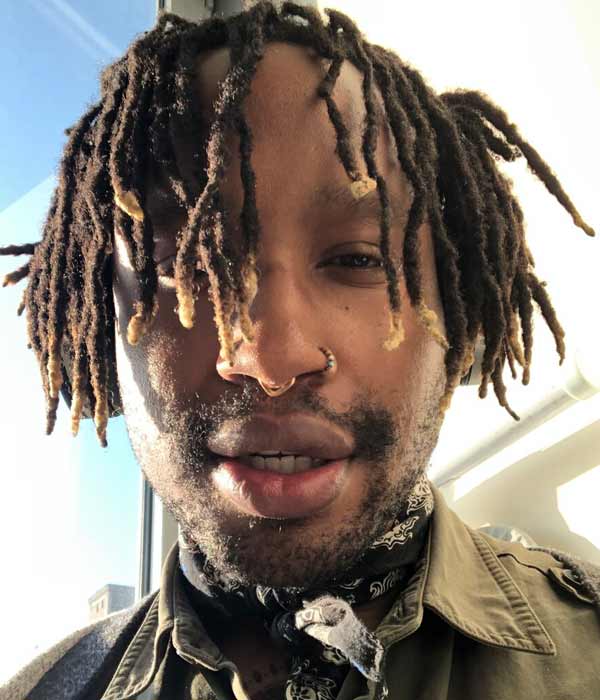
Bio Photo

Victor Arumemi
@chillscottheron

I am a creator that enjoys telling stories through an eclectic and authentic lens whether with the stroke of a pen or paintbrush or playing a diverse DJ set. I like exploring the nature of creating community and connection through art. The evolution of my hair started in my youth with harrowing bowl cuts and low caesars and fades with crazy parts to an unhealthy preoccupation with having waves. I rocked a kinky coiled mane that was once blue and also blonde. When I started going with a more natural style, I found myself increasingly fascinated and in awe of black hair and the untold stories and history that lay within each and every crown. I also enjoy the spirit of rebellion that so many natural styles evoke. I am currently enjoying the touch and feel of my locs and the sensation of my hair brushing against my skin and obscuring my face. I look forward to continuing this journey of seeing my natural hair thriving. If my hair could share wisdom with the world it would say, “find a way.”

Bio Photo

Izetta Pritchard
@izetta.h

I am a Senior Merchandise Planner at The Metropolitan Museum of Art as well as a yoga and meditation teacher. My journey with my hair is the journey of being black in this world. I have been denied jobs, promotions, opportunities and relationships because of it. Falling in love with my hair has been a journey of falling in love with myself. I always wanted hair like my mother’s as hers fell into soft, silky ringlets. I spent years trying to obtain something that wasn’t mine to have. I no longer desire wavy hair like my mother. I still love her hair, but I love it on her. I appreciate the texture and thickness of my hair. Having locs gives me freedom to swim, do my hot yoga and sweat it out knowing it will always look amazing. Whether I am leading a class, leading a meeting or simply walking the streets my hair screams I am here, I belong here and you will not break or change me. If my hair could share wisdom with the world it would say, “keep your eyes on your own head; love yourself and don’t compare your hair to anyone else’s.”
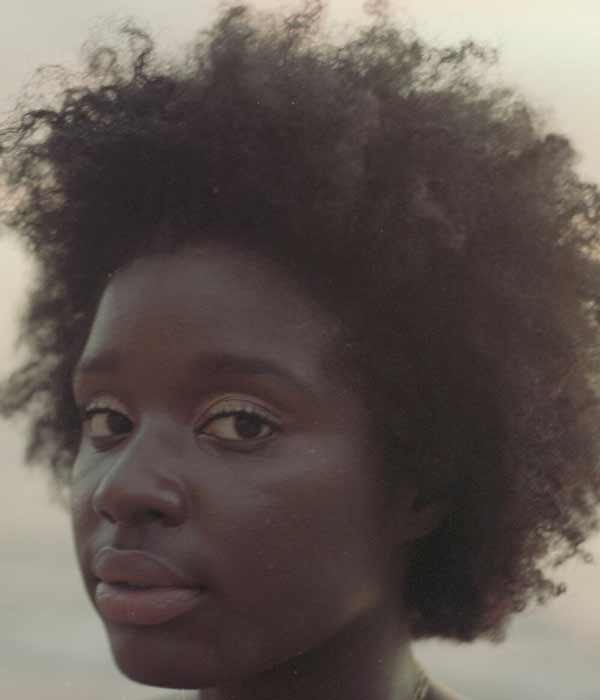
Bio Photo

Mominatu Boog
@mominatu

I’m a Senegalese/Liberian digital brand strangest, vipassana yogi, writer and hatha yoga practitioner. I went from an anxiety and grief stricken child to a world traveling woman. After sitting in two vipassana meditations last year I felt silly holding so much attachment. I wanted to get rid of everything from my hair to my clothes. I wanted to be seen as Mominatu the being not Mominatu the girl with the big Afro. So I chopped it! I’ve shaved my head now three times in my life. I’m currently in a bit of a transitional period. I’ve been finding it hard to feel beautiful in the “in between phase” but I’m looking forward to my hair growing back in all of its glory while appreciating it for where it is now. My biggest accomplishment thus far has been breaking out of my own cocoon that was self doubt, worry, and fear. I now, spread my wings using my voice to empower young black women to escape their cocoons as well. If my hair could share wisdom with the world it would say, “my value doesn’t decrease based on your inability to accept my freedom.”
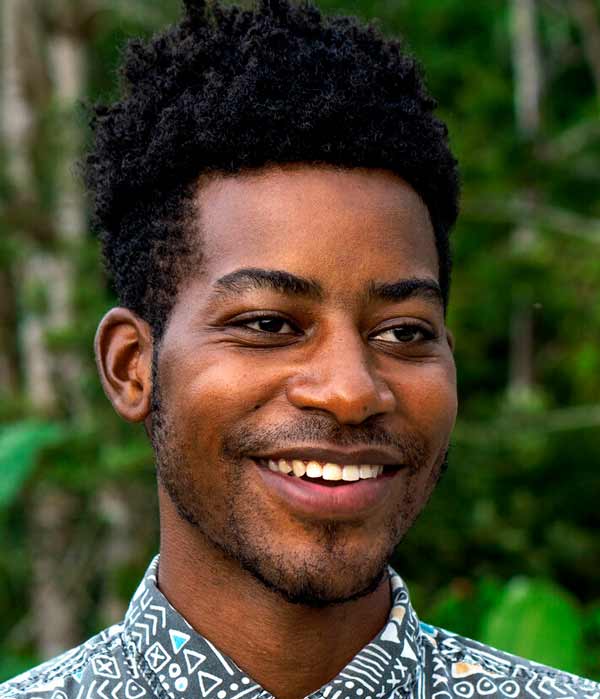
Bio Photo

D’Andre “Sage” McMillan
@anubesage

I am a creative visionary and engineer. My spiritual journey has taught me that I am never without as long as I am whole within. In contrast, as a person of color the marathon continues. The women in my family made sure I always looked groomed because being clean cut was seen as socially acceptable as a black man. Towards the end of my college experience, I began to redevelop my relationship with my hair. There is such deep fulfillment in being reunited with all aspects of yourself. I currently let the top grow and keep the edges lined up and the follicles moisturized. I’ve been learning to love how my hair looks, even in the struggle phases! I see my hair as an extension of my identity, power and essence. I also LOVE to play in my own hair. If my hair could share wisdom with the world it would say, “Patience is required along any journey. If you wish to grow you must show up each day, nurture the roots and reach for the Sun.”
Studio Spotlight: The Yoga Hive

Studio Spotlight: The Yoga Hive

Studio Spotlight: The Yoga Hive

Edited by: Tashya Knight

PROFILES

The-Yoga-Hive-Rebecca Gala

We are so excited to chat with Rebecca Gala Jones, the owner of The Yoga Hive, our first studio partner in Georgia! You can see the full interview via our YouTube link, and here is an excerpt of our fun IG live chat we had about what it was like opening a studio during the pandemic, the importance of community and rest, and exciting things coming up for the studio!


Iana
Thank you for chatting with us today. How long have you been open?

Rebecca
We opened in September of 2020, which was not a plan at all. We had signed the lease for the property in October of 2019, and then they broke ground in January of 2020. We took possession in April of 2020. We’re in Atlanta, Georgia and right after Memorial Day of 2020, they started to lift some of the restrictions. So that worked in our favor in the sense that we could have people in the studio and people that were comfortable. We wore masks, we had all of the social distancing, so that was really exciting. And then we did something we had never considered doing which was to have virtual classes, which we still continue to this day. A lot of other studios have done away with virtual classes because there are more people coming into the studio.

One of the things that was really exciting for us when that happened is that we were able to offer classes to a lot of people who are not geographically close to us. I just co hosted a retreat in North Georgia this weekend and people came from Chicago, interestingly enough, and people came from Lexington, Kentucky. They may not be able to connect in person with us in the studio, but they can take virtual classes with us. So that was one of the meditations that I often do, I mean, people open businesses in recessions at times when it’s really tricky. And we’re finally on the other side of a lot of the discomfort.

Iana
That’s the perfect way of putting it.

Rebecca
Because it’s really uncomfortable, it’s scary. There’s no right way, there’s no wrong way, there’s only a path and trust in the process. And then there’s the financial component of it. How long can I continue to be with something that I’m not really sure if there’s going to be a return? Or put money in it,  or we have rent that we have to pay every month, the vast tax of what has to go behind the business. So fortunately we’ve been very lucky that every month we were able to cover our costs. I did have a business partner when I first went into it who decided that it wasn’t sustainable for her. A lot of it was because of the fact that we weren’t able to see the future. And so she decided to step away and I decided to continue and I’m very glad that I did. We have a beautiful community and I’m really proud of what we’ve constructed, staying with it.

We have a diverse staff of teachers that offer all kinds of classes. We have programming for pregnant women, we have programming for seniors who have balancing issues. We have women’s classes, we have men’s classes, we have different styles of yoga. We teach yin and ashtanga and restorative and vinyasa and power. So we tick a lot of boxes and we’re in an area where we’re fairly easy to get to. So we’re moving right along.

Iana
Were there moments where you thought, I don’t know how I’m going to get through this?

Rebecca
Definitely. So many times it came up because it’s like, what am I doing? Why am I doing this? And what was so interesting is I never thought that populating the studio would be the challenging component. I’ve been teaching yoga now for 20 years, always in the Atlanta area, and have been fortunate to have a following. So I never thought that that would be the difficult part of opening the studio. But there was just something that said, keep going. There was just this little voice constantly inside that said keep going. And on those days when you get just so there weren’t very many people coming into the studio or there was just a lot of fear some little thing would happen, it would be just a little nudge. My go to stock phrase all the time was “choose the hope over, doubt and then look for the signs.” So then a little sign would come up, someone buying class cards or a former student would reach out, we would get a little corporate gig, a private student that I hadn’t seen would start taking lessons again, etc.

“My go to stock phrase all the time was ‘choose the hope over doubt, and then look for the signs.’”

So some little thing would happen that would say, “you’re going in the right direction, keep going” and so I would just sort of lean into that. One of the hardest parts, of course, was when my business partner left. And then I thought, I’m not ready to stop, I have a vision for what I want to happen with this and I just wasn’t ready to say, this is it. I wasn’t ready to do that. I think we’re both exactly where we need to be now in many ways.

And then I was fortunate enough to have a lot of people behind me. Family, support, mentors, even the leasing agency wanted us to continue. When I say we, I think about myself, my teachers, my husband is a very active participant, he is a yogi himself. So I’m not doing it alone. I mean, I’m the person that signs things and whatnot. But I’m not here by myself though. And I guess that’s another go to is just that feeling of there’s somebody or something that wants this to continue. It’s not just me and the community that has gathered around us.

Iana
That’s amazing. It’s so important to have that foundation of support and having your own personal vision and motivation to keep going.

Rebecca
I’ve been teaching for a long time, and I’ve always wanted to have a space and I didn’t know, should I do this? And another one of those little phrases that comes up all of the time is one that came to me just before I made the decision to go into partnership and open the studio. It was, “you’ll regret it if you don’t try.” So I feel as though that’s something that we all need to remind ourselves of: we’ll regret it if we don’t try. While it’s not always easy, it’s typically worth it most of the time. And the reality is that no matter what you do, there’s work behind it. No matter what we do, no matter how much I love teaching yoga and creating community and being able to do so many other things that we’re doing at the same time, there’s still work, there’s effort and then there’s ease.

Iana
That was one of the things that surprised me the most when I launched my magazine, because I still work a full time job in addition to the magazine. When I would do my full time job, I could understand when I would feel a little bit cranky or tired or not so motivated, that made sense. But when I was doing the magazine, I thought, how can I be tired? I love this so much, but I’m still human and get tired and need rest. And it’s still, like you said, it’s a lot of work no matter what.

Rebecca
It doesn’t matter how passionate you are about something or how meaningful it is to you, it’s still going to take effort. I think it’s very important, particularly when you’re doing something where you share energy, that you take a step back and you recharge the battery too. I have a new teacher here at the studio, and she fields emails for me and does a lot of some of the behind the scenes things. So I can take one day a week, Tuesdays, and I completely go off the grid. I don’t look at any personal or professional emails. I’m not on Instagram on Tuesday or anything like that which is really important, I just let my time unfold however I want. So it’s important if you’re a creative type, or you’re in a nurturing profession of some kind where you share energy, to get a total disconnect from all of it on a weekly basis.

Iana
I really started doing that seriously not that long ago, quite honestly, probably about three or four months ago. And it was by accident. The first time I did it one day, I was so tired I couldn’t do anything. I just watched movies on my couch all day long. I had Disney Plus, and I just watched all the Avengers movies with my puppy on my lap, and thought this is amazing. The next day I went back and I felt great.

Rebecca
Exactly. But that’s exactly what happens to all of us, we think we don’t deserve that, especially if you’re an entrepreneur. Who’s going to feed that machine if you’re not doing it right? So that’s part of it. But you need to rest or take the afternoon, or go for a walk without your phone, any of these things. Because what I find is that I become more creative if I have a break rather than continuing. And nobody wants a grumpy yoga teacher.

One of the yoga tenants is about non harming. If you’re continuing to work in these cycles where you’re working all of the time, and it’s just overwhelming, you’re not being kind to yourself and you’re harming yourself.

Iana
I love that! It’s so important. I love that studios are open now and there’s that sense of community where we can remind each other of these things.

Rebecca
That’s what we’ve seen that is so exciting. There are a lot of people that have moved here or some traveling nurses that will come in and they always find community here for however long they’re here, even if they’re here for three months. We have some doctoral students that are working on their thesis at Emory University so close to us, and they just find a community here. People know that when they come to the studio on a regular basis, they’re going to see familiar faces. Our tagline is “you belong here” and we do our best, and we try to be reflective of the community around us and offer diversity and a welcoming space. I’m so excited when I see all ages and all sizes, and everyone from every walk of life in the studio, because everybody can do and needs yoga. We make sure that people feel they have a safe space to come to, and feel acknowledged and seen.

“Our tagline is ‘you belong here’ and we do our best, and we try to be reflective of the community around us and offer diversity and a welcoming space. I’m so excited when I see all ages and all sizes, and everyone from every walk of life in the studio, because everybody can do, and needs yoga. We make sure that people feel they have a safe space to come to, and feel acknowledged and seen.”

Iana
And I love that I hear that more and more. Now that I see studios embracing this and saying, yes, come, you can’t touch your toes, great. Who cares? It doesn’t matter. Just sit in the corner if you need to. I remember one of my teachers said, we want you to show up every single day for class. And if you’re too physically tired, it doesn’t matter. Just sit and listen. You can sleep in the back, but just be in the space and let it absorb in your body. You don’t have to be moving doing the Asana, but just be with us.

Rebecca
And just see what’s possible. I think that’s one of the things, too, with the pandemic, we all got into this mindset of feeling very isolated. So it’s important that we can come in. Over the weekend, when I was teaching that retreat, I opened up with one of the quotes from Theodore Roosevelt about the comparison as the thief of joy. So by human design, we feel as though we have to apologize: “Oh, I used to be able to do this stuff, but I’m older now and I’m out of shape.” No, you did the hardest part, you got here. We didn’t want mirrors in the studio because the mirror is you. It’s about how you feel in your body. I’m certainly not judging you. And so reserve that judgment. Put it somewhere else. We don’t need to judge ourselves for what we are or are not able to do. So just being in your body, being in community, learning how to breathe.

We see such great suffering. Several of my teachers are therapists as well as being yoga teachers, and people are depressed. They’re anxious, they’re worried. You come here, and this is to help you deal with all of that stuff. And it doesn’t have anything to do with how flexible you are. You may increase your flexibility. You may not. You may get stronger. You may not. I mean, if those are things you’re looking for, you certainly can do it. All people can do when they come into the studio is to get a little bit more in touch with breathing and then what breathing can do for you and make you feel like when you walk away.

Iana
And thank goodness we can all breathe.

Rebecca
Everyone can breathe. When people tell me, I can’t do yoga, can’t touch my toes. I say, can you breathe? You can do yoga.

Iana
You’re alive and you’re good.

Rebecca
That’s exactly right. And if you can’t sit on the floor we have a class where they use chairs. It’s really nice to see my vision taking root in that every person feels as though there is a class on the schedule they can go to. I can go to any class, I know I’m welcome in any class. We’re in an area that is largely Jewish based and so there is an Orthodox community here. And so it was originally the idea to offer a women’s only class so that women who don’t feel comfortable because of or for cultural reasons don’t practice with men would come. And then we have a men’s class because men often feel like it’s just women that practice yoga and they feel as though they come into a class where there are women that they’re going to be laughed at or they won’t be able to keep up. So we have a class that’s dedicated just for men.

If you like jazz, we have a class that’s yoga and has jazz music because music is therapeutic. All kinds of things on our schedule that really try to tick boxes so everybody feels welcome. So if you can breathe, you can do yoga. I love that.

Iana
What do you find is the most popular class? And it could just be because of the time it’s offered, it doesn’t necessarily mean anything, but what class is generally the most full?

Rebecca
The class that we tend to see the most people in consistently is a Flow and Restore class. We do about 30 minutes or so of movement on your feet or sun salutations. And then the second half of that is more restorative or yin poses or stretching, for lack of better word. I love that qualifying that people really enjoy that it’s accessible for most people to do. And then the other thing is we have a basics class. We do that once a week, and that’s usually pretty popular most of the time. Most of our classes do really well. We see quite a few people in them.

Iana
I’m so happy for all your success. I always like to see what’s coming up that you’re super excited about. Do you have any other retreats that are coming up or anything you want to share?

Rebecca
We have a few really exciting retreats. We have a retreat in the southwest of France in May that we’ll be going to, which is really amazing, which is very exciting. Then it’ll be our third year in a row to go to Shinolani which is in Puerto Vallarta in Mexico. It’s a beautiful setting in the jungle. It’s so wonderful, we’re excited. They’re lovely people and have great programming when we go.

The other thing that I’m really excited about is that Jasmine, our teacher is a doula, and she’s soon to be a midwife, and she has a whole program she’s bringing to the yoga hive, which will be all about women’s services. She’ll be our women’s support services coordinator. And I’m really excited because both are something that I wanted to have and do. She’ll be introducing all kinds of wonderful resources in classroom settings and also outside of that with her services.

All of my teachers are very diverse, and one has a coaching business, so she’ll be introducing more things. 2023 will see more of what my teachers have to offer aside from just coming in and teaching a class to see more programming that will be centered around their particular talents and gifts, too. So that’s the things I’m really excited about for the year ahead.

Iana
Big stuff is coming. I’m so happy to hear that.

Rebecca
The pleasure is all mine. Being a steward for this practice is really important, and I’m glad to have these types of opportunities. So thank you very much. Thanks for the chat and thanks for continuing to do the work that you do, too.

Jason Naylor

Jason Naylor

Jason Naylor

By iana velez

ART & MUSIC

Jason Naylor ART

“Do you remember when you were too cool for LOVE? When you were too busy being tough or macho to let any one know that you actually have feelings? Well, were you really tough? Because guess what…that shit is over…love is on fire. All the cool kids are into it. And I’m proud to say that I think love is tough, cool, masculine, AND manly. And NOW is a great time to talk about it. So get into it…get on the love train with me, and if you’re not, then start learning. Learn to love LOVE. Because love can change the world.”


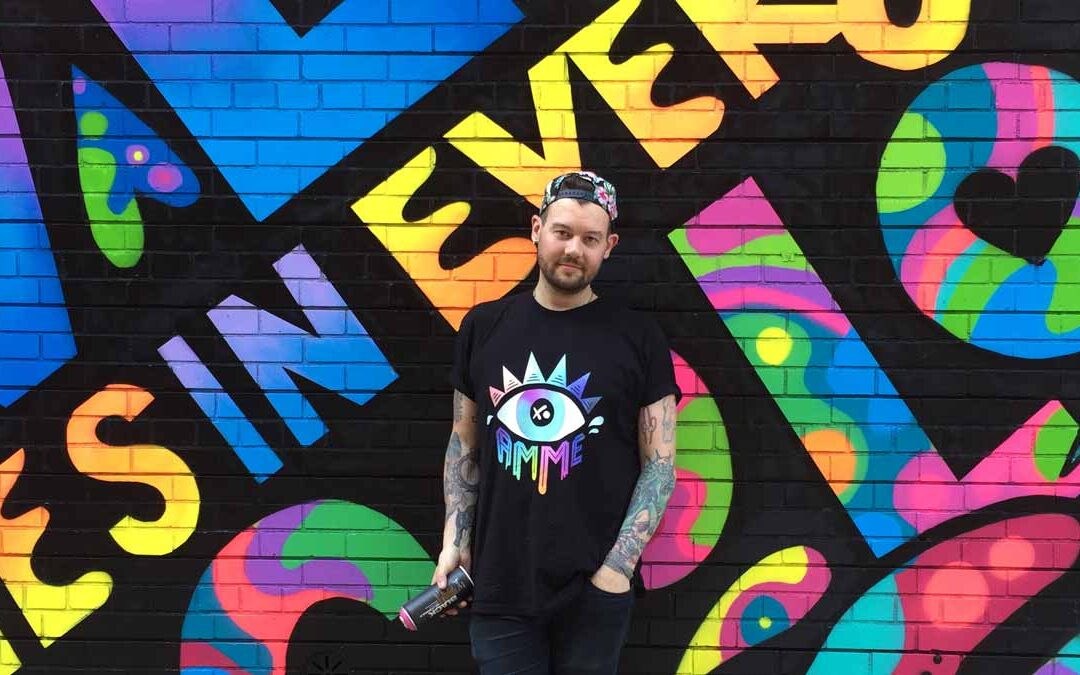
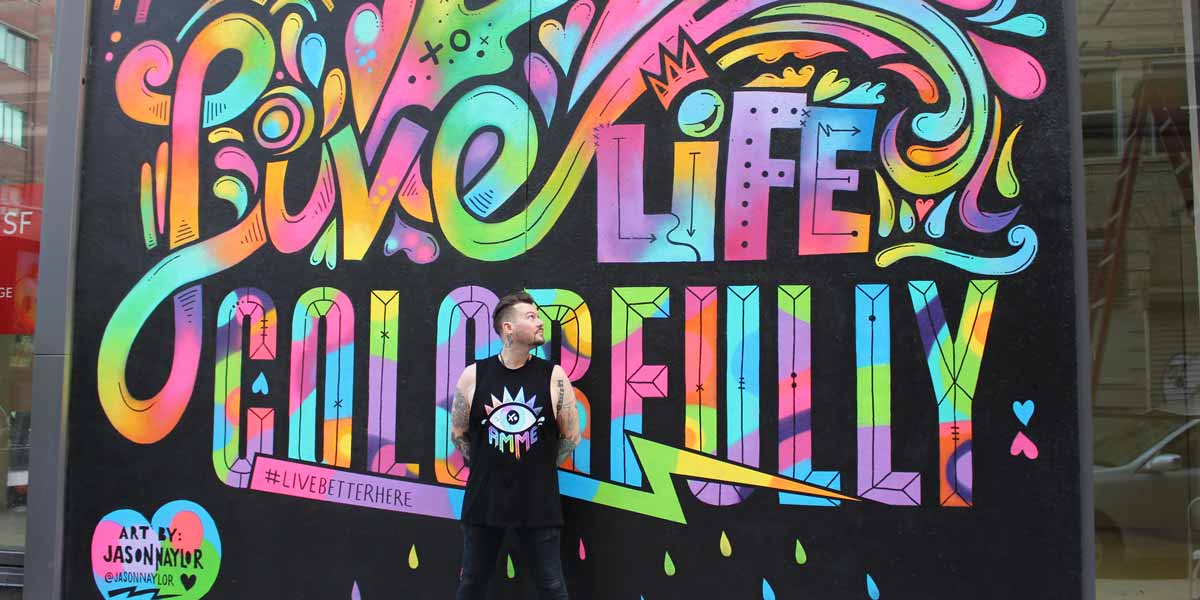
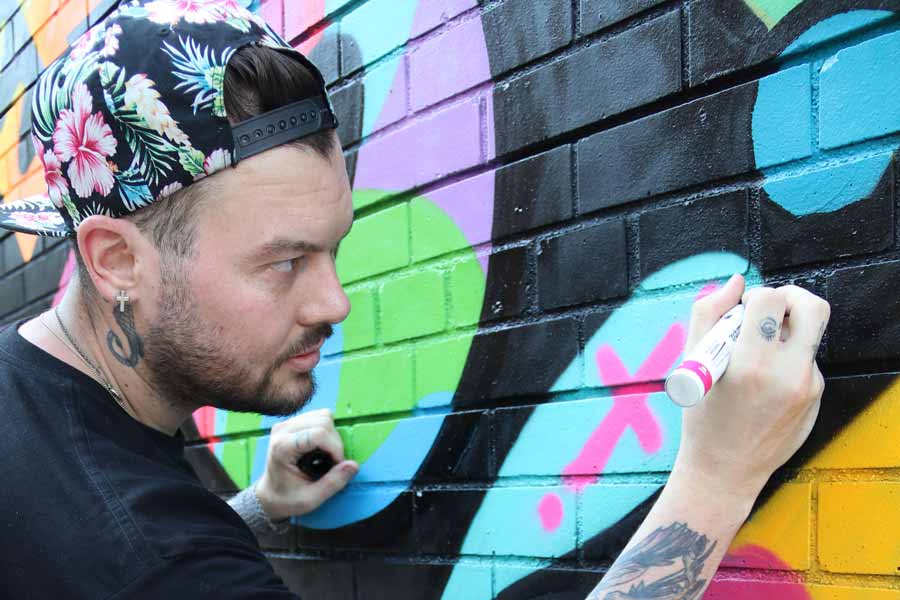
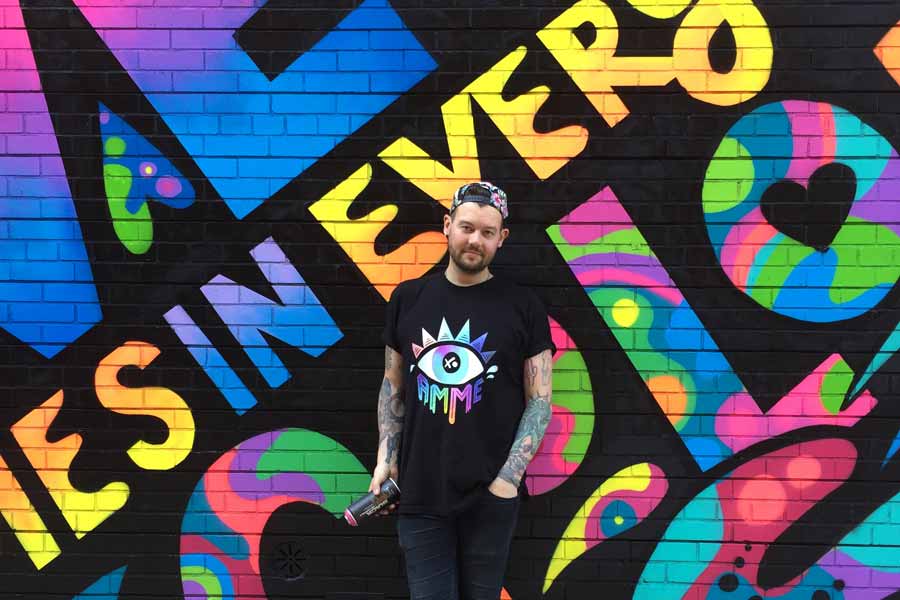
Bold. Colorful. Happy. Scroll through Instagram and Jason Naylor’s art is sure to catch your eye. With messages of positivity delivered in his signature syle, when you see his work, you can’t help but smile. We chatted with Jason to learn more about the man who put the smile on our face.

Q. YOU ARE KNOWN FOR YOUR BOLD, BRIGHT BEAUTIFUL MURALS THAT EXPRESS MESSAGES OF POSITIVITY. TELL US MORE ABOUT THAT.
I think i’ve always been a pretty positive person, like sorta relentlessly optimistic. I like to look for the silver lining in everything and I guess i’ve kind of discovered that most people really respond to and enjoy positivity and optimism. Something I realized a few years ago was that there is this world of positive quotes and motivational messaging and its huge – but its a smidge cheesy in terms of design. That “motivational world” is full of beautiful messages that resonate with me and millions of people, but the messages come on tacky refrigerator magnets with sad font choices and unfortunate typographic designs.

I started putting up my own positive messages in an application completely opposite the fridge – the street. There’s something magically vulnerable about putting your art on the streets because it is an open forum for any and all to love, despise, photograph, celebrate – even destroy (but please don’t do that). It’s the most public forum to express any message, so what better place to express positivity, color and love? Visually, street art has edge to it, but I believe that feelings are the new edge. Love is the new black. And vulnerability is the new chic. So to me, bright colors framed in black is the perfect way to design a message of love for the street. And I sincerely hope my designs are a little better than the ones found on the refrigerator magnets.

Q. WE HAVE ASKED A LOT OF OUR COMMUNITY IN THIS ISSUE TO SHARE WITH US ADVICE THEY WOULD GIVE TO THEIR YOUNGER SELF. IF YOU COULD SEND A MESSAGE TO YOUR YOUNGER SELF WHAT WOULD IT BE?
I often think about baby me, and how crazy I was. I grew up in a very stringent religion/culture so I went through the expected rebellion to escape it. But crazy as I may have been, I feel that I wouldn’t be the “me” I am now (and love). However, here are a few things to say to that guy in hopes of sparing some unnecessary troubles.

IT’S OK TO BE YOU.
This is the biggest one. My whole life I felt people were telling me what to do and who to be. In order to feel like I was myself, I had to prove that I wasn’t like anyone else by being the opposite. This is a disaster, because the opposite of what you think people expect of you, is not necessarily who you are. And who you REALLY are IS cool. So f**k what people expect of you altogether, and be comfortable with you are. Easy to say, hard to do.

MODERATION.
I have gone through a lot of extremes in terms of behavior, appearance and opinion. Extremes often affect the balance in the system, and lack of balance causes unrest. Peace and happiness are more easily found when you have balance in your life, so practice moderation in things. Balance things out a bit, and you’ll find yourself at peace more frequently.

GRATITUDE.
This one is huge, and easy. Gratitude can solve all your problems in seconds, and it’s the easiest and most effective way to change your attitude. Remind yourself to feel thankful for the good, the bad, and the difficult. Feel thankful for the things that are easy, thereby enabling you to endure the challenges. Feel grateful for the pain so you know what it feels like when its gone. Practice gratitude. Do it.

Q. THE THEME OF OUR ISSUE IS TRUTH. WHAT DOES TRUTH MEAN TO YOU?
This takes us right back to my advice to “Jr. me.” Its ok to be you. Understanding who you are relies on being honest about what really is TRUE to you. It’s a simple concept, but in practice it can be difficult. Being honest with ourselves is something that I’m sure we can all improve, and I think it’s safe to say we, as a culture, don’t do this enough. What do I really like? What do I really think about life? What kind of music do I like?

Start small, ask yourself what do I want for dinner? And then notice that your opinion will begin with scanning your expectations of what others may want, and weighing those into your opinion. DON’T DO THAT! Stay in your lane, don’t worry about what others want or like. What is it that YOU want. Just you. So that’s a little bit on being honest with who you are, what you want and being yourself.

Now TRUTH itself is a bigger concept that I think relates to the way one experiences reality. And it speaks to your core values. What is true to me may be different than what is true to you. Here are couple of my truths: It’s true that kindness is the key the success. It’s true that I am often reminded of how far I can get in life by being nice. It’s true that I will never regret being the bigger person. It’s true that I can rise above my fears, I have done it before and I will do it again. It’s true that I have the power to be the best me I choose to be. And it’s true that that me, is good enough for me.

Learn more about Jason // jasonnaylorcreative.com and @jasonnaylor

Jason Naylor ART
Jason Naylor ART
Jason Naylor ART
PRACTICING FOR LIFE’S DIFFERENT STAGES

PRACTICING FOR LIFE’S DIFFERENT STAGES

Practicing For Life’s Different Stages

By: Jai Sugrim
Photos: Chas Kimbrell
YOGA
Jai Sugrim is a Yoga Teacher, Athletic Trainer, Public Speaker, recognized Men’s Health Expert and creator of the Jai Sugrim Method

We are the first generation to be able to see what thirty years of a consistent, physically demanding yoga practice produces. Some folks look rested, bright, agile and positively energetic. Others look ragged, dry to the bone, exhausted and hobbling. Some of this boils down to genetic predisposition and lifestyle choices like rest, nutrition and sleep. We should definitely keep an eye on adapting our practice to each new decade of life. Wisdom is the trimming away of the un-essentials. 

Vinyasa yoga is a very attractive form of exercise that has numerous physical and psychological benefits. The practice hones our attention, and when done consistently, can be deeply revealing. In New York City, as in any large metropolis, it’s easy to pour the addictive side of our personalities into the practice and pursue poses like rungs on the career ladder. Most practitioners have gotten carried away with the physical side of the practice at some point. After injury, or total exhaustion, we may ask ourselves: “What is the right way to practice, for the current stage of my life?” At age 42, I’ve made every practice mistake in the book. After 18 years on the path, I have started to adapt the practice to a new goal: living a long, healthy, mindful life. I practice fewer asanas, vary my physical exercise movements, and sit in daily meditation. Here are my tips and what to consider for the evolution of your practice: 

INTELLIGENT DESIGN 

For a decade I practiced 4 hours of asana, daily. Now, I’ve shifted my approach to reflect positive aging, with a focus on long-term bone health and muscle strength. I now practice 5 hours of vinyasa yoga, 2 hours of weight-training, 2 hours of martial arts, and one dance class, per week. This kind of periodization is a systematic planning of one’s physical training through the arch of a year. To avoid exhaustion, injury, and mental fatigue it involves zoning in on one part of the year devoted to peak performance. Different phases are divided with different goals. I intentionally allow the body to pack on 10 extra pounds of weight in the winter, while running 2-3 times per week in the summer to lower my body fat percentage to reflect peak fitness and extra self-discipline. Then I let it go. I’m no longer trying for personal records. My aim is to harmonize strength, endurance, flexibility, brain health, and physical balance, while respecting the body’s need for rest. 

AGE 

Ride the physical peak, if you feel inclined to do so! From puberty to the mid 30’s most people go beast mode. Once adapted to training, the body recovers well from hard practices as well as injuries. When I worked with the New York Yankees, we called age 33 onwards the “back stretch of a guy’s professional career.” For most athletes, this is when their pitches slow down and agility declines. It’s important to recalibrate after age 40. Everyone after 40 should incorporate weight training, because it maintains bone health, tendon strength and muscle mass, which declines with time. The consequences of over-training or moving inappropriately are greater after 40. Youth forgives many training mistakes, but men and women over 40 carry less testosterone and the body does not heal as quickly as it once did. 

CONSTITUTION

Initially, I’d advise approaching yoga practice with skepticism, become a tourist, and visit several schools. You will find a yoga style that moves your heart, and more importantly, fits your constitution. You may be drawn to the mantras, meditation and vegetarian diet associated with Jivamukti Yoga. Personally, I find Iyengar yoga too intellectual as a daily practice, but use it as a supplement to my Ashtanga practice. In order to dig the well very deep, and find water, it’s best to stick with one style. 

ANCESTRY

Additionally, look over your shoulder and explore where your ancestors lived. You are likely to perform best with the foods that match the region your genes spring from. Anyone hawking a one size fits all training or nutrition program is selling a false bill of goods. Constantly experiment, and listen to the body for feedback. It’s best to select locally grown/raised food, so as to adapt your immune system to the pathogens of your area. 

VOCATION

Some folks have jobs that require more physical energy, while others are sitting at a desk and using more mental energy. Our brains burn about 30 percent of all calories consumed, but our lower backs, biceps, quadriceps and core muscles are firing differently. If you work in an office all day, a 90 minute vigorous vinyasa class may reconnect your head to all four limbs and the axial skeleton. The key is to think of how to appropriate your energy. 

NEW MOVEMENT

Asana practice is more or less linear, with lots of repetition. This allows us to deepen our flexibility and develop a personal relationship to each pose, with regard to our specific anatomical proportions. All good stuff, but it comes at a price. Once we master a specific set of movements, the brain undergoes “synaptic pruning,” a process by which extra neurons and synaptic connections are eliminated in order to increase the efficiency of neuronal transmissions. In order to engage and maintain neuro-plasticity (the ability of the brain to form and reorganize synaptic connections throughout life), we should always be practicing some new form of movement that we have not mastered. Supplements to an asana practice could be, salsa dancing, basketball, martial arts or even juggling. When we are learning something new we engage the primary motor cortex of the brain, which is responsible for the preparation of movement, the sensory guidance of movement, the spatial guidance of reaching, and the control of trunk muscles in the body. So always study something new for long-term brain health and plasticity. 

PATIENCE

Asana practice is preparation for sitting still. It makes us comfortable enough in our bodies so we can meditate. If you have been practicing asanas for over 10 years you should be able to sit still for 20 minutes twice per day. If you don’t want that, that’s fine my point is that there is no need to overemphasize the physical, or remain attached to hundreds of poses for a lifetime. When I turned 40 I gave myself permission to put on 15 pounds of muscle, and parted ways with some asana such as Marichyasana D, Pashasana, and Kapotasana. I’m content with Mari B, Ardha Matsyendrasana, and Urdvha Dhanurasana. The vigorous, high volume vinyasa practice of my 30’s had done its job. I now practice more meditation and fewer postures, which yields extra energy that can be applied towards my creative work. One of the biggest lessons I’ve scooped on the path is to be flexible and treat myself with respect. A wonderful meditation practice that pairs well with asanas is the Buddha’s technique, Vipassana. Like asana, it is sensation-oriented, and centered around what is happening in the body/mind system at the moment. 

LOVE

Even the times where I got injured, tried too hard, thought I knew it all, or taught beyond my experience, are all worth it. I now accept the mystery of “not knowing” and the wisdom that comes from embracing all the parts of myself. I’ve learned to maintain healthy boundaries in my personal and professional life. So much of who I am today, is a result of all the blood, sweat and tears that were shed on my mat for two decades. I am more reverent than ever for the practice and am grateful that I have two arms and legs that allow me to continue the exploration. Practice creates an involution of energy and awareness. What you find there, in inner space is between You and infinity, your karma, and the capacity to interpret your experience. It is very personal. Be loving towards yourself, and allow long-term thinking to shape your approach to the practice.


Jai Sugrim is a Yoga Teacher, Athletic Trainer, Public Speaker, recognized Men’s Health Expert and creator of the Jai Sugrim Method. For more visit jaisugrim.com

Jai Sugrim is a Yoga Teacher, Athletic Trainer, Public Speaker, recognized Men’s Health Expert and creator of the Jai Sugrim Method
My Covid Body

My Covid Body

My Covid Body

Compiled by Iana Velez

TRENDING

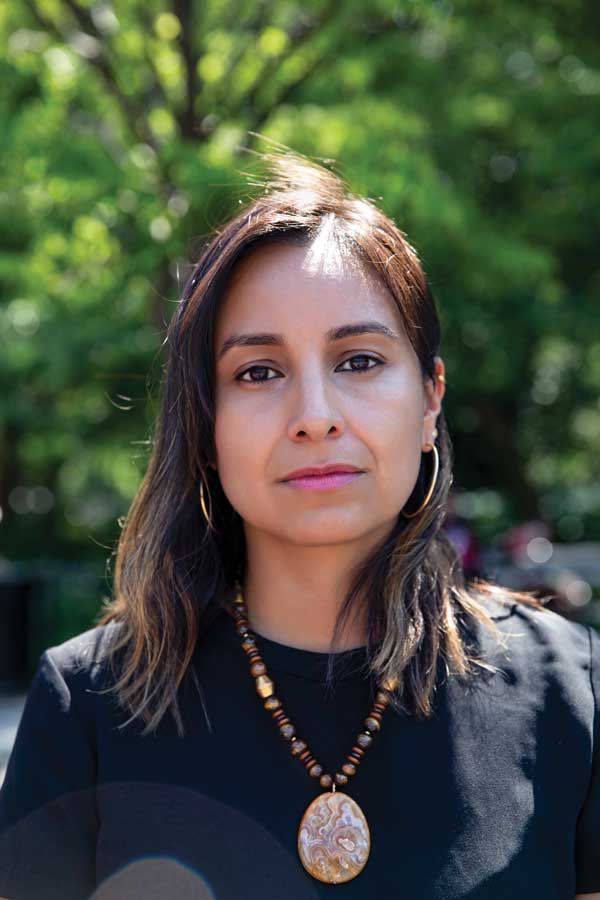
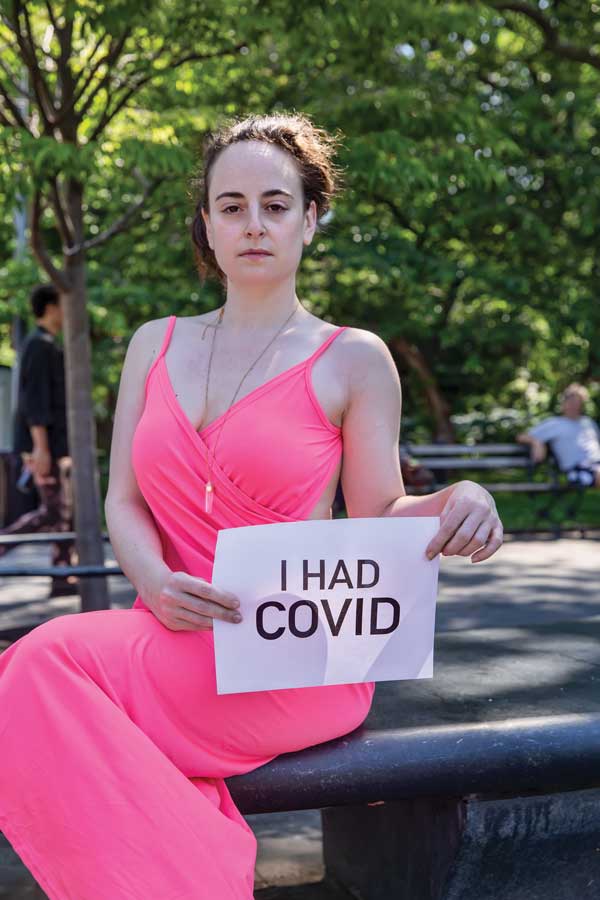
Yoga Plus Magazine - COVID- MEGAN - INGRID - GINA - bio pic
If you lived in NYC during the pandemic, chances are you knew someone who got COVID.
While most people generally think about their yoga teachers as healthy people, we quickly learned that COVID-19 did not care if you were young or old, healthy or not, COVID came for anyone. We reached out to our community of yoga teachers to share their stories with us.
Yoga Plus Magazine - COVID- GINA bio pic

Name: Gina de la Chesnaye
Age: 50
Where do you live: Brooklyn, NY
When did you get COVID-19: March 2020 and March 2021

Describe how the experience felt in your physical body:

The first time I contracted COVID in March 2020, I didn’t realize that my first symptom was related until it was listed in the news. Essentially, I experienced awful diarrhea. This was followed by profuse sweating, headaches, sore throat and that awful “itchy” feeling one
has when a virus is in the body. Intense physical aches and pain, plus weeks long lethargy followed. Occasional chest tightness came and went, but luckily, I never had problems breathing or high fevers. I attribute the daily breathwork practice I have to helping keep my lungs clear and aiding with anxiety. I did notice that my symptoms were worse at night,
and I could literally feel when the virus was dying. For a week or so, I felt as though I had the carcass of it still moving through me. I developed high blood pressure, which I never had before and utilized hibiscus tea and cardio to bring it back down over the following months. The second time I contracted it, I lost smell and taste, and experienced intense body aches that again, were worse at night. Smell and taste returned after a week or so, but I am still working with lethargy and pain in the body. It was fascinating to track the virus as it moved through me. I literally felt like it was learning me and I, it. As I watched the virus tear through the country and across the world, I realized it was learning Us.

Describe the emotional/psychological experience:

It was frankly terrifying in the beginning. No one had a clear understanding of
what it was and the fear that was circulating in NYC was palpable. This was heightened by the non-stop ambulance sirens and the inability to see people’s faces. We were suddenly afraid of each other. Anyone could be a threat or if we had the virus—we were the threat. It
became clear to me, as well, that any unresolved or unmetabolized trauma in the body came rearing back. Anxiety and depression increased in nearly everyone; I experienced both. My heart would race, monkey mind increased, and mornings were filled with dread. I am fortunate that I was able to parse out the experience of my nervous system with knowledge and use my skills, but it was not easy. There was also intense grief. So many had lost their lives, including people I worked with and family members. The collective grief of this as a country is something that we must begin to address.

As a yoga teacher, how did having COVID-19 impact you?

My first thought was “This is why we practice.” Again and again, my practice sustained me. I was able to come to my body and my conscious connection to it to heal and gain wisdom, in deeply profound ways and not to just work with my shit but to step back, witness
and process the dysregulation that was occurring locally and globally. Not being able to share practice with people in person was a loss. That connection and co-regulation are so necessary to us as physical beings. However, I was able to share practice online with people across the country and different parts of the world. I offered classes and workshops through various online platforms. While we were separated physically, we were still able to connect in ways I hadn’t thought possible. For years, people had recommended I offer classes online, and I thought that was just weird. Now I see how remarkable and beautiful it can be. We can connect over vast distances. The path has no boundaries.

What surprised you the most about your COVID-19 experience?

Covid was a mirror. Someone I was in a workshop with commented that the pandemic very clearly showed us what our life choices were and how they led us to exactly that precise moment, both individually and collectively. Typically, I travel two to three times a year to share skills and practice in East Africa through my organization, The Nachan Project. Being home and unable to travel made me realize that part of the reason I enjoyed traveling so much was because being home was sometimes painful. My home, while a beautiful home, carried so many memories of a failed marriage and trauma that I neglected to tend to it in a mindful way. It’s not an easy thing to observe in oneself, but if we are in the practice of genuinely paying attention to our habits — both the positive and negative — that is what we must do. And then, utilize our practice to move forward with compassionate awareness. And, yes, not just metaphorically pull the weeds out and declutter, but literally

Yoga Plus Magazine - COVID- INGRID bio pic

Name: Ingrid Baquero
Age: 39
Where do you live: Astoria, NY

When did you get COVID-19:

November 3rd, 2020. I remember clearly as it was during the elections, and I wanted to celebrate sooo bad the weekend of November 7th but couldn’t leave my house. I used up whatever energy I had to bang those pots out of my window.

Describe what the experience felt like in your body:

My first symptom was feeling tired. A couple of days later, I had a fever, and said “oh no, how?” Immediately, I went to City MD and took the test, and received the call minutes later that I tested positive. The fever continued for an additional day, followed by loss of smell, taste, and severe fatigue, which lasted beyond a month.

Describe the emotional/psychological experience:

Honestly, I was disappointed in myself, I didn’t know how I caught it, as I had been extremely careful. I’m also a very active person — I run, bike, dance, do yoga, but my body had not felt this extreme exhaustion before. I couldn’t work out for the life of me, which affected my mood. Instead of fully resting, I tried to push through the exhaustion as I continued to work my day job, which made it worse. I went into a post-COVID depression and burnout after the two-week quarantine.

As a yoga teacher, how did having COVID-19 impact you?

I looked forward to teaching my Saturday class during this pandemic because it gave
me life. I saved my energy to host a slow flow yoga class virtually the second week
of being sick. My breathing, though, was off — I had to catch my breath, which wasn’t ever an
issue before.

What surprised you the most about your COVID-19 experience?

How sneaky COVID is, and how even a healthy, active individual can get sick. Also, how important it is to rest and take care of yourself. The world can wait until you get better. The world needs you healthy.

Yoga Plus Magazine - COVID- MEGAN bio pic

Name: Megan Fliegelman
Age: 34
Where do you live : New York, NY
When did you get COVID-19:
March 2021

Describe how the experience felt in your physical body:

My disease expression had a number of distinct phases. My acute disease was
not extreme, bad allergy symptoms, some mild chest pain, and a headache
ruled the first two weeks. As the acute viral symptoms began to wane, I noted a profound shift in my fascia & energetic systems, gatē completely changed. That pulsation of energy I had gotten to know so well became a stranger. As this happened, it became too hard to consume solid foods as my heart and head declined (I lost 25 pounds, which often is complimented). In June, I had a preliminary diagnosis of Vasospasms of the Coronary Arteries that were setting off arrhythmias. We are trying to understand and control changes in my EEG and get a handle on the weight loss and other organ damage. Hopefully this is all temporary, but we just do not know how COVID-19 affects the body or what the future holds. Science is slower than disease. I have dealt with major health events before, but none of these things were a part of my life before COVID-19.

Describe the emotional/psychological experience:

The entire medical system is completely strained. The burden of COVID-19 on the medical system and infrastructure exposed how ill prepared we are to manage emerging pathogens as a society. A year and a half into the pandemic burnout is a profound issue that is
completely pervasive in everything that touches most of society, but specifically medicine. This is compounded by the complexities of emerging pathologies and many long haulers without quantifiable findings. I am not “lucky” enough to have quantifiable findings so my doctors are taking me seriously now. Early in my disease expression, I was told everything was anxiety. Only after things further declined in a quantifiable way was I able to find any appropriate, respectful care. It is trauma pushing trauma and in this dynamic everyone loses. This is system-wide problem. I was in love with my work before I had COVID-19, I was not teaching as much, but I was running a large organization and putting the principles of yoga into practice in a corporate setting; it was like art, and I loved it. Unfortunately, I was not able to continue working. I can not wait to take on the next project and put the principles to work — creating systems that build norms that are in line with my soul.

As a yoga teacher, how did having COVID-19 impact you?

In this process, I have learned so much and been able to connect the dots of teachings and lessons that have been in me but not fully integrated. At this stage in my disease expression, I may not be processing a lot of external information, but internally, there is a whole new level
of understanding opening for me. There is a richness and vibrancy that is now behind the stick figures that were the techniques I so well knew. In the loss there is a new, in that there is always hope in the grief. With this experience under my belt and hopefully in the rearview mirror, I will be able to offer richer alternatives and modifications. I am refining understandings
of techniques, which always opens another way or wording to accessing them. As a teacher, I will be better prepared to support the fluctuations of the lives of my students when I get back to teaching. Oh, and how sweet it will be to be back teaching…

What surprised you the most about your COVID-19 experience?

What surprised me the most was how there were very distinct cycles in how society reacted to the changing reality of life in a global pandemic. The incredible interplay of fear, gratitude, and a pathological need to know, instead of a need to keep building a base for understanding. These dynamics play out on repeat in many ways, and there is a great deal of momentum to their flow. The power dynamics of conflict never happen in a vacuum but always include the vacillate of rajas and tamas around, but rarely settling in on sattva. There were so many points in this pandemic period where we could find that pause and plateau, only to be knocked into a different spiral of conflict. There are statements of the pandemic being over. The pandemic is not over. The mitigations procedures are being rolled back now that specific thresholds of vaccination are being met. That leaves out a lot of society; that leaves out all of those who are unable to access the vaccine, and all of those who will not have an effective immune response to the vaccine. This leaves entire subsets of society behind and amounts momentum behind power dynamics of inequality in society.

Head to Toe

Head to Toe

Head to Toe

By LouLou Piscatore

BEAUTY

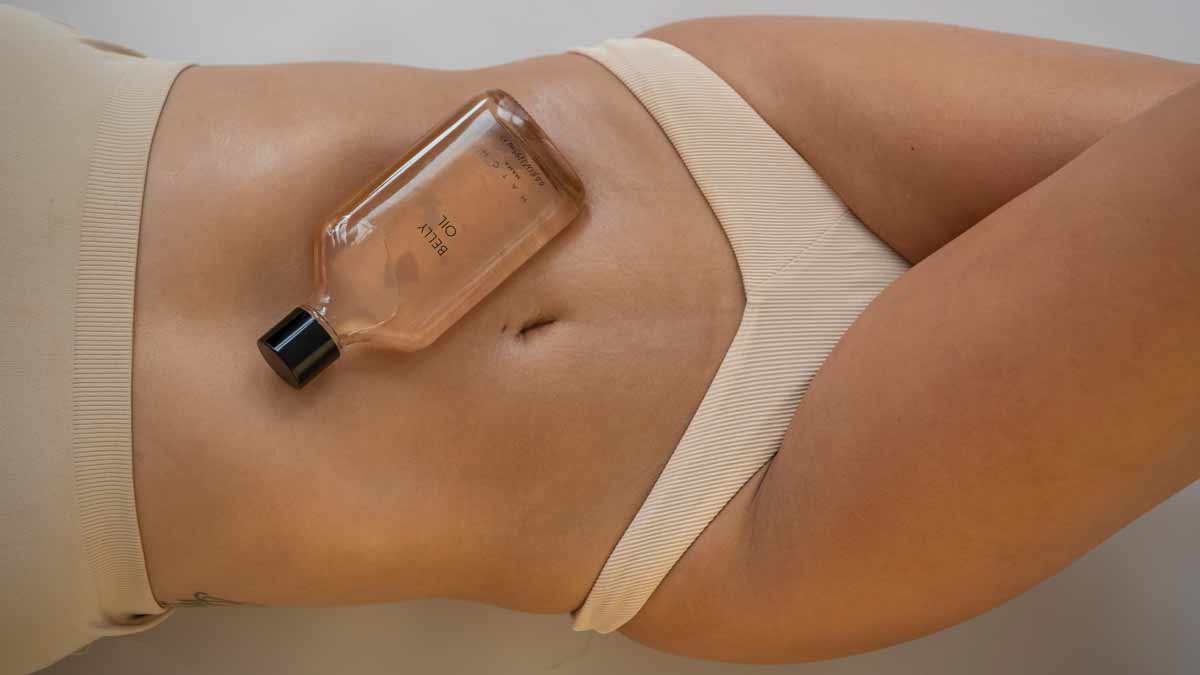
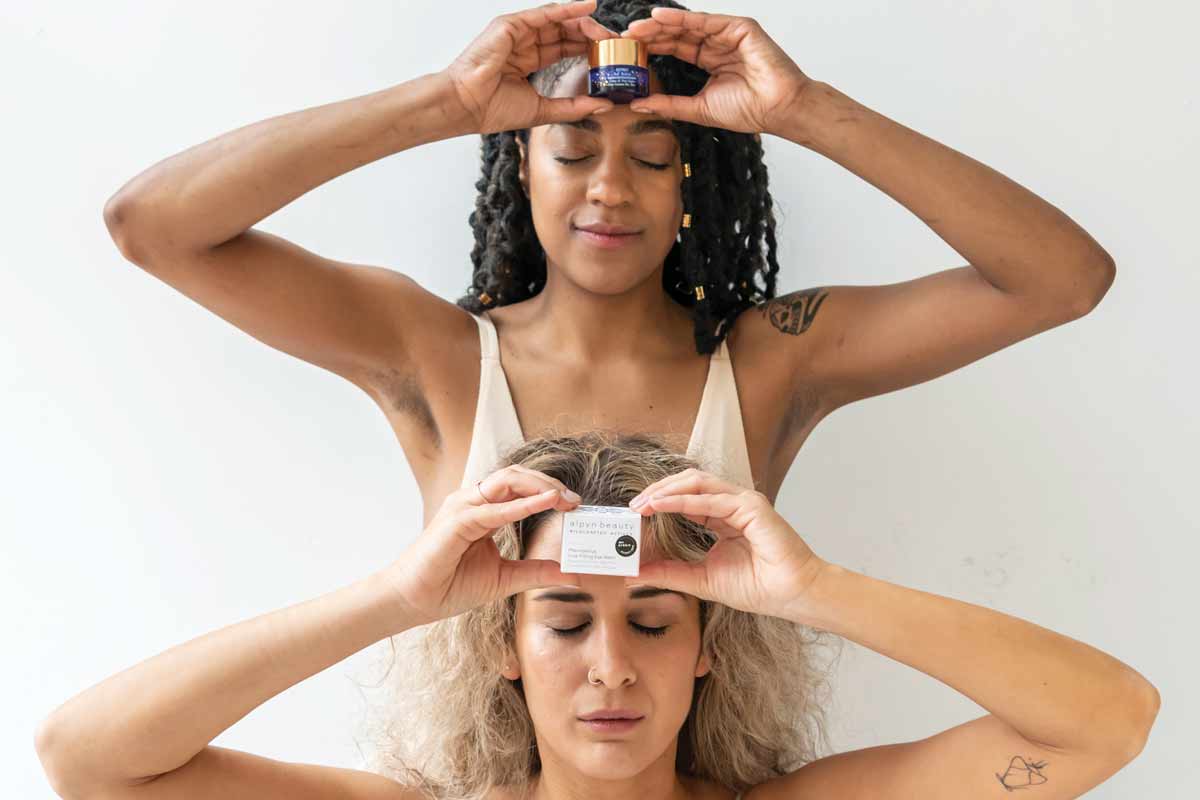
Head To Toe Beauty products

Your skin is a living, breathing organ. It is your largest organ, and it needs the same level of care as other organs. It needs nourishment, hydration, sleep, oxygen and apparently lots of moisturizer. For thousands of years, Ayurveda has associated aging with “drying out.” Now western science is catching up. According to recent research, some of the systemic inflammation associated with chronic diseases of aging has been linked to — dry skin!

In a recent article, Mariana Lenharo documents the research going on at the University of California, San Francisco, and the links between dry skin and inflammation.The inflammation response is part of the body’s immune system and plays an important part in healing tissue damage and fighting viruses and bacteria. But chronic, low-level inflammation has been linked to common age-related degenerative conditions (like Alzheimer’s, arthritis, and cardiovascular disease). As you age, the skin barrier deteriorates, and is unable to keep the skin hydrated. So the skin sends out signals to the immune system to try and repair itself. Those signals, and the immune system’s response, creates systemic inflammation, which can lead to chronic disease.

This creates exciting possibilities. They found that if you improve skin function, you can reduce inflammation. Basically If you moisturize your skin, you can improve your health. And one of the most exciting findings is that treating even part of the skin has enough of an impact to make a difference.

So skin care is health care, and Ayurveda was right all along. Stay moisturized. Pick a body part and start with any of these great products:


Belly Mask, Belly Oil

hatchcollection.com

Lip Serum, Lip Mask, Citrus Hand Cream

henneorganics.com

Smooth Operator Intimate Serum

itsquim.com

Line-filling Eye Balm

alpynbeauty.com

Ad Astra Nighttime Eye Cream Emulsion

Kyprisbeauty.com

Precious Sea Hand Saviour

ediblebeautyaustralia.com

Thigh Rescue

Megababebeauty.com

Happy Pits

megababebeauty.com

Stretch Mark Cream, Stretch Mark Serum,

loveanybody.com

Founders Blend Scalp and Hair Treatment

rahua.com

Foot Treatment

aylabeauty.com

Lip Patch, Eye Patch, Foot Mask

lapcosusa.com

Butt Masks

Bawdybeauty.com

Himalayan Body Buff

Osmiaorganics.com

Barrier+Triple Lipid-Peptide Cream

Skinfixinc.com

Body Cream

ayuna.co

Body Butter

mutha.com

Stone Crop Body Oil

emstore.com


Body Salve

sparitual.com


Creme No. 3

lamarue.nyc


Ceramide Refuel Soap Jel

bodybarrier.com

Head To Toe Beauty products