
SRI DHARMA MITTRA
By Joneil Adriano – Owner, Living Yoga
PROFILES
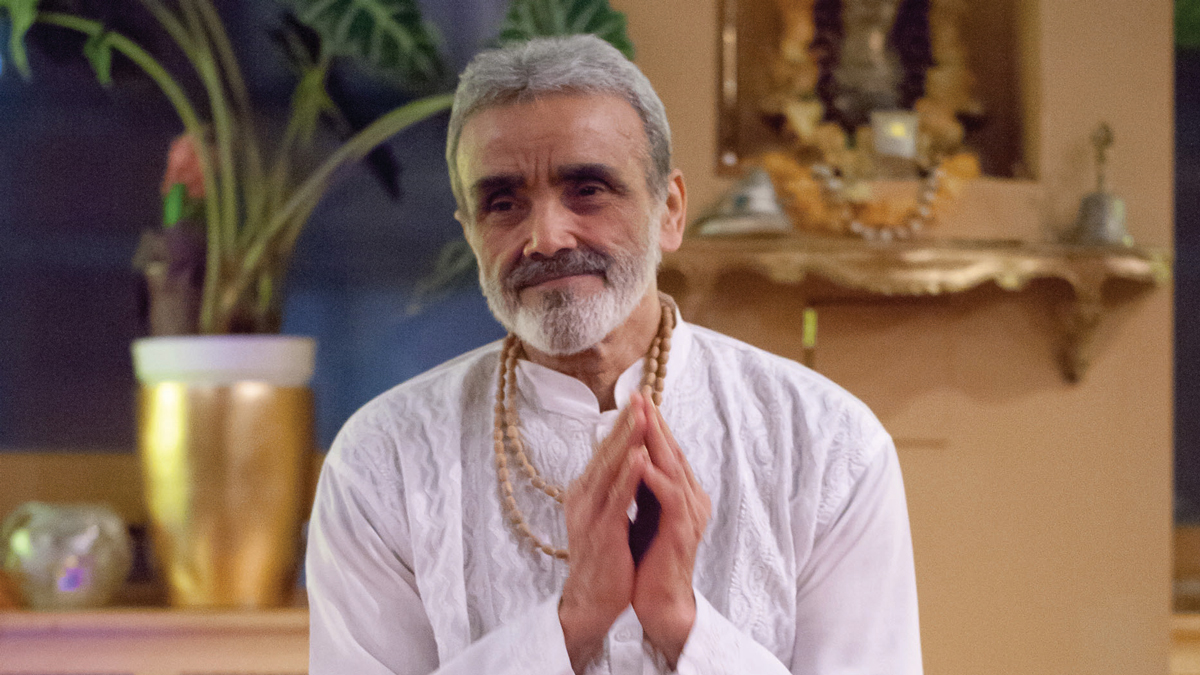
From those early, austere, and lonely years in the ashram, he went on to establish one of New York City’s first yoga centers, eventually becoming a world-renowned yoga teacher. Now in his late 80s, and with more than half a century of teaching, Dharma-ji’s path has been one of discipline, service, and compassion. In this intimate conversation, he reflects on his formative experiences and offers timeless guidance for anyone called to create a space for yoga and community today.
When you first met Yogi Gupta, how did you know he was going to be your guru?
Well, that is one thing that is beyond belief. I felt that he was the right guru, especially after our first meeting. Just like when you’re trying to find a spouse, right? Sometimes at first sight, you feel – that’s it!
You did not speak English at the time, right?
No, I knew one or two sentences, “I am hungry. I need money. Thank you.”
How difficult was it to communicate with him?
My younger brother had to do the translation. I bought a little book about Moby Dick. It’s a book to teach people how to improve their English. So I started copying and memorizing, little by little. Trying to listen to the TV and to the radio. And gradually, I started getting better.
My goal first was to learn English enough to conduct a class. You see, for many years, my English was just enough to conduct a hatha yoga class and a pranayama class, but I could not read the scriptures or explain the Bhagavad Gita. So I did more silent meditation. If the student asked me any question that I could not answer, I said to him, “Why don’t you talk to my guru?” But it was extremely difficult if you cannot communicate. I’m still having lots of problems with English! In order to share knowledge, you have to speak well to give the right knowledge. I am still working on it.
How long before you taught your first yoga class under Yogi Gupta?
That was about three years, in 1967. I went to teach my first class in a health club and my English was just enough to conduct the class. But I didn’t succeed much. When you don’t speak well, they don’t understand. They fire you.
How many years did you spend in the ashram with Yogi Gupta?
I lived in the ashram, maybe 11 or 10 years. The main ashram was located on 56th Street, close to Lexington [in New York City]. It was an old brownstone building that was close to being demolished. Then we decided to rent and fix the building. I was the handyman. Then we moved into this ashram. We have maybe 5-10 disciples giving classes.
What were some of the most important things you learned there?
Well, my goodness. First, what struck me was to learn how to cope with loneliness and pain when you don’t have anything outside anymore. No money, no family, not what you want to eat, no cigarettes, no alcohol. You understand? No movies, no friends. Since I could not speak English, I had no friends, no communication.
When we were in the ashram, I learned about my level of ignorance. I learned how stupid I was, how ignorant, and how I lacked self-control. I realized we have to purify the mind in order to feel, not in peace, but to feel ready to concentrate on knowledge. To follow some of these instructions, you need discipline. I learned how to get healthy. Also, — the most important — I learned how to gradually cope with obstacles. When you feel depressed, when you feel temptations. So you learn how to cope with them. I had difficulties going through it, but I knew how to go through it with faith.
I also learned that the action of compassion is to see yourself in others, and see the discomfort there. The same technique I used to place myself in the guru and try to force myself to feel what he’s feeling. You learn to place yourself in others for different purposes. So that’s part of compassion, empathy.
How did he tell you that you were ready to start your own yoga school?
Actually, he didn’t tell me when I was ready. I was the one who told him I had enough of hearing his lectures for 20 years!
My younger brother was also there, so when he left, I was in total darkness. My brother later opened a little yoga center, teaching at a hotel. I said, “Why am I not doing the same? I don’t need anything here anymore.” So I left the ashram. Before I left, I asked the guru. He said, “That’s fine. Do your best. If you need help, use the phone.”
I didn’t have any money. I met one of my students and he said, “Why don’t you go downtown? I have a loft there, 3,000 square feet. Why don’t you go there? You can fix it and start teaching.” Then I received a call from a student. This lady, she lives on the East Side, near Central Park, she sent me some money to pay for a private class. I remember it was $200. It was exactly what I needed! I fixed the place and in one week, I had a full class.
A full class? In one week?
Yeah, $1 or $1.50 classes. But at that time, everything was not too expensive.
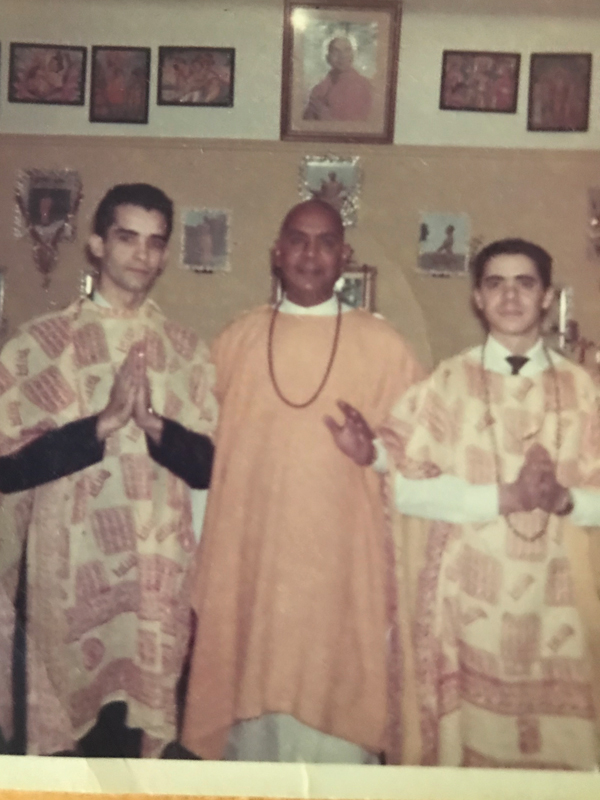
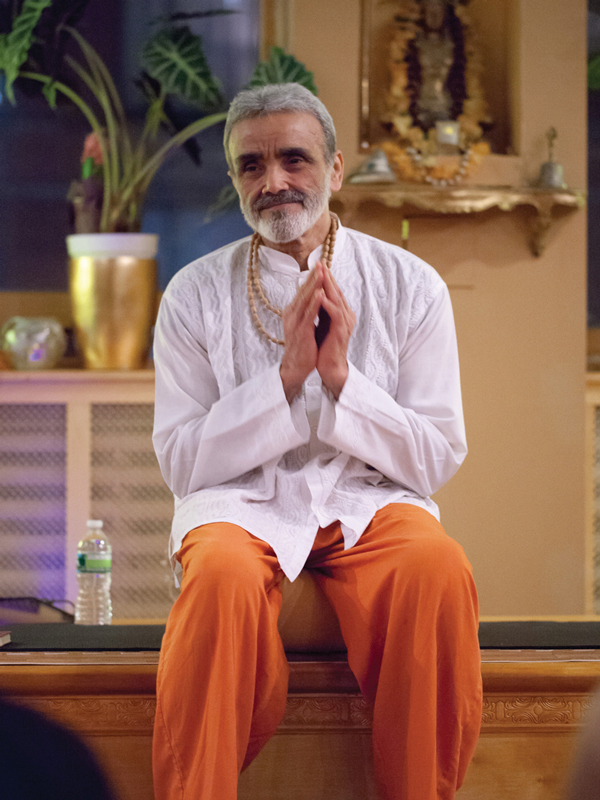
Oh, yes, little by little. I remember in one year, I had $1,350. That was enough to rent another place on 29th Street. One of my students’ husband owns a little building on 29th Street and Seventh Avenue. The second floor is empty, he said he can rent that to me for $230. So I bought a neon sign to put in the window, and after a few days, I had a full class.
You used to make the signs, too, right? The neon?
Yeah, I went downtown to a school where you learn how to bend them. You burn your hand, though!
What are some of the differences between the students you had then versus the students you have now?
Remember, everything evolves. Today, technology – cell phones, internet – is a very strong distraction. The students change a little bit, they are not that reverent and obedient anymore because there are so many choices.
A good teacher adjusts the yoga according to the lifestyle of today. If I ran a class here the way it should be, the way I learned in a traditional way, this room would be empty. Today, people are more active. They are restless. So we have to adjust the poses according to their conditions.
Today, it’s also a blessing because we have the internet. You can have your vegan diet online. If you’re lazy, you can order from Juice Press. So you can make students succeed much easier. You can find any scripture on the internet overnight. So students change, we change, and the techniques to share the divine knowledge change.
With all of the changes, how do you still honor tradition and the lineage?
Tradition, I understand, but lineage, what means lineage? Like my guru, I don’t know which lineage. I don’t care what lineage. I never even understand this word. It doesn’t make no difference to me. But tradition, my tradition is just a tradition, but that tradition keeps moving. (Laughter) Tradition has to keep updating. Not the essence. Everything needs some updates.
If somebody came to you and said, “I want to start a yoga center,” what is your advice to them?
Sit quietly. No distractions, no cell phone, no food, no watching TV. Then see where you want your yoga center, the location. It has to be comfortable. It has to be soft.
Remember, if you rent a place in a building today, you have different laws. You have to have access for [disabled people] to go up. And get ready for the first day, the second, even a week, you won’t have much business. That’s why I have three months [saved up] already. If I don’t have any money for three months, I still can pay all the bills.
Is there anything else you want to share?
The first thing you have to do with the students: get them in good health. Force them to improve their compassion, because that leads to the rest. You get more enthusiasm to ask, “Who am I? What’s next?” When a student comes to you, pay attention. Your communication is very important.
Remember, we are not pure enough, we have not achieved anything yet. We’re just sharing what we have here. I’m still learning so many things every day. So keep sharing, but don’t share too much. Keep your secrets. Share only for those who are ready. Because if you start opening too much, giving, you’re losing your energy and you’ll be empty. Every year, you may notice you are at a different level. You may notice your students are at different levels. So as you grow, you attract the crowd of people with you.
Last thing — very important: Tell them not to forget to pay.
Learn more:dharmayogacenter.com
