ACROSS THE RIVER, ACROSS THE METRO:  HOW TWIN CITIES WELLNESS COMMUNITIES ARE HOLDING EACH OTHER THROUGH GRIEF, FEAR, AND CARE

ACROSS THE RIVER, ACROSS THE METRO: HOW TWIN CITIES WELLNESS COMMUNITIES ARE HOLDING EACH OTHER THROUGH GRIEF, FEAR, AND CARE

ACROSS THE RIVER, ACROSS THE METRO: HOW TWIN CITIES WELLNESS COMMUNITIES ARE HOLDING EACH OTHER THROUGH GRIEF, FEAR, AND CARE

By: Melissa Honkanen

TRENDING

BEN CLARK INTERVIEW

In moments of collective trauma, the Twin Cities of Minneapolis and Saint Paul often move like a single body; sometimes tense, sometimes trembling, but rarely disconnected. While Minneapolis has been the epicenter of national attention following the killings of Alex Pretti and Renee Good, the reverberations are deeply felt across the river in St. Paul and outward into the suburbs. What emerges, again and again, is a quieter story of care: practitioners holding space, neighbors watching out for one another, and communities choosing service over spectacle. 

In St. Paul, that care looks intimate and immediate. Amy DePoint, an acupuncturist and mother living in a diverse neighborhood describes the past weeks as a movement from shock into a kind of weary flow. “We’re exhausted,” she says plainly, “but we’ve also found a rhythm in the community.” That rhythm is punctuated by fear that feels too close to home. ICE vehicles idling near schools, neighbors disappearing from daily routines, children instructed to run to safe houses if something goes wrong. The contrast between what residents witness on their own streets and what they hear on the news is jarring. “What’s being said doesn’t match what we’re seeing,” she explains. “It’s not agitators. It’s moms and grandmas texting each other, saying, ‘They’re staking out my neighbor’s house! Can you keep eyes on it?’”

“The contrast between what residents witness on their own streets and what they hear on the news is jarring. ‘What’s being said doesn’t match what we’re seeing,’ she explains. ‘It’s not agitators. It’s moms and grandmas texting each other, saying, They’re staking out my neighbor’s house! Can you keep eyes on it?’”
Inside her acupuncture practice, that disconnect shows up somatically. Patients arrive depleted, angry, scared. One man admits he’s consumed by thoughts of retribution. Another can’t sleep. The work, she says, becomes about nervous system repair, sometimes without ever naming it as such. “I try to bring every session back to gratitude, even briefly. Otherwise we’re completely fried.” Anger, she believes, isn’t the enemy; it can be a bridge from fear into action, if it’s held carefully. 

Care also extends beyond clinic walls.Through networks like Acupuncture Without Borders, practitioners across the metro, and even from out of state, are quietly organizing pop-up treatments, ear acupuncture kits, and in-home support for people sheltering in place. The emphasis is on safety, structure, and sustainability. “If I get followed or detained, I can’t help anyone anymore,” she notes. So roles are distributed. Some patrol. Some deliver food. Some offer bodywork behind closed doors. Showing up, she says, looks different for everyone. And that’s the point.

“…roles are distributed. Some patrol. Some deliver food. Some offer bodywork behind closed doors. Showing up, she says, looks different for everyone. And that’s the point.”

-Amy DePoint

If St. Paul’s response is grounded in proximity, the suburbs are responding through scale and steadiness. In Plymouth, about 25 minutes from Minneapolis, Honest Yoga studio owner Nicole Byars describes a different but connected energy. There are no protests outside her doors, no sirens echoing through class. Instead, there’s a palpable heaviness and an unmistakable pull toward community. Studio attendance is up more than 40 percent from last year. “People aren’t coming to argue or vent,” she observes. “They’re coming to be together. To process quietly. To move.”

Her studio has long been trauma-informed in practice, if not in marketing, and right now that shows up as familiarity rather than novelty. Teachers lean into repetition, silence, candlelit rooms, what one instructor called “yoga as comfort food.” The goal isn’t commentary; it’s containment. “Our job isn’t to narrate the news,” Nicole says. “It’s to give people something steady when everything else feels chaotic.” 

Service, however, is where the suburban response reaches outward. The studio has mobilized support for local and Minneapolis-based food shelves and partnered with grassroots organizations DHH Church delivering groceries to immigrant families afraid to leave their homes. A recent donation-based Himalayan sound healing event directs all proceeds to a Colectivia Bilingue, a bilingual shared relief fund providing emergency rent assistance and housing support. “If you’re going to make a statement about your values,” Nicole states, “you have to put service behind it.” 

“If you’re going to make a statement about your values, you have to put service behind it.” 

-Nicole Byars

What’s striking is not just what these communities are doing, but how thoughtfully they’re doing it. Both practitioners speak to the tension of wanting to help without appropriating, of acting without centering themselves. Listening first. Showing up when asked. Acknowledging fear without amplifying it. “Everybody has a different capacity,” Amy reflects. “Showing up might mean patrolling, or it might mean making soup, or it might mean holding someone’s hand while they cry.” 

Across the Twin Cities, that ethic of care is threaded with a deeper awareness. What’s happening now is not new for many communities of color, even if it’s newly visible to others. There is anger in that realization, and grief. But there is also resolve. Monarca Rapid Response Line is providing nonviolence training rooted in the teachings of Martin Luther King Jr. and Gandhi are circulated alongside somatic practices and sound baths. Singing protests and candlelit yoga classes coexist. Fear and hope sit side by side. 

Minnesota has been here before, thrust into the international spotlight with the murder of George Floyd in 2020. The state was forced to grieve publicly and compelled to organize quickly. What feels different this time, many say, is the infrastructure of care already in place. Mutual aid networks. Wellness practitioners willing to step beyond their job descriptions. Studios and clinics that understand healing as communal, not transactional. 

From St. Paul kitchens where neighbors keep watch, to Plymouth studios quietly filling with breath and movement, the message is consistent: the Twin Cities are holding each other. Not perfectly. Not without exhaustion. But with intention, humility, and a fierce love of neighbor.

HOLDING SPACE UNDER OCCUPATION: A MINNEAPOLIS YOGA STUDIO RESPONDS

HOLDING SPACE UNDER OCCUPATION: A MINNEAPOLIS YOGA STUDIO RESPONDS

HOLDING SPACE UNDER OCCUPATION: A MINNEAPOLIS YOGA STUDIO RESPONDS

By: Melissa Honkanen

TRENDING

BEN CLARK INTERVIEW

photo: Deb Girdwood

Minneapolis is once again at the center of national and international attention, but what is happening on the ground cannot be fully understood through headlines alone. In South Minneapolis, just steps from Yess Yoga studio near Nicollet Avenue aka “Eat Street,” the fatal shooting of Alex Pretti unfolded amid an ongoing ICE presence Operation Metro Surge that has reshaped daily life for residents. For months, community members have been organizing quietly and relentlessly. Driving children to school, delivering food, raising funds for rent and medical care, and creating networks of safety where none feel guaranteed.

In this conversation, Yoga Love Magazine Digital Editor, Melissa Honkanen speaks with Lucia Yess, founder of Yess Yoga in Minneapolis, about what it means to practice yoga in a moment of state violence, prolonged fear, and deep exhaustion, and why studios are becoming unlikely sanctuaries of collective care. Their dialogue explores how somatic grounding, mutual aid, and nonviolent resistance are converging, revealing a community that is not only enduring, but actively caring for one another with intention, dignity, and resolve.

Melissa: Yess Yoga is located near Eat Street on Nicollet Avenue, an area known for dozens of local and international restaurants. Minnesotans especially love Glam Doll Donuts, and Alex Pretti was murdered directly across the street from that business. Can you walk us through what happened that day?

Lucia: Saturdays are usually our busiest days. We had an 8:30 a.m. class, and the shooting happened during that class. The teacher is actually recorded during śavāsana saying, Oh no, oh no, oh no…” That’s when we began realizing something was very wrong.

Melissa: How did you first get alerted? Was it through a community Signal group?

Lucia: Yes, some people are part of those groups. One of our teachers who also helps coordinate mutual aid works as a street medic. She has a public health master’s degree and works for the American Heart Association. She texted me at 9:22 a.m. and said, There’s been a shooting outside the studio.” The incident was not going to play out well. My husband is a physician at Hennepin County Medical Center, and our neighbors across the street are emergency doctors. I texted them to confirm, and they said yes, and that we should cancel classes immediately.

So I went into response mode making sure the 8:30 class got out safely. The 10 a.m. teacher was already at the studio and aware by then, because ICE had surrounded the area. We coordinated quickly with our studio manager Elisabeth, the teacher Victoria, and Claire, the street medic, to keep the space open for shelter. It was about negative ten degrees. Brutally cold.

Melissa: I grew up in northern Minnesota, so I know how dangerous that kind of cold can be especially for people outside protesting.

Lucia: Exactly. It’s that kind of cold where if you touch metal without gloves, it burns. We closed classes for the day but kept the studio open so people could shelter and warm up.

Claire was flushing people’s eyes because of tear gas. ICE had surrounded the building. People couldn’t leave and we were effectively trapped. They roped off our entrance and stood shoulder to shoulder across 26th Street. Tear gas and rubber bullets were being used, and this was all before 10 a.m.

Around 2 p.m., ICE told us we had a window to evacuate, and that’s when people were finally able to leave.

Melissa: How has your yoga community been affected, emotionally and practically, since the fatal shooting of Alex Pretti?

Lucia: It’s Alex, and it’s also Renee Good, who was killed less than two miles from us in South Minneapolis. This has been a concentrated ICE presence for months.

Melissa: Yes, my friends live in Powderhorn Park, and I have former colleagues in Whittier. Those neighborhoods sit right at the center of where both shootings occurred.

Lucia: I’m glad people outside Minnesota are paying attention. When I walk past Alex Pretti’s memorial, which I do daily on my way to the studio, there are international news crews there all the time. Someone is speaking a different language every visit. It’s important to document government violence when it happens.

“I’m glad people outside Minnesota are paying attention. When I walk past Alex Pretti’s memorial, which I do daily on my way to the studio, there are international news crews there all the time. Someone is speaking a different language every visit. It’s important to document government violence when it happens.”

What many people don’t realize is that this organizing didn’t start with the shootings. Communities here have been mobilizing since early December by driving kids to school, delivering food, supporting families who are sheltering in place. The shootings are shocking and deeply dysregulating for our nervous systems, but the exhaustion comes from the length of this occupation. It’s been months.

People are spending their extra time and money supporting families who can’t work because someone has been detained. Rent assistance, food, childcare, it’s unsustainable without broader support. A yoga studio in Rhode Island sent us $1,000, and I cried. People here are donating $25 at a time, the equivalent of a drop-in class. That generosity adds up, but it’s heavy.

A yoga studio in Rhode Island sent us $1,000, and I cried. People here are donating $25 at a time, the equivalent of a drop-in class. That generosity adds up, but it’s heavy.

photo: Elisabeth Pletcher

photo: Elisabeth Pletcher

photo: Lucia Yess

Our goal is to acknowledge that people are tired, scared, and still giving. We want the studio to be a place of respite because this work has to align with our morals and values.

Melissa: I spoke with friends in the Twin Cities this week, and the exhaustion was visible the moment we got on Zoom. Have you noticed changes in attendance or class dynamics?

Lucia: Attendance hasn’t changed dramatically. People still come especially during hardship. Yoga isn’t just asana; it’s a way of living. Action itself can be therapeutic. What has changed is the depth of conversation. The themes before and after class are unmistakably about this moment. ICE sightings near schools. Journalists who witnessed the shooting needed trauma care. We’re constantly sharing resources like EMDR therapists, reiki practitioners. This occupation is pervasive. It touches every conversation.

Melissa: Has the studio taken a public stance?

Lucia: Yes. We closed during both strikes and have been doing mutual aid for over a month. Our focus is healthcare supporting people who are missing preventive care or are afraid to seek medical treatment. We’ve partnered publicly with clinics, therapists, and organizers. We’ve hosted a free reiki restorative workshop, watercoloring and mindfulness, and community acupuncture. Our wellness wing has become a hub. Practitioners are donating their time. The street medic who helped flush eyes organized much of this care.

What’s happening in Minneapolis is a living example of collective care. Journalists, healers, demonstrators, parents, neighbors, it’s a mycelium network. Grassroots and deeply human. Yoga studios can play a real role here: offering space for people to feel, process, and regulate so they can return to action sustainably.

What’s happening in Minneapolis is a living example of collective care. Journalists, healers, demonstrators, parents, neighbors, it’s a mycelium network. Grassroots and deeply human. Yoga studios can play a real role here: offering space for people to feel, process, and regulate so they can return to action sustainably.

Melissa: I’m now based in Atlanta, the birthplace of the Civil Rights Movement. Many people here say what’s happening in Minnesota isn’t unprecedented, it’s something many other communities have endured for decades. How is that being discussed?

Lucia: People absolutely acknowledge that. After George Floyd’s murder and centuries of state violence, this isn’t new. What feels especially alarming is that Alex was a white person helping someone out of a snowbank when he was killed. It’s unsettling, but it’s also not the first time people have warned us.

The real question is: Is this the moment when more people say  “This is not how I want my tax dollars spent. This is not safe.” Do we finally change systems or slip back into a status quo where some people have proximity to safety and others.

Melissa: I recently saw a political cartoon depicting ICE agents raising the old Minnesota flag in a formation resembling the WWII Iwo Jima photo, while the new Minnesota flag, designed to remove colonial imagery, lay on the ground. It was powerful commentary. What advice would you give yoga students who want to be supportive without appropriating lived experience?

Lucia: The heart of yoga is learning how to be in community often with strangers. In studios, we practice what it feels like to be safe in our bodies: closing our eyes, softening vigilance, checking in. That safety is not universal. The question becomes: Is it okay that some people don’t feel safe simply existing?

Practices like brahmacharya remind us there is enough that we don’t need to hoard safety for ourselves. Yoga can help us advocate for bodily safety and dignity for everyone. These spaces shouldn’t be about escapism. They should help us align with liberation for ourselves and others. That’s a call to studios and teachers: make sure people feel safe right now. Truly welcome. Truly inclusive.

Practices like brahmacharya remind us there is enough that we don’t need to hoard safety for ourselves. Yoga can help us advocate for bodily safety and dignity for everyone. These spaces shouldn’t be about escapism. They should help us align with liberation for ourselves and others. That’s a call to studios and teachers: make sure people feel safe right now. Truly welcome. Truly inclusive.

And then ask: How do we extend that safety beyond studio walls? Into rental assistance, food networks, medical care, especially for people afraid to seek treatment or even give birth in hospitals. Safety can’t be reserved for the privileged. Yoga studios have a real opportunity to model something better.

Melissa: What else would you like our readers to understand about what is happening in Minneapolis right now?

Lucia: Minneapolis is caring for each other deeply and doing so with joy. There is singing, movement, and dancing. People are feeding one another, inviting neighbors over for game night, creating warmth wherever they can. There are tears, yes, but more often they are tears of love and connection than of fear.

I think that’s important to name. What’s happening here isn’t violence. People are protesting while singing. They are resisting while caring for one another. They are grieving and organizing at the same time. And that joy, rooted in community, is part of how we are surviving this moment together.

Learn more about YESS yoga and support their community work

Brick and Mortar Yoga Studios That survived the pandemic

Brick and Mortar Yoga Studios That survived the pandemic

Brick and Mortar Yoga Studios
That survived the pandemic

by iana velez

TRENDING

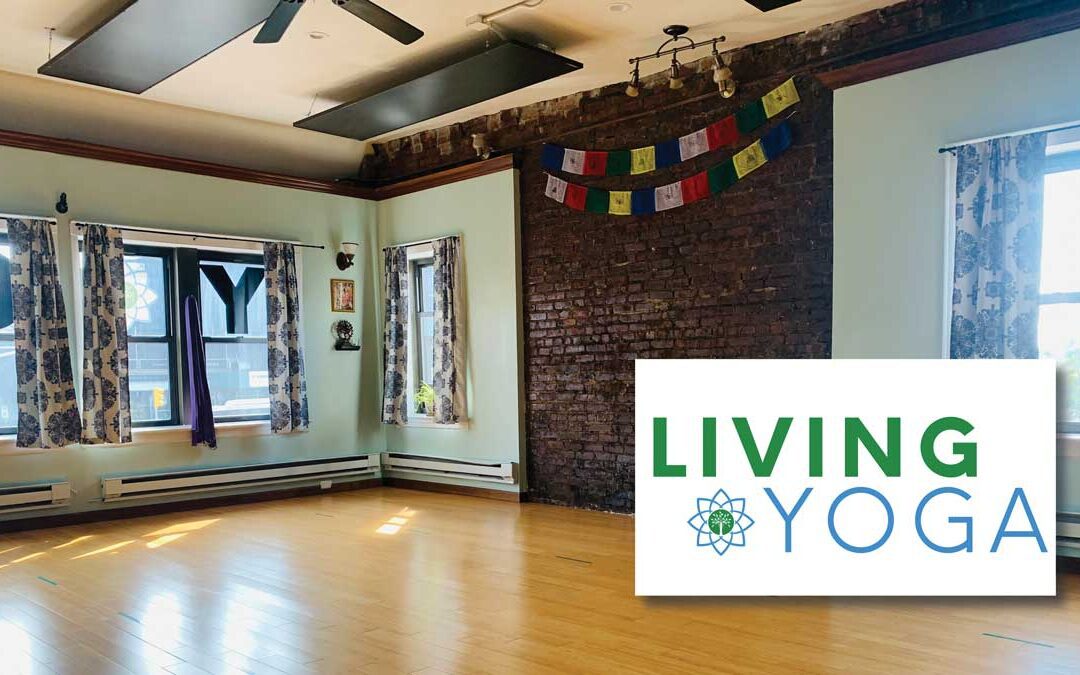
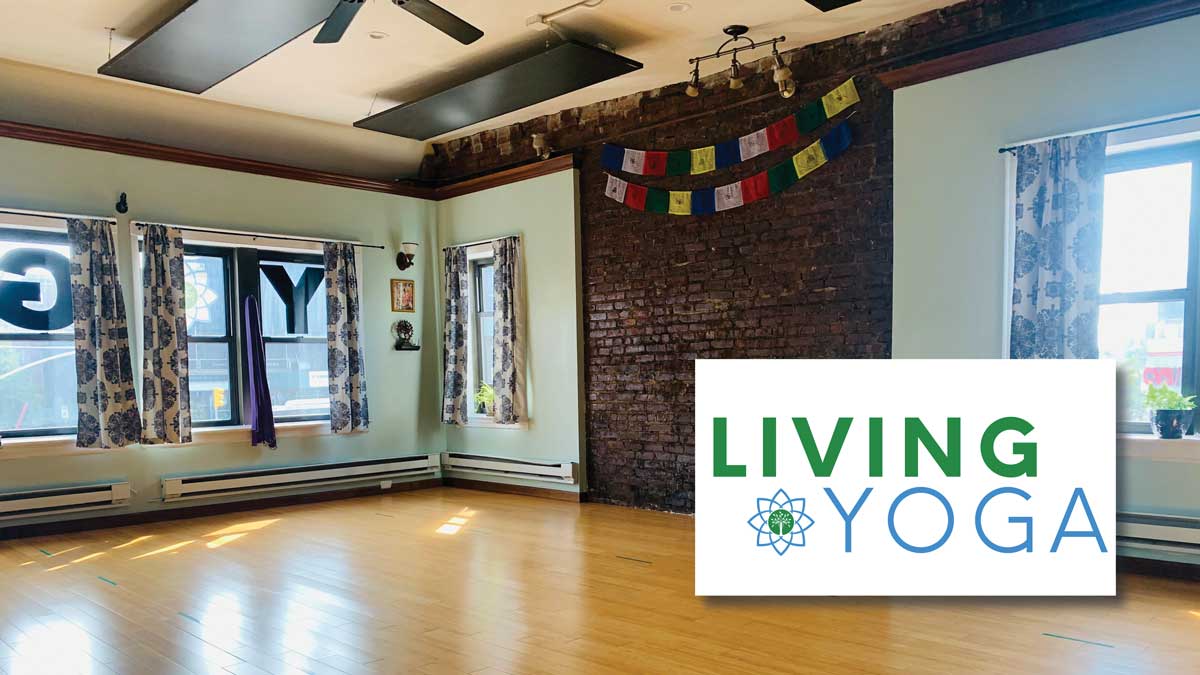
YOGA PLUS MAGAZINE - STUDIO Photo - LIVING YOGA

Emotional. Terrifying. Determined. Surreal.
These are just a few words studio owners use to describe what owning a yoga studio during the pandemic was like.

We put the call out to find studios in our community who had managed to reopen their brick and mortar spaces once restrictions were lifted, and were relieved to hear many had managed to survive. They share their inspirational with us in the Fall of 2021

Living Yoga
Forest Hills, Queens

When did your studio originally open? 

Living Yoga first opened in 2009. I purchased it from the original owner in May 2019, about 10 months before COVID-19.

Describe what it was like to shut down your physical
studio space?

Closing the studio was surreal, but I had seen how yoga studios in other countries were forced to shut down, so I was already preparing for that possibility, and communicating to my students and teachers about it. In fact, I placed our first Zoom class on our schedule several days before Gov. Andrew Cuomo issued his shutdown orders. Still, our teachers and students appreciated the concern I had for keeping everyone safe and pivoting to livestream classes quickly. So even though the studio physically closed, people were still able to keep up with their yoga practice, at least for the first few weeks, without too much of an interruption. I thought we would be closed for a few months at most. Never in my nightmares did I think we wouldn’t be allowed to reopen for more than a year.

How did you stay inspired and motivated while your studio was shut down?

It was really hard because help from government agencies and industry groups was seriously lacking. The market for online yoga classes was oversaturated — everywhere I turned, people were offering free or unbelievably cheap yoga classes on Zoom. When things felt hopeless, I thought about all the notes and messages I received from my members when I first took over the studio. They told me about how they had been practicing there for years, and how the practice helped them through some really difficult life challenges. I remembered how beloved the studio was by the community; I couldn’t possibly let them down. That gave me the energy to keep going. There was no way I could allow Living Yoga to be closed at the end of all of this. I was determined to make it through, at all costs.

Describe to us what it was like to reopen? 

It’s been wonderful to have people back in the studio again and to see new faces walking through our doors. A yoga studio filled with people has a vibrancy, energy, and joy that you feel the moment you step inside. I am so grateful to be able to walk into this space every day, serve our community, and lift people up physically, emotionally, and spiritually.

What surprised you most about your studio and community? 

I was really touched by how many people continued their memberships. Given the shortcomings of doing yoga on Zoom, I was expecting most members to discontinue their memberships, but they didn’t. In fact, about 60% kept them active. This told me they understood how crucial their memberships were to the future of the studio and the livelihoods of our teachers. Those that couldn’t afford to continue them found other ways to prop the studio up — whether it was by amplifying us on social media, supporting our T-shirt fundraiser, or passing along leads for small business relief. Our community rallied around the studio in so many small but impactful ways. They were as devoted to keeping the studio running as I was.

How do you see the future of yoga studios?

All those predictions about the demise of yoga studios are wrong. In the early days of the pandemic, Zoom was all the rage. As the months wore on, and we were forced to live our lives almost entirely on Zoom, attendance for Zoom classes plummeted. Don’t get me wrong, live streaming yoga classes are here to stay. People like having the option of taking a class online from time to time, but the in-studio experience is about community and connection — the chance to see friends, to share hugs and a laugh, to practice in a calming environment without distractions, to receive a timely physical adjustment — and that’s just not something you can’t easily replicate on Zoom. For those of us who are still around, the core purpose remains the same: quality yoga instruction in a safe and welcoming setting. Yoga studios also need to be better prepared for future disruptions and be nimble enough to pivot at a moment’s notice.

Learn more: mylivingyoga.com
Living Yoga Studio - Logo
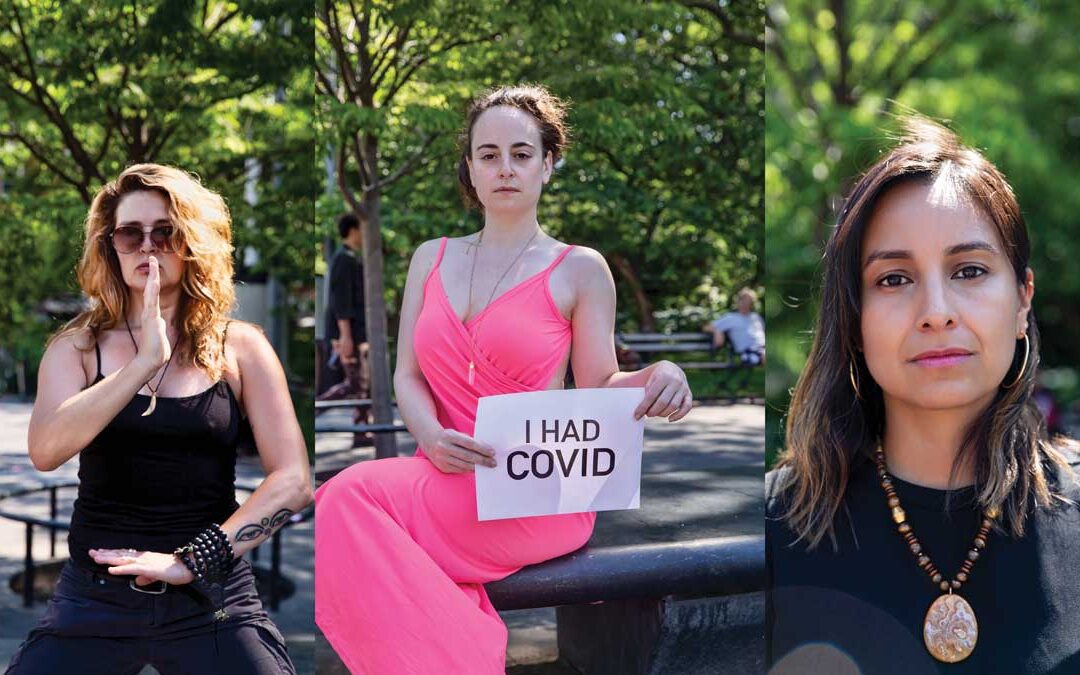
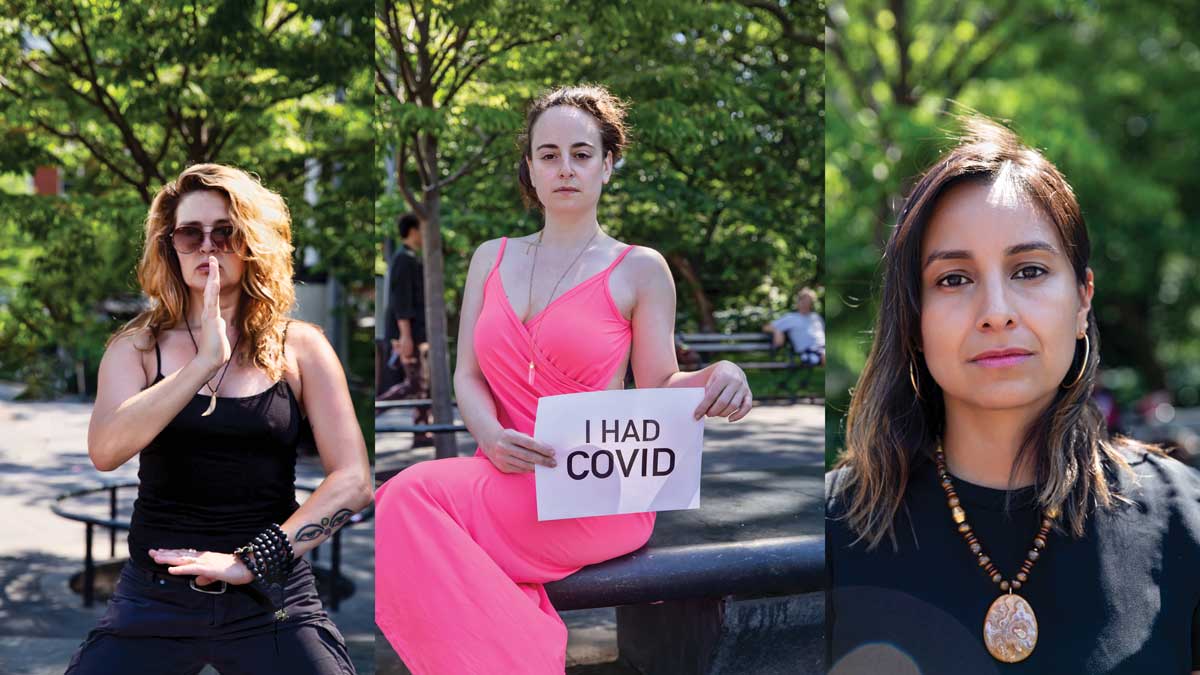
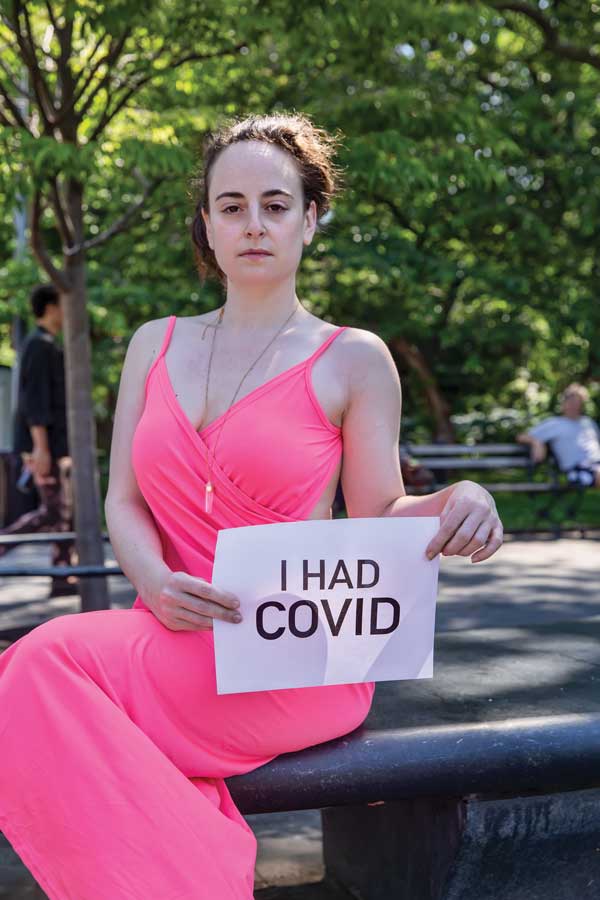
My Covid Body

My Covid Body

My Covid Body

Compiled by Iana Velez

TRENDING

Yoga Plus Magazine - COVID- MEGAN - INGRID - GINA - bio pic
If you lived in NYC during the pandemic, chances are you knew someone who got COVID.
While most people generally think about their yoga teachers as healthy people, we quickly learned that COVID-19 did not care if you were young or old, healthy or not, COVID came for anyone. We reached out to our community of yoga teachers to share their stories with us.
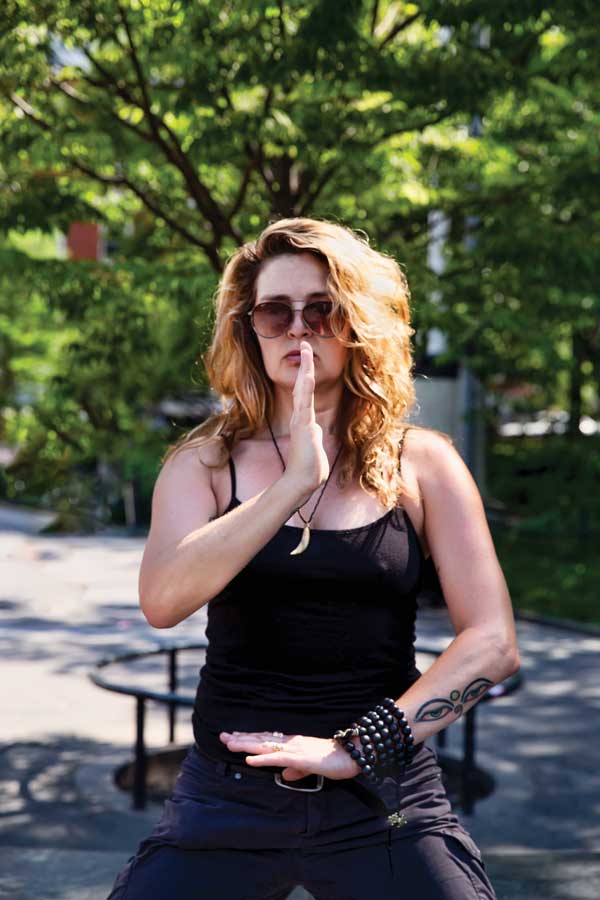
Yoga Plus Magazine - COVID- GINA bio pic

Name: Gina de la Chesnaye
Age: 50
Where do you live: Brooklyn, NY
When did you get COVID-19: March 2020 and March 2021

Describe how the experience felt in your physical body:

The first time I contracted COVID in March 2020, I didn’t realize that my first symptom was related until it was listed in the news. Essentially, I experienced awful diarrhea. This was followed by profuse sweating, headaches, sore throat and that awful “itchy” feeling one
has when a virus is in the body. Intense physical aches and pain, plus weeks long lethargy followed. Occasional chest tightness came and went, but luckily, I never had problems breathing or high fevers. I attribute the daily breathwork practice I have to helping keep my lungs clear and aiding with anxiety. I did notice that my symptoms were worse at night,
and I could literally feel when the virus was dying. For a week or so, I felt as though I had the carcass of it still moving through me. I developed high blood pressure, which I never had before and utilized hibiscus tea and cardio to bring it back down over the following months. The second time I contracted it, I lost smell and taste, and experienced intense body aches that again, were worse at night. Smell and taste returned after a week or so, but I am still working with lethargy and pain in the body. It was fascinating to track the virus as it moved through me. I literally felt like it was learning me and I, it. As I watched the virus tear through the country and across the world, I realized it was learning Us.

Describe the emotional/psychological experience:

It was frankly terrifying in the beginning. No one had a clear understanding of
what it was and the fear that was circulating in NYC was palpable. This was heightened by the non-stop ambulance sirens and the inability to see people’s faces. We were suddenly afraid of each other. Anyone could be a threat or if we had the virus—we were the threat. It
became clear to me, as well, that any unresolved or unmetabolized trauma in the body came rearing back. Anxiety and depression increased in nearly everyone; I experienced both. My heart would race, monkey mind increased, and mornings were filled with dread. I am fortunate that I was able to parse out the experience of my nervous system with knowledge and use my skills, but it was not easy. There was also intense grief. So many had lost their lives, including people I worked with and family members. The collective grief of this as a country is something that we must begin to address.

As a yoga teacher, how did having COVID-19 impact you?

My first thought was “This is why we practice.” Again and again, my practice sustained me. I was able to come to my body and my conscious connection to it to heal and gain wisdom, in deeply profound ways and not to just work with my shit but to step back, witness
and process the dysregulation that was occurring locally and globally. Not being able to share practice with people in person was a loss. That connection and co-regulation are so necessary to us as physical beings. However, I was able to share practice online with people across the country and different parts of the world. I offered classes and workshops through various online platforms. While we were separated physically, we were still able to connect in ways I hadn’t thought possible. For years, people had recommended I offer classes online, and I thought that was just weird. Now I see how remarkable and beautiful it can be. We can connect over vast distances. The path has no boundaries.

What surprised you the most about your COVID-19 experience?

Covid was a mirror. Someone I was in a workshop with commented that the pandemic very clearly showed us what our life choices were and how they led us to exactly that precise moment, both individually and collectively. Typically, I travel two to three times a year to share skills and practice in East Africa through my organization, The Nachan Project. Being home and unable to travel made me realize that part of the reason I enjoyed traveling so much was because being home was sometimes painful. My home, while a beautiful home, carried so many memories of a failed marriage and trauma that I neglected to tend to it in a mindful way. It’s not an easy thing to observe in oneself, but if we are in the practice of genuinely paying attention to our habits — both the positive and negative — that is what we must do. And then, utilize our practice to move forward with compassionate awareness. And, yes, not just metaphorically pull the weeds out and declutter, but literally

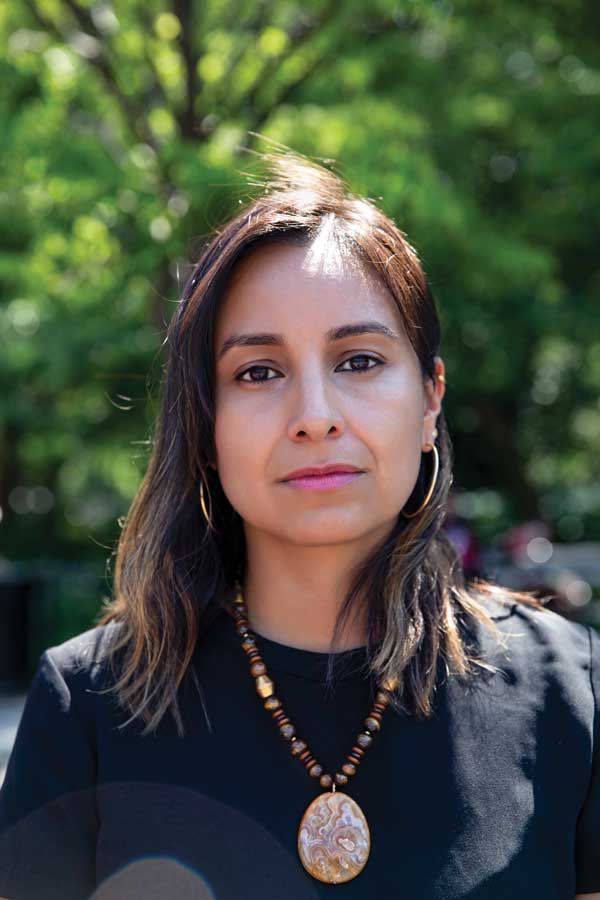
Yoga Plus Magazine - COVID- INGRID bio pic

Name: Ingrid Baquero
Age: 39
Where do you live: Astoria, NY

When did you get COVID-19:

November 3rd, 2020. I remember clearly as it was during the elections, and I wanted to celebrate sooo bad the weekend of November 7th but couldn’t leave my house. I used up whatever energy I had to bang those pots out of my window.

Describe what the experience felt like in your body:

My first symptom was feeling tired. A couple of days later, I had a fever, and said “oh no, how?” Immediately, I went to City MD and took the test, and received the call minutes later that I tested positive. The fever continued for an additional day, followed by loss of smell, taste, and severe fatigue, which lasted beyond a month.

Describe the emotional/psychological experience:

Honestly, I was disappointed in myself, I didn’t know how I caught it, as I had been extremely careful. I’m also a very active person — I run, bike, dance, do yoga, but my body had not felt this extreme exhaustion before. I couldn’t work out for the life of me, which affected my mood. Instead of fully resting, I tried to push through the exhaustion as I continued to work my day job, which made it worse. I went into a post-COVID depression and burnout after the two-week quarantine.

As a yoga teacher, how did having COVID-19 impact you?

I looked forward to teaching my Saturday class during this pandemic because it gave
me life. I saved my energy to host a slow flow yoga class virtually the second week
of being sick. My breathing, though, was off — I had to catch my breath, which wasn’t ever an
issue before.

What surprised you the most about your COVID-19 experience?

How sneaky COVID is, and how even a healthy, active individual can get sick. Also, how important it is to rest and take care of yourself. The world can wait until you get better. The world needs you healthy.

Yoga Plus Magazine - COVID- MEGAN bio pic

Name: Megan Fliegelman
Age: 34
Where do you live : New York, NY
When did you get COVID-19:
March 2021

Describe how the experience felt in your physical body:

My disease expression had a number of distinct phases. My acute disease was
not extreme, bad allergy symptoms, some mild chest pain, and a headache
ruled the first two weeks. As the acute viral symptoms began to wane, I noted a profound shift in my fascia & energetic systems, gatē completely changed. That pulsation of energy I had gotten to know so well became a stranger. As this happened, it became too hard to consume solid foods as my heart and head declined (I lost 25 pounds, which often is complimented). In June, I had a preliminary diagnosis of Vasospasms of the Coronary Arteries that were setting off arrhythmias. We are trying to understand and control changes in my EEG and get a handle on the weight loss and other organ damage. Hopefully this is all temporary, but we just do not know how COVID-19 affects the body or what the future holds. Science is slower than disease. I have dealt with major health events before, but none of these things were a part of my life before COVID-19.

Describe the emotional/psychological experience:

The entire medical system is completely strained. The burden of COVID-19 on the medical system and infrastructure exposed how ill prepared we are to manage emerging pathogens as a society. A year and a half into the pandemic burnout is a profound issue that is
completely pervasive in everything that touches most of society, but specifically medicine. This is compounded by the complexities of emerging pathologies and many long haulers without quantifiable findings. I am not “lucky” enough to have quantifiable findings so my doctors are taking me seriously now. Early in my disease expression, I was told everything was anxiety. Only after things further declined in a quantifiable way was I able to find any appropriate, respectful care. It is trauma pushing trauma and in this dynamic everyone loses. This is system-wide problem. I was in love with my work before I had COVID-19, I was not teaching as much, but I was running a large organization and putting the principles of yoga into practice in a corporate setting; it was like art, and I loved it. Unfortunately, I was not able to continue working. I can not wait to take on the next project and put the principles to work — creating systems that build norms that are in line with my soul.

As a yoga teacher, how did having COVID-19 impact you?

In this process, I have learned so much and been able to connect the dots of teachings and lessons that have been in me but not fully integrated. At this stage in my disease expression, I may not be processing a lot of external information, but internally, there is a whole new level
of understanding opening for me. There is a richness and vibrancy that is now behind the stick figures that were the techniques I so well knew. In the loss there is a new, in that there is always hope in the grief. With this experience under my belt and hopefully in the rearview mirror, I will be able to offer richer alternatives and modifications. I am refining understandings
of techniques, which always opens another way or wording to accessing them. As a teacher, I will be better prepared to support the fluctuations of the lives of my students when I get back to teaching. Oh, and how sweet it will be to be back teaching…

What surprised you the most about your COVID-19 experience?

What surprised me the most was how there were very distinct cycles in how society reacted to the changing reality of life in a global pandemic. The incredible interplay of fear, gratitude, and a pathological need to know, instead of a need to keep building a base for understanding. These dynamics play out on repeat in many ways, and there is a great deal of momentum to their flow. The power dynamics of conflict never happen in a vacuum but always include the vacillate of rajas and tamas around, but rarely settling in on sattva. There were so many points in this pandemic period where we could find that pause and plateau, only to be knocked into a different spiral of conflict. There are statements of the pandemic being over. The pandemic is not over. The mitigations procedures are being rolled back now that specific thresholds of vaccination are being met. That leaves out a lot of society; that leaves out all of those who are unable to access the vaccine, and all of those who will not have an effective immune response to the vaccine. This leaves entire subsets of society behind and amounts momentum behind power dynamics of inequality in society.

Dear Rina Column

Dear Rina Column

Dear Rina Column

by Rina Jakubowicz
TRENDING
Yoga-Plus-Magazine - Dear Rina banner photo
Dear Rina is an advice column with the angle of helping and giving guidance with the yoga teachings in mind. You will see how the teachings are applied in a practical way towards different topics.

During the pandemic, her work shifted to helping people manage their lives and choices better by giving them guidance and helping them think through their challenges in different ways. Here’s some testimonials to see how helpful her advice has been for others. Perhaps, she can help you too! Please email rina@rinayoga.com or DM her on iG via @rinayoga if you want your question(s) answered.

Dear Rina,
How do I feel sexy again and regain my confidence after a breakup? What are some practices you can share?
Rebuilding in Ft. Lauderdale

Dear Rebuilding in Ft. Lauderdale,

Your sexiness and confidence should never have been placed on a relationship or a partner. So regardless of whether you’re single or not, your sexiness and confidence ideally is alive and pumping! 🙂 Buuut, since we are learning how to do this in reference to a fresh break-up, our first thing to keep in perspective is that this break-up is for the best. I know it’s hard to live this way because we are attached and feel so many emotions. Take it one day at a time. When you are not attached, you can move freely and lovingly. Plus of course, you can see and understand clearly. A mental practice for you: As soon as an emotion pops up, just observe your emotion and say “Hello (insert emotion). You can pass by, but not stay.” Don’t get caught up in the emotion. Don’t look at old pictures, social media, emails, texts etc. Place your worth on yourself and not on your partner. Follow up your “Hello…” with a positive affirmation. For example, “I am already full on my own.” A Physical Practice for you: Masturbate thinking of yourself. Turn yourself on by yourself. Don’t think of anyone else. Make yourself the sexiest mofo alive in your eyes!” Yaaaaas Queen!

Dear Rina,
How do I initiate sex without feeling silly and uncomfortable?
Love,
Shy in Los Angeles

Dear Shy in Los Angeles, 

A sensual woman never feels uncomfortable or silly asking for what she needs and wants. In fact, she’s empowered by it. Not because she’s going to get what she wants, but because she’s empowered by voicing her truth. Consider how you’d like to be approached when your partner wants to initiate sex. Playful yet assertive is sexy. So step up and act that way with them too. Especially since men tend to be visual so if you’re awkward and uncomfortable, they won’t register that as a sexy initiation. Depending on your relationship, you could voice your discomfort if you feel your partner will receive it respectfully and do what they can to make you feel safer and more comfortable. The way to get over it at first is to fake it until you make it… pretend you’re comfortable and confident and eventually you will be. You got this!

Yoga-Plus-Magazine - Dear Rina bio photo
Rina Jakubowicz, founder of Rina Yoga and Super Yogis, is known for her vibrant and uplifting approach for students of all ages. She has been teaching yoga in English and Spanish for over 20 years and has been a featured presenter at Wanderlust Festivals, Yoga Journal Conferences, Kripalu Center, Himalayan Institute, Omega Institute, Yogaville, Sedona Yoga Festival, Telluride Yoga Festival and Mammoth Yoga Festival. Rina is the best selling author of “The Yoga Mind: 52 Essential Principles of Yoga Philosophy to Deepen Your Practice” and has an international following in the U.S., Chile, Puerto Rico, Mexico, South Korea and Andorra. Rina’s yoga videos are found on Headspace, Fabletics, Gaia TV, Yoga Journal Online, Yogisanonymous.com and Udaya, and she is the yoga expert on Univision’s Tu Desayuno Alegre. She has twice appeared on the cover of Yoga Journal in the US and in Spain, and has been featured in Yoga Journal Russia. You can find Rina in Origin Magazine, Mantra Magazine, Glam Belleza Latina, Revista Mujer, MindBodyGreen and other publications worldwide. Rina is grateful for her teachers Swami A. Parthasarathy, Sarkis Vermilyea and Ceci Lester. She lives in Los Angeles and Miami with her husband Eric and Rhodesian Ridgeback dog, Roo.