Yoga Plus Magazine Logo with white border
Letter to my Younger Self

Letter to my Younger Self

Letter to my Younger Self

By Steven G. Medeiros
Photo: Robert Sturman

PROFILES

Steven Young yoga on the beach at sundown

Dear Steven,
While this letter is not intended to shield you from life’s adversities, it will hopefully provide you with some level of comfort, despite how bleak things may seem at the moment.

Your mother’s death will have a profound effect on you for years to come, forcing you to grapple with the questions of life early on and the legacy your parents have left you. Don’t fret, your path has not been written. At this young age, you have yet to fully conceptualize this idea of choice and the role it will play in your life.

You will learn many of life’s lessons the hard way. However, it will be to your amazement that your tribulations will inspire potential in others. Lean into those opportunities to connect with others for your gifts were not meant for you alone.

Forgiveness will play a critical role in your ability to heal and move forward in life. It will be nothing short of transformative. It will allow you to be free from the burdens of your past—enabling you to live freely in the present. What will soon follow is this unwavering awareness of self and others. This awareness will become your motivation to want and strive for better; to want and create a legacy far different than the one your parents have left you.

Listen carefully: do not let fear preclude you from sharing your light and love with the world. Learn to embrace vulnerability and to use the time you have been gifted with intentionality. Your intuition is strong, pay attention to it, it will serve you well. Find people and activities that help to ground and nurture your spirit.

Steven, know that you are more than the sum of your past mistakes, but remember to always stay rooted to where you come from.

The totality of your earlier lived experiences is the bedrock of who you are today and will continually inform your interests, the person you aspire to be, and how and where you invest your time and energy.

The adversity you endure will reveal to you your capabilities, your strengths, and your fullest potential. You will defy the odds and challenge the status quo, a testament that one’s plight can be altered—with the motivation and desire to seek change—and the humility to never forget what it took to get there.

Me Ke Aloha (With Love),

Your Older Self

Steven Young youth photo
Bone Broth

Bone Broth

Bone Broth

By Andrew Sterman

FOOD

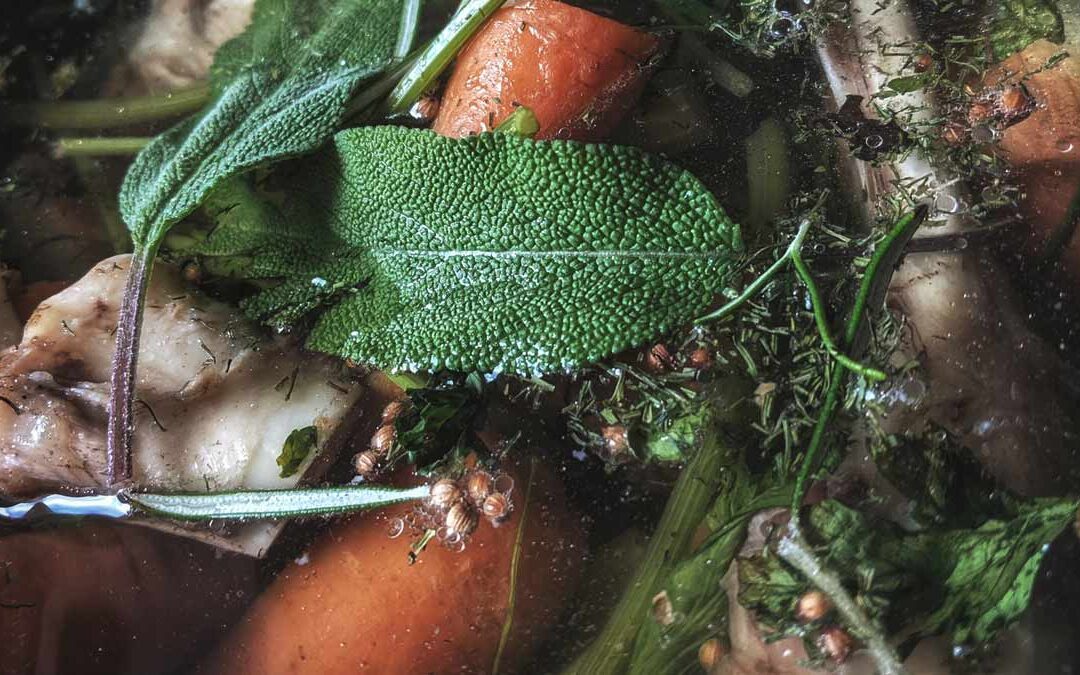
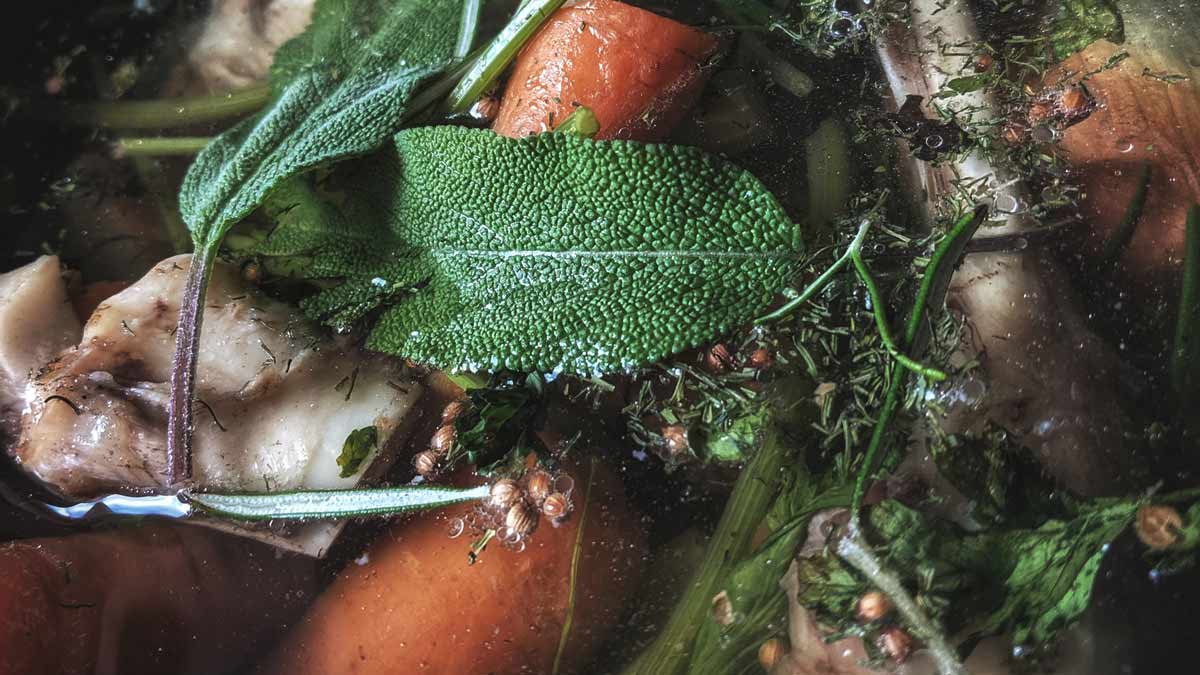
Bone broth

Bone broth has long been a secret both of fine restaurant kitchens and food therapists, but in the last few years it has become easy to find in food markets, restaurants, and even take-out places that specialize in chef-made broths. Bone broth has now come into the spotlight.

Is it a Paleo drink? Hardly. Do we really have to discuss the plausibility of prehistoric hunters cooking bones for two days, fighting off scavengers, patiently waiting for their broth, discussing how to skim foam or when to add aromatics, all tens of thousands of years before the invention of the first cooking pot?

In the dietary branch of Chinese Medicine, cooking bones into stock is a method to extract the essence of the animal for easiest digestion and assimilation. There is something shamanic about it; we are trying to absorb the deepest digestible energy of the animal. High cuisine chefs rely on stocks for finesse and depth, but the focus in dietary therapy is on the deep resonance between the bone essence of a long-cooked stock and our own deepest level: bones, joints, blood building marrow, kidneys, reproductive system and the very special organ that resides surrounded by bone, the brain.

That’s the theory, but does it do anything in practice? I’ll leave the studies to others, but in my experience, bone stocks are extremely helpful for individuals who are depleted or run down from stressful lifestyles, overexertion, poor diet, sleep problems, specific illnesses or old age.  Drinking good bone stock is grounding, fortifying, and stimulating all at the same time.

Making bone stock at home is easy, but it’s not for the fainthearted. There are bones in there, and the best stock is made from knuckles, knees, tendons… there’s no getting around it. This may not be paleolithic, but it certainly is primal.

According to the classical teachings of Chinese Medicine, each type of bone stock has a different influence within us:

  • Beef bone broth: strengthens our constitutional health and is very anchoring.
  • Chicken stock: stimulates our immune response and is more warming.
  • Turkey and duck stock: somewhere in between.
  • Fish bone broth: often forgotten but is fantastic as both a cooking stock and a health tonic, resonating with the skeletal and reproductive level. Fish bone stock cooks more quickly (fish bones are softer and quite skinny); 6-8 hours is ideal, but even one hour will make a good fish bone broth, useful for sipping or as a base for other cooking.
  • Shellfish: offers a wide variety to work with: lobster and crab shell (more stimulating or warming, for adrenal exhaustion), or oyster and clam shell (more calming or cooling, for emotional stress).

Although not bones, broth made from dried scallops, mussels, shrimp, abalone and other shellfish are also common and important, particularly in Asian cuisine. Shellfish are constantly in the process of creating their shells and are therefore seen as particularly supportive to our own bone maintenance level. All of these stocks provide minerals, including calcium. Vegetarian stocks can also be made. To make a vegetarian stock that approximates a bone broth, use seaweed (usually kombu/kelp) and dried mushrooms. These vegetarian foods resonate at the constitutional level.  I make vegetarian stocks often, for sipping or as a soup base, and they’re ready in only 20 minutes.

Stock recipes are personal. They have been the secret of the kitchen, and rightly so. These stocks reach deeply within us, and the constitutional level of our own health is private, it’s hidden, it is the reservoir of life’s mysteries. In the kitchen, what lurks beneath the surface of an ever-so-slightly gurgling stock pot is mysterious, like what lurks below the surface of the sea.  It’s always a surprise when you see something pop up from under the surface. But the mysterious quality of bone stock is not based on the recipes being secret, rather, it’s the mysterious level at which they work within us. This is not diminished at all by sharing the recipe.  Below is my recipe for basic beef bone broth, rich enough with vegetables and kitchen herbs to be called a soup.

If this is all it takes to be an urbane caveman, I’m in.

Beef Bone Broth Recipe
Serves: 4-8 quarts (depending on pot capacity)
Prep time: 30 minutes
Total time: two days
Ingredients:
fresh or frozen beef knee bones | 3-5 pounds
leek | 1 large or 2 small, white part and some green, chunked
carrots | 3 or more, medium, chunked
celery | 2-3 stalks, trimmed and coarsely chopped
olive oil | 1-2 Tbsp
salt | 1-3 Tbsp
vinegar (apple cider vinegar, red wine vinegar, or balsamic) | 1/4 cup
dried mushrooms (black or porcini) | 6-8 whole mushrooms, 1-2 ounces if porcini (or combine)
kombu | 2 strips
bay leaf | 2
seed spices | 1 tsp each of mustard seed, black peppercorns, fenugreek seed; 1/2 tsp allspice, 3-5 star anise pods, 6 green cardamom pods
other kitchen herbs | 6 red jujube dates, 1/2 handful goji berries, peel from 1/2 tangerine or mandarin orange (omit if not available)
water | 4-8 quarts, depending upon your pot size

Shopping Note: Buy knee and ankle bones from a good butcher shop.  They will quarter them with a table saw to allow best cooking.  Marrow bones are a delicacy for some but avoid them for making broth.  We are looking for the collagen in the bone joints, not the marrow of the long bones.

Directions

Roast the bones on a baking sheet in 350˚F oven for 20-30 minutes.

While bones are roasting, coarsely chop the leek, carrot, celery and any other root vegetable that you may have ready for the stock pot (try daikon, parsnip, etc.)  Toss the vegetables into the largest pot you have, add the olive oil, start them over medium-high heat with a good pinch of salt. Add the dried mushrooms and the kombu strips. Add the seeds spices and kitchen herbs.  Use aromatic spices but avoid hot peppers or garlic; those spices are too stimulating to be used here for best health.  Bone broth resonates with our deepest level of health, a level that deserves the cook’s respectful support and should not be overly stimulated.

When the bones have browned, move them from the oven to the stock pot (discard the fat they give off). Cover with plenty of water (your pot should be about 3/4 full of water). Bring to a simmer but not a full boil—boiling can turn the broth cloudy and slightly bitter.  The stock should have a slow-rising bubble every few seconds, no more.

Add the vinegar (I often include two or three types of vinegar to add complexity). The acidity of vinegar draws calcium and collagen from the bones into the broth.  The finished broth will not be acidic.

Simmer, partially covered for one or two days, non-stop. I often let bone stock cook for two and a half days. Check periodically that it is hot enough for an occasional bubble but not hot enough to reach a true boil. Too cool won’t extract essence from the bones and could at least potentially allow some bacteria to grow; too hot and the stock isn’t of the highest quality. Add water if needed.

After a day or two, pour the stock through a strainer into another pot, and discard the bones, vegetables and herbs. When cool enough, ladle the strained broth into refrigerator containers; refrigerate overnight. Fat will separate to the top for easy removal and the stock will show its character by congealing through the natural gelatin from the bones. Some may wish to reserve the beef fat for other uses, but fat is not needed in the bone broth itself—it’s the essence from bones and vegetables rendered through the cooking process that we’re after.    

Warm portions in a saucepan to use. Some people like to sip bone broth straight, others like to open its taste by diluting it with some warm water. Salt to taste as desired. For superbly nourishing cooking, use beef bone stock as the foundation for soups, braise dishes, sauces and stews. For the home cook, the addition of a great stock is the secret you need to match fine restaurant cooking.


Andrew Sterman is author of Welcoming Food: Diet as Medicine for Home Cooks and Other Healers, available Fall 2019. He sees patients in New York City for Chinese medicine dietary therapy, medical qigong and meditation.  Mr Sterman began studying cooking in 1988 at the Natural Gourmet Cookery School and at the same time entered Chinese medicine through qigong and tai chi. In order to deepen his understanding of food energetics, in 2001 Mr Sterman began formal study of Chinese herbal medicine, diagnostics, medical theory, and dietary therapy with Daoist master Jeffrey Yuen. Mr Sterman writes a regular dietary column for the Golden Flower Chinese Herbs newsletter.  In addition to his extensive travel schedule, Mr Sterman teaches food theory and practical home cooking in Manhattan, where he lives with his family. 

andrewsterman.com/food

Fermented

Fermented

Fermented

By LouLou Piscatore

FOOD

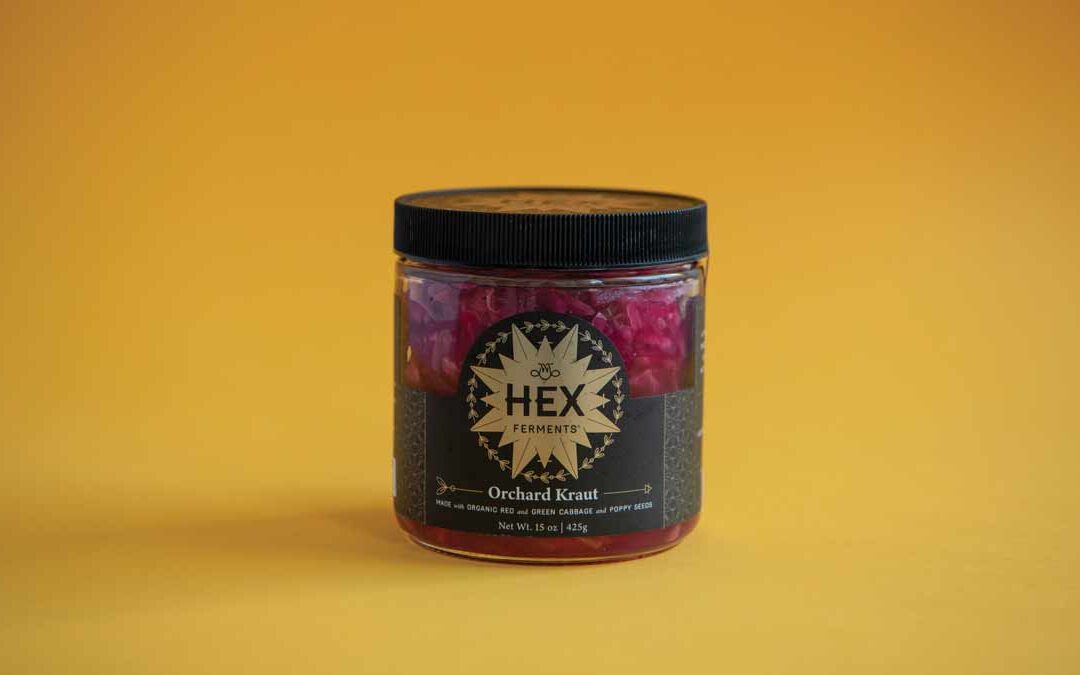
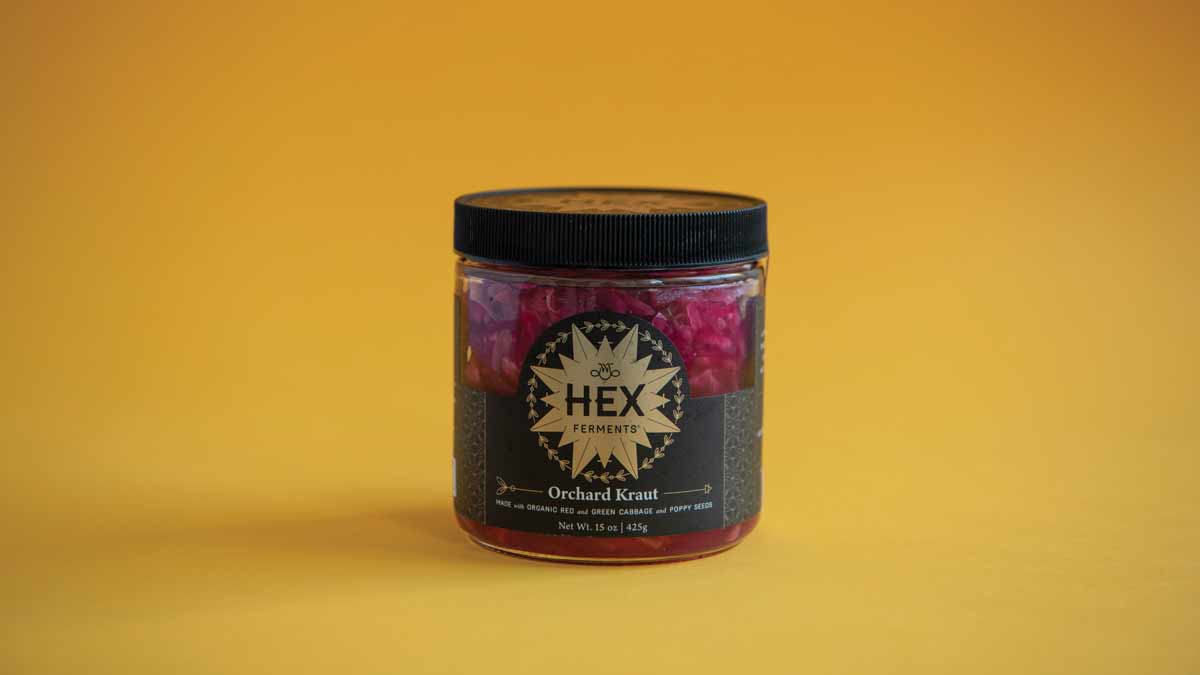
HEX brand Fermented Sauerkraut
Fermented foods have shown up for thousands of years in almost every culture in the world.  Historically they have been a way to preserve the harvest and make foods more digestible. We now understand that fermentation transforms food —enhancing nutrients, while adding naturally occurring probiotics (healthy bacteria) to the diet. In recent years, naturally fermented foods have been getting a lot of attention because they help strengthen the gut microbiome —the “good bacteria,” or “gut bacteria,” that live in your digestive tract. These healthy bacteria impact our digestion, immune system, heart health and even our mental health.

To learn more I chatted with my friend Meaghan Carpenter, an honest to goodness “Food Alchemist,” and co-founder of Hex Ferments.

What are fermented foods?

Fermentation is a process of microbial transformation that can be achieved using sea salt for vegetable ferments, a culture (like kombucha and kefir), an active starter like sourdough or yogurt, or inoculated and left to grow like koji spores on rice for miso.” What is created is a “living food,” which contains live, healthy bacteria or probiotics.

The fermentation process for veggies involves cutting or shredding to create surface area, and adding salt, “which releases water and exposes the sugars and nutrients that the lactobacillus bacteria need to grow and thrive. In a short time the vegetables transform into tangy, nutrient-dense and probiotic-rich sauerkraut, kimchi or pickles.

Why are fermented foods important?

They make anything you are eating instantly more bioavailable. There is a reason why you get a pickle with your sandwich or kraut on a hot dog. Fermented vegetables help our bodies to break down fats, nutrients and coat our digestive organs with beneficial bacteria that will make digestion and assimilation quicker and more efficient.

They are important for healthy gut bacteria, which is important for a healthy immune system, and even impacts mood. “90% of our immune system and serotonin is produced in our gut. Both are impacted by our gut bacteria. The more of a diverse bacterial environment you have in your body, the stronger your immune system. And it will help keep you happy! (Serotonin is the ‘feel good’ brain chemical.)

And they add fiber, vitamins and minerals that are already pre-digested. Think of your gut as a lush rainforest that you need to keep in balance with daily doses of delicious sauerkrauts, kimchi and kombucha tea. The more lush your forest the better you feel. So when you are feeling over-indulged, bloated, hungover etc. reach for a bite of sauerkraut or kombucha.

Not all fermented foods are created equal

To get the benefits of “living food” look for fermented vegetables that have been made using just sea salt and left unpasteurized. This ensures that the process has been done traditionally and not using a shortcut like vinegar. Look for the words “naturally fermented” on the label, and for telltale bubbles in the liquid when you open the jar.

Or make your own! Here’s a recipe from Hex Ferments for a quick Local Winter Kraut:

INGREDIENTS:

  • 5 pounds green cabbage
  • 2 pounds napa cabbage
  • 3 medium carrots
  • 5 small red turnips
  • 1 small onion
  • 1 Bosc pear or apple
  • 5 cloves garlic, minced
  • 2 tablespoons grated ginger with skin
  • 1 orange juiced, approximately ¼ cup
  • 1 to 2 teaspoons dried pepper or to taste (Espelette, cayenne, or jalapeño)
  • 4 to 6 tablespoons coarse sea salt (taste after 4, then salt to taste)


DIRECTIONS:

  1. Wash produce well, and remove any bad parts. Reserve 5 to 6 outer cabbage leaves, set aside. Cut cabbage into 4 sections, and remove the core. Slice produce into thin, bite-sized pieces.
  2. Place everything in a large bowl, add salt, spices (wear gloves if adding hot pepper!) and orange juice. Mix and massage with your hands. Squeeze! Work those veggies! Work salt into the produce well to release the water and create a brine.
  3. Once a nice pool of brine has collected in the bottom of the bowl, approximately 2 to 3 cups, pack vegetables into a clean, 2-gallon crock or wide-mouth glass container. Be sure to push down with your hands to remove air pockets. After all vegetables are packed in to the jar, press down well so that the brine covers the surface, creating an anaerobic environment. Layer reserved cabbage leaves onto the surface of the kraut. Place a weight (a plate topped with a jar filled with water works well) over the surface, cover the top of the vessel with a clean towel and secure with a rubber band. Kraut should be covered in its brine with room at the top of the vessel to allow for expansion over the first few days of active fermentation.
  4. Date outside of the vessel and place in a location that is away from direct sunlight, and maintains a relatively even temperature; 64-72 degrees is ideal, higher temperatures will speed up fermentation, cooler temperatures will slow it down.
  5. After 5 to 10 days, active fermentation will slow as lactic acid bacteria begin to take up residence. Kraut will continue to ferment vegetables into sour, tangy Winter Kraut. At this point, jar up kraut into smaller portions and refrigerate or take what you want from crock and enjoy its flavorful changes until it’s all gone.


Different types of fermented foods

Kombucha: a fermented sweetened black or green tea drink

Kvass: fermented sauerkraut or beet juice.  In slavic cultures it is made from rye bread.

Yogurt/Kefir: milk fermented by added bacterias

Kimchi: Korean salted and fermented vegetables (usually napa cabbage and Korean radish)

Sauerkraut: finely-cut raw cabbage fermented by lactic acid bacteria.

Miso/Tempeh/Natt: fermented soybean products

Sourdough: bread made with fermented dough using naturally occurring lactobacilli and yeast

Olives: brine cured and naturally fermented

Pickles: vegetables fermented in brine (not vinegar)


Meaghan Carpenter is a “Food Alchemist” and Co-Founder of HEX Ferments, an award-winning, Baltimore-based fermented foods company. HEX Ferments specializes in creating living foods (sauerkrauts, kimchi, pickles and Kombucha) from local-organic and sustainably grown ingredients. HEX Ferments was born from a performance art piece that was a collaboration with her photographer husband. The concept of the art-piece touched on her pursuits of (re)creating gut-healthy communities centered on local food and delicious edible art. HEX Ferments has been nationally and internationally recognized for its creations, sustainability practices, fermentation education and advancing the frontier of the fermented arts.

Find them at  https://www.hexferments.com/pages/find-us

Accessible Yoga

Accessible Yoga

Accessible Yoga

By: Lauren Cap
Photos: Sarit Z. Rogers
YOGA
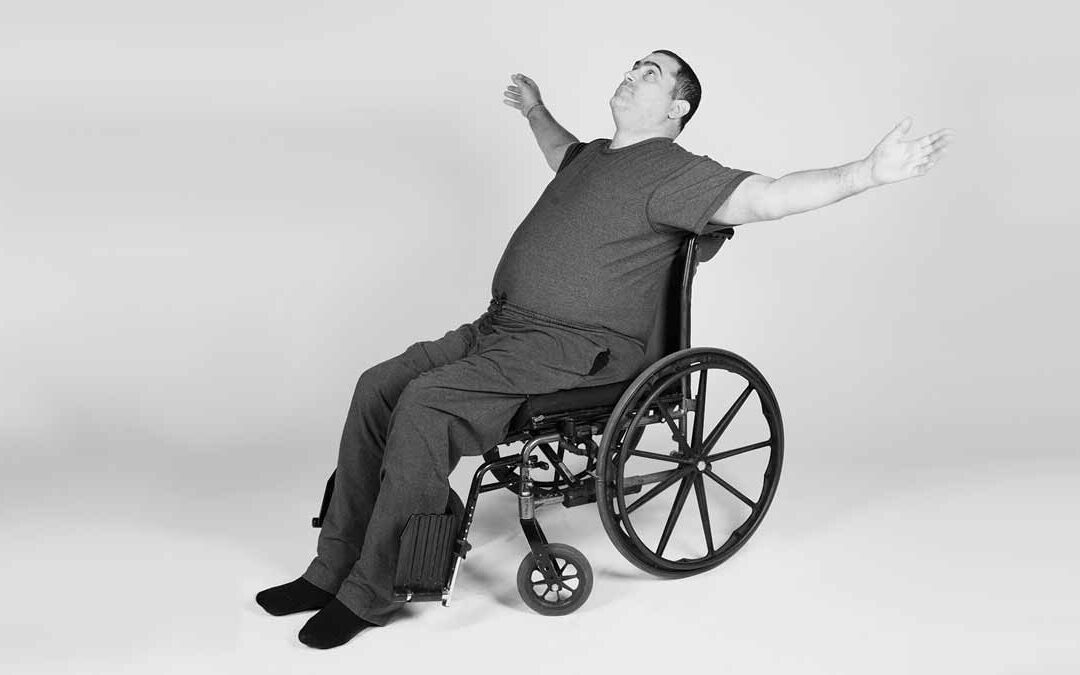
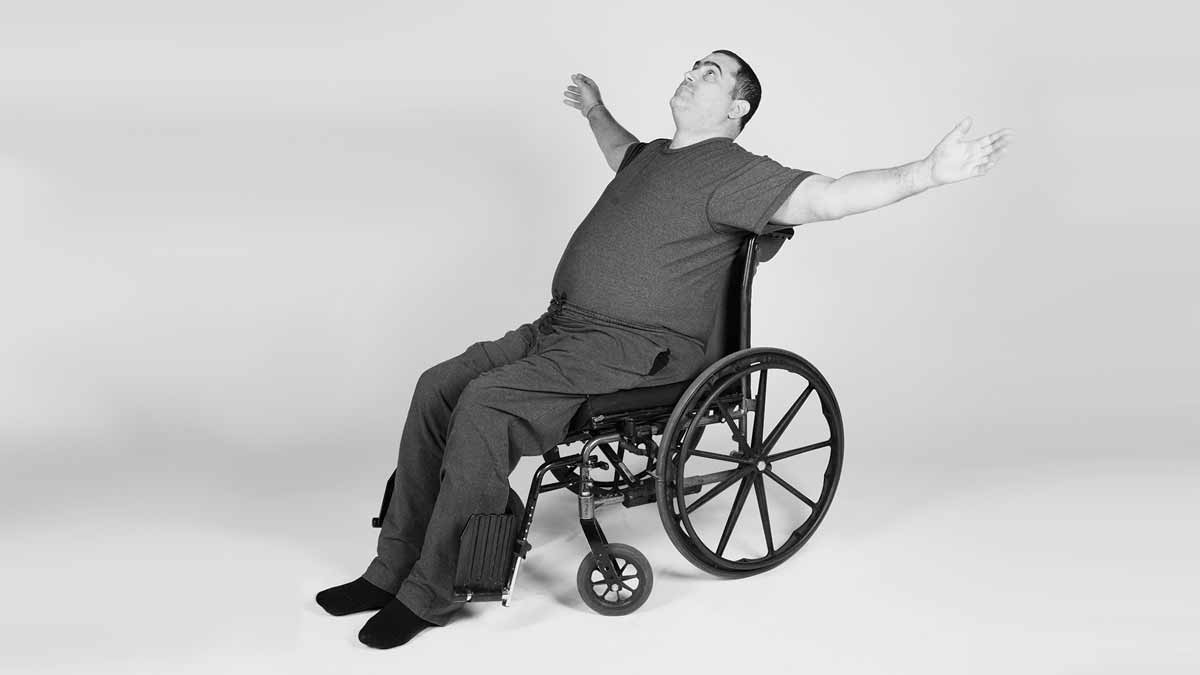
accessible yoga wheel chair yoga

Jivana Heyman, founder of non-profit organization Accessible Yoga, gives readers a gentle nudge to step into a safe yoga practice that fits the needs of any person in his book, Accessible Yoga: Poses and Practices for Every Body. With compassion and years of experience, we are guided into an accessible yoga practice, literally for every body. Yoga Editor for NY YOGA LIFE magazine, Lauren Cap had an opportunity to chat with Jivana right before the pandemic in early 2020, and shares her interview below.

I first want to thank you for creating Accessible Yoga to make yoga available to all communities with various physical abilities. It’s important to have information like this at our fingertips to remind everyone that yoga is most importantly about feeling good, not looking good.

Thank you for your interest in Accessible Yoga, and for your awareness that yoga is really about feeling good, not about how you look or what kind of poses you can do. It’s unfortunate that the image of yoga in the media is so limiting when the benefits of yoga are so powerful and are available for everyone. In fact, I often think of how it’s those of us who are struggling the most who can really benefit from yoga.

I came to yoga to help me deal with the pain and stress in my life, and I’m so grateful for how yoga has given me tools to help me with the challenges of being human. I feel like I owe a debt of gratitude to give back in some way, and my mission is to challenge those limited ideas we hold on to about what yoga is and how it works.

The most important thing for people to understand about yoga is that it is primarily a mental practice – working with the mind to reduce stress and connect with the essence of who we are. I often say, “Yoga isn’t about having a flexible body, it’s about having a flexible mind.” With that deeper understanding of the practice, it’s easy to find ways to make all the practices of yoga accessible, whether we’re talking about the poses, breathing practices, relaxation techniques or meditation.

The use of pose orientation in this book is very creative as we are able to maintain the elements of the traditional practice while offering an accessible way to receive the healing benefits of yoga. How do you empower practitioners to look beyond their physical limitations and feel confident in their Accessible Yoga practice?

I think knowledge is power, and one of the challenges in yoga is that there’s this feeling that the classical poses can’t be adapted or somehow they lose their power. Most of the poses we’re practicing these days evolved over the past few hundred years. It’s really the philosophy, meditation and breathing practices that are most ancient. The more people understand the underlying benefits of individual poses, the more they can find those benefits in different variations. That’s the way I’ve organized my book – trying to help people look beyond the superficial appearance of a pose and consider why they’re doing it. The “why” of a practice is the key to adaptation and accessibility.

What are some challenges you’ve witnessed from students who may be reluctant to a practice that doesn’t resemble what they see on social media or magazines? How do you work with your students to identify those needs to create a safe space of acceptance?

Safety and acceptance are the two most important elements of a yoga class. I want people to feel like they belong in the space, and that they will be safe – physically and emotionally. In order to do so, I often directly address the misrepresentation of yoga in the media. I try to teach my students about what yoga is – working with the mind to connect with the heart.

The main challenge that comes out of the misrepresentation of yoga within yoga classes is the idea that more is better. I constantly see students straining and potentially injuring themselves. It can take experience to learn about how far to go into poses and how long to hold them. I worry that with the competitive nature of our Western culture, many people are getting hurt in yoga. I also worry about the emotional suffering that people experience in yoga classes – feelings of not being good enough, or that they don’t belong.

There’s a common phrase, “The students are our teachers.” Along with your extensive training and experience, do many of these sequences and alternative practices come from practitioner feedback?

Yes, pretty much everything I teach comes from collaborating with my students and from other teachers who have inspired me. A key element of accessible yoga is collaboration, which is based on the idea of seeing the student as your equal and lifting them up. The traditional teacher/student hierarchy can be disempowering and lead to many problems, including much of the abuse we are seeing in the yoga world.

Collaboration is a key element in my teaching because it asks the student to step into their inner wisdom and sharpen their awareness. It can help them take on their yoga practice in a more profound way. In many ways, my goal is to make the students independent yoga practitioners who aren’t reliant on me. The more they feel that they have their own practice the more yoga will become an important part of their lives.

How has your personal practice changed over the years from when you first started?

I’ve been practicing yoga intently since I was in my early twenties, and now I’m in my early fifties, so a lot has changed. As my body ages, I try to find a practice that is supportive of my wellbeing in every way. When I was younger I would push myself into some of the more gymnastic poses, but after a lot of injuries, I’ve finally learned my lesson.

Nowadays, I don’t plan what I’m going to do when I get on the mat. I like to take a moment to notice how I’m feeling and consider what will be most supportive of my body and my mind in the moment. In fact, my mental state may be the most compelling part of my daily practice. I ask myself, do I need a more inward, slow, gentle practice with restorative poses and longer pranayama? Or do I need a faster, fun practice with music? Is there a part of my body that needs to be protected, strengthened, or stretched? Each day is a new adventure.

I realize that for a new practitioner that might be too much to take on. In the beginning it’s fine to do the same practice every day and notice how it feels. Gaining sensitivity to what’s happening inside your body. Introspection is an essential skill that comes with practice. Also trying out all different styles is a great way to learn about all the different tools that yoga offers.

What has surprised you the most since founding Accessible Yoga?

I’ve been most surprised by the incredible reaction I’ve gotten, and how much this work resonates with so many people who love yoga deeply. A big part of the mission of Accessible Yoga, the non-profit, is to support yoga teachers who are making yoga accessible. I’ve been amazed by the work that yoga teachers are doing all over the world. These are teachers who are serving day after day to bring yoga to communities that have been disempowered or underserved. They are often serving without recognition, and sometimes without even getting paid!

Wherever I travel, I meet yoga practitioners and teachers who have found the power of yoga and are sharing it with others. Their dedication and service is what propels me to continue to work for greater understanding and to break down barriers to access. All the issues that limit access to wellness also limit access to yoga – racism, sexism, ableism, homophobia, transphobia, etc., are all issues in the yoga world.

Physical adjustments in class has been a hot topic recently. To quote you, “Ongoing consent means that just because a student gives you consent at one point in class doesn’t mean that you have consent to touch at another time…Ongoing consent means that we open up a dialogue with our students during class…you can create an environment where declining touch is accepted and even celebrated, where students are learning to connect with themselves and speak up for what they need.” Do you have any additional comments on this topic?

It’s very important that we have more discussions in the yoga community about the lack of consent for touch that is happening in a lot of classes. Most of us weren’t trained in how to gain consent from our students, and we assume that hands-on adjustments are what the students want. I think we’re just starting to address this issue as a community, and I’m sure we’ll see more policy changes in the coming years to create more clarity around this topic.

The first thing we need is a clear scope of practice for yoga teachers, as well as a thorough code of conduct. We currently don’t have either, and it means that many yoga teachers are offering touch, adjustments and other practices without appropriate training. It also means that as a community we don’t have clear guidelines to follow to keep students safe.

Ironically, the real power of yoga resides in its ability to calm the mind and allow us to turn inward. I think we need to turn to the heart of yoga, which is already accessible, in order to make the practice safer and more effective for all our students.

Learn more: jivanaheyman.com

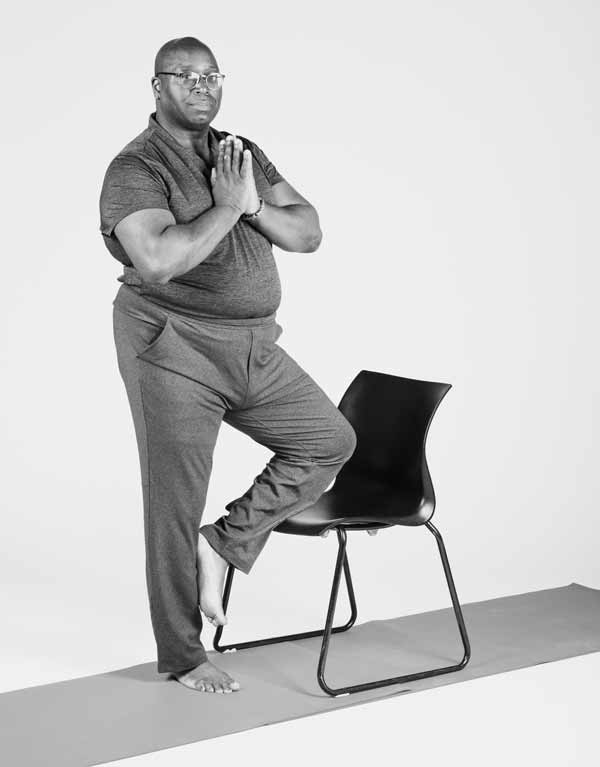
accessible yoga chair yoga
A 4-Pose Self-Care Chair Sequence for Working At Home

A 4-Pose Self-Care Chair Sequence for Working At Home

A 4-Pose Self-Care Chair Sequence for Working At Home

By Allison Jeraci
Photos: Miko Hafez
YOGA
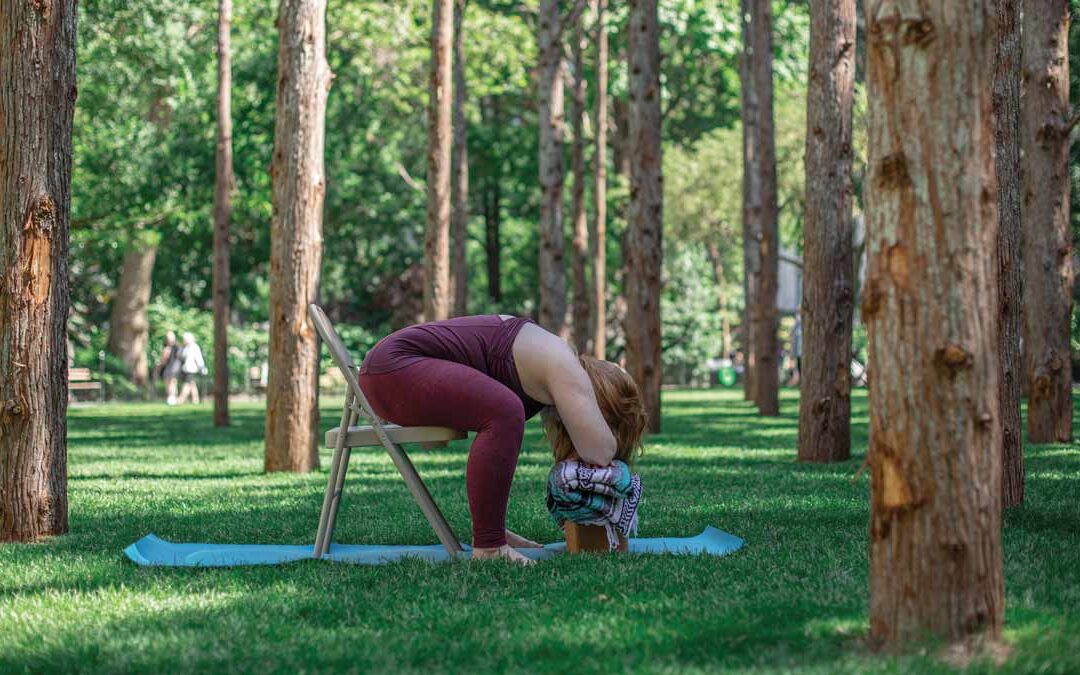
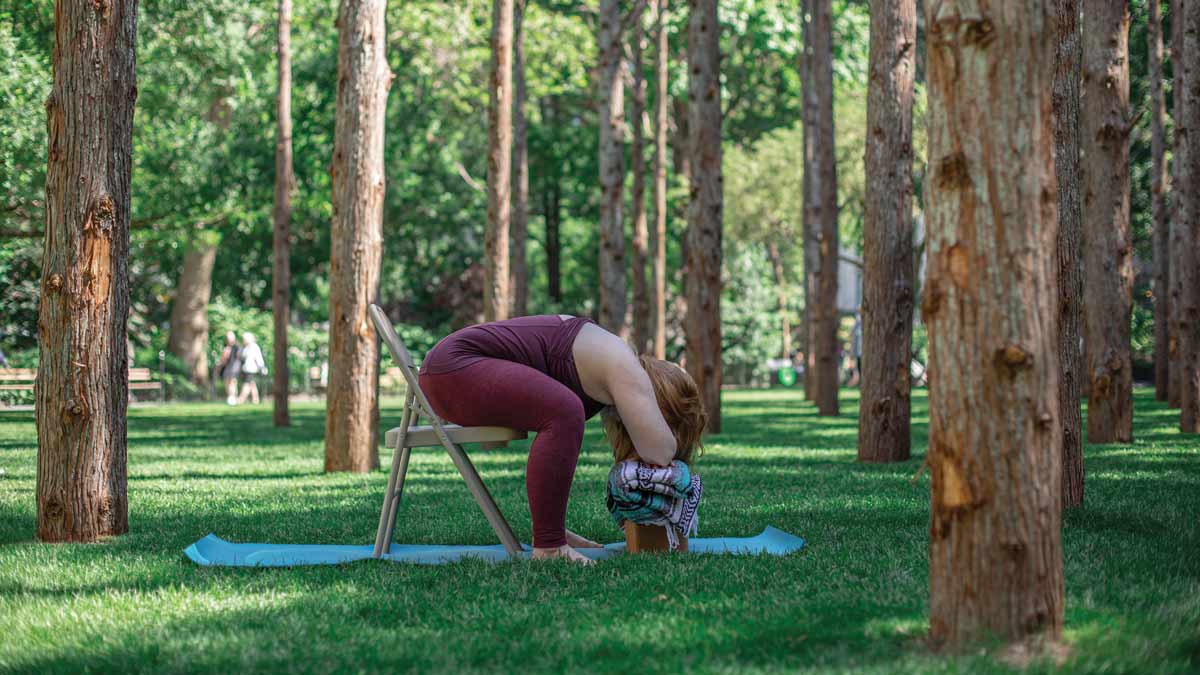
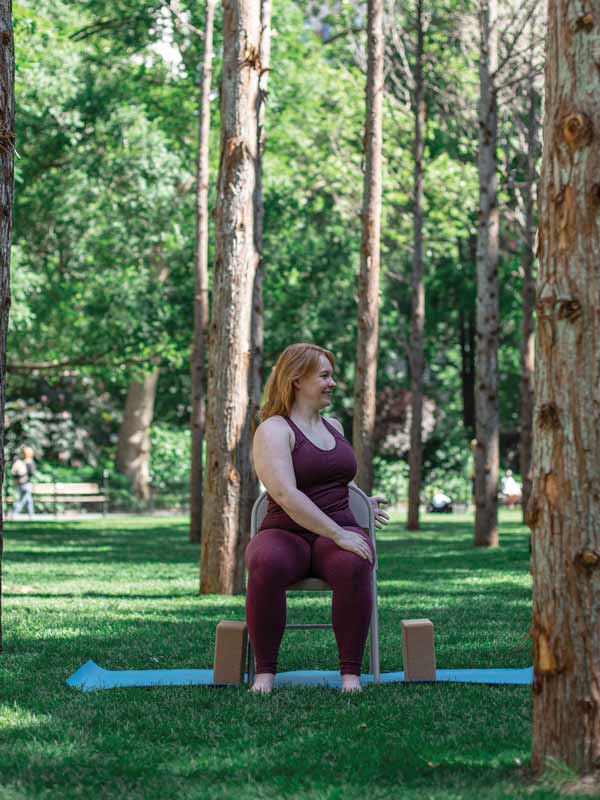
Chair Yoga in the park

With more people working from home due to the COVID-19 pandemic, there have been a few silver lining discoveries for some. Cutting down travel, spending more time at home, avoiding awkward or negative workplace scenarios, and the occasional “wear your sweats to work” dress code are all benefits of the virtual office. But one challenging arena to navigate is finding work-life boundaries. You may have noticed you’ve been working longer hours than usual from the comfort of your home and find yourself taking fewer movement breaks. Maybe those trips to the water cooler weren’t so bad? Periodic movement throughout your workday helps release unwanted tension and unburden your mind.

Here is a gentle and feel-good chair yoga sequence you can do right from your desk that helps counteract those long hours of sitting.

Neck and Spine Relief

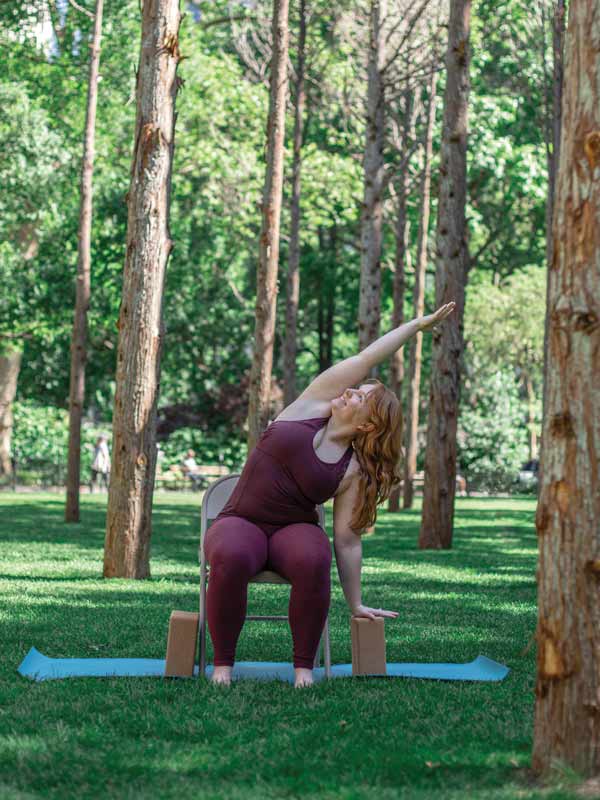
Maybe you’ve been leaning into the excitement of your work or slouching into the comfort of your couch. This side bending pose can help you rebalance your spine, release a tense neck and stretch your intercostal muscles to facilitate better breathing.

Start seated in your chair with a neutral spine. Lean your right ear towards your right shoulder and straighten your left arm down alongside your chair seat. Take a few breaths here, sensing the elongation of the side of your neck. Then allow the rest of your spine to follow suit by side bending to the left and reaching your left arm overhead. You can walk your right hand down the side of your chair or support your hand on a block. Take 3 to 5 deep breaths as you observe the movement of your left side ribs. Next, lower your left arm to hang heavily by your left side while you slowly rotate your neck to look down towards your right hand and then up towards the ceiling. Do this for a few cycles. When you are ready to change sides, center your head and bring your torso upright.

Dynamic Twist and Lift

When your back is feeling achy, and your breathing feels off, try this dynamic combo. Begin seated with a neutral spine. Take your right hand to your outer left thigh and support your left hand on the chair seat or chair back (do the one that feels natural in your body to do. Inhale, and as you exhale, turn to the left. Breathe smoothly and steadily rather than forcing a deeper twist. On an exhalation, unwind your twist. Then hold onto the sides of the chair slightly behind your hips, and lift your chest. Stay for a breath or two, then repeat and turn to the right. Do this for as many rounds as you need.

Lunge It Out

Does it feel difficult to stand up after being seated for a while? Give your hip flexors some love with one or both of these supported lunges.

For the first variation, begin seated and turn your body to the left so that your left shoulder faces the chair back and your feet are on the floor. If they are not, try using blocks under your feet. Lean your torso forward as you step your right foot back, maintaining your left hip and back of your thigh on the chair. Straighten your right leg and take a few breaths. Then bring your torso upright and bend your right knee so that the feeling remains in the front of your right hip. Stay here, or lean your torso to the left as you support your left hand on the chair and lift your right arm overhead. Stay for a few breaths, then release your right arm, lean over your left thigh to step your right foot forward, and come upright to sit. Swivel around to change sides.

The second variation is done standing. Stand behind the right side of the chair and place your left foot in the center of the chair seat. Take your hands to the chair and walk your right foot back some. You can keep the ball of your right foot on the floor or drop the heel to the floor for more balance. Steady your legs, and when you’re ready, lift your torso and reach your arms overhead. Stay here or take your left hand to the chair back and side bend to the left with your right arm overhead. Take a few deep breaths as you press the ball of your right foot into the floor and observe the sensation along the front of your right hip. To come out, lift your torso upright, take your hands to the chair seat to step your right foot forward, and then step off the chair. Stand in tadasana for a few moments before changing to the other side.

Soothing Forward Fold

The chaos of the day usually catches up at some point, so having a few moments of quiet can go a long way. This forward bend can help soothe your nervous system by decreasing the stimulation of your senses.

Begin seated with a neutral spine and your feet wider than your chair. Press your palms into the tops of your thighs as you elongate your spine. On an exhalation, tip your pelvis forward and then round your spine. Support your forearms on blocks on the floor or thighs. Use a blanket for additional support. Close your eyes or soften your gaze and sink into that sweet feeling of release.

Working from home carries the incognito weight of defining clear boundaries between work and rest. As you take on that challenge, these poses can serve as a reminder that small increments of activity can reduce stress and tension while taking care of your body and mind while you work.


Learn more: allisonrayjeraci.com

Chair Yoga in the park
Functional Medicine and Adrenal Fatigue

Functional Medicine and Adrenal Fatigue

Functional Medicine and Adrenal Fatigue

By LouLou Piscatore

photo credit: Chas Kimbrell

LIFESTYLE

Yoga Plus Magazine - adrenal fatigue - Photo by-Chas Kimbrell
Adrenal fatigue is a phrase we hear often in the wellness world, but what is it? As a licensed  acupuncturist, I can say that the majority of what I treat can be described as stress related health issues; imbalances in the body created or exacerbated by prolonged and repetitive stress. Everyday I see how almost every bodily function is affected – digestion, sleep, immune function, blood pressure, pain, fertility, mood, hormone health and more. Recently the World Health Organization recognized “burn out” as a diagnosable condition (1), perhaps opening the door to more exploration on how stress impacts our health. But how are the adrenals involved? And what happens when they get “fatigued?” I reached out Dr Miriam Rahav, a dual certified physician of internal medicine and functional medicine doctor, for some answers.

  1.  https://www.who.int/mental_health/evidence/burn-out/en/

What is functional medicine? How is it different than standard care? And what are the kinds of things that you treat? 

In functional medicine, we say that we want to work on root cause resolution. This depends wildly on the human sitting in front of me asking for help and the entire constellation of their being. 

My formal training is as a general practitioner. If someone came in with high blood pressure, there are specific definitions…there is a bit of nutrition counseling, and of course, a lot of medications. We had tools, but we also had a certain time allotment in which to use those tools. And what I saw happening, which made me incredibly sad, was that if the tools weren’t working, there started to be almost a dread of that patient – you wanted to solve that problem, but you didn’t want to be in the room with a patient who had a problem you could not solve within five or ten minutes. I watched kind of the unraveling of the sacredness, the beauty, or the joy that could be in a provider-patient relationship.

That’s standard care.

Yes, that is the standard of care and it’s incredible that we know what we know. It comes from a depth of study and understanding of the body. But sometimes someone would come into my office and they would have diabetes, hypertension, high cholesterol, but they would also not feel well and not feel themselves. I could give them the medications and they’d say, “But Doc, I still don’t feel well…is there anything I can do other than the medications you have prescribed?” I wanted to be able to meet the requests of these humans who were not feeling well, who were vulnerable and who were asking me for help.

It’s more intuitive to explain functional medicine through the lens of a human being and the problem, and what I call a 360-degree wraparound plan of care. But it wouldn’t just be a laundry list of things that might just be good for you to do. It would be based on that person’s biology.

For example, during my residency in the Bronx, there was a lack of access to fresh foods. And so sometimes my therapeutic plan of care would be sussing out the farmers market schedule, how they would get there, did they have transportation, etc. And then if they were able to buy those fresh foods, how would they cook them and I would Google recipes and print them out. 

So it is a 360-degree approach to the entire person. What is going on in their life, what their lifestyle choices are, what they are eating, what their stress levels are, And personalizing care for that person?

Right, what their genetics are, what their environmental exposures are, and every human who is struggling with a health imbalance will have antecedents -–those could be myriad. We think of it as the functional medicine matrix. We look at all of the factors influencing a person’s health, including social, cultural, life circumstances, everything.

For example, not being able to get fresh produce in the Bronx…

Right. That might be an antecedent because it puts you at risk for vitamin and mineral imbalances, or blood sugar imbalances. And then there are triggers – where your body is maintaining a certain balance and then something pushes you over the edge. Maybe it’s a big life stressor, maybe it’s getting an acute illness, or taking a course of antibiotics, which can begin a kind of a snowball. Maybe someone says, “Well, my digestion wasn’t good but then my husband filed for divorce and ever since then I’m so bloated, and I look like I’m pregnant.” So, there might have been an antecedent, but there’s also a trigger. And then there are certain things that might perpetuate that imbalance. Once that imbalance is in place, certain foods might be feeding the wrong population of gut flora that are perpetuating bacterial overgrowth, or yeast overgrowth, which could manifest in fatigue, joint pain, and headaches. It might be a seemingly unrelated constellation of symptoms that come from a similar root cause. so, we would think about it in terms of the functional medicine matrix – what is contributing to that health imbalance, what was the trigger, what were the vulnerabilities that allowed that trigger to push them over the edge,and we address as many or all of those pieces of the puzzle as we can to bring the person back into optimal balance. 

You take the time to figure all of that out, which separates you from standard care.

When humans come to me, who I call in my mind and in my heart, “partners in healing,” because it really is a healing partnership, they’ve gone to other physicians, sometimes many, who have done their utmost within the scope of their training to advocate, to investigate, and to treat my partner in healing.  

But their tools are limited.

The tools are limited. And also the system is limited. What I started seeing happening in my early training and residency, within the time allotment and with the tools we had, we started to experience failure. And I really love and respect my colleagues. However, if all the tools that I acquired with the intention of being of service have not been able to answer the need of a patient, what functional medicine does, is it expands the menu. It’s evidence-based medicine the way I was trained, but expanding the toolkit.  

Let’s talk about adrenal fatigue or “burnout” 

Our adrenals are little glands that sit like little snow caps on top of our kidneys. Our adrenals are chiefly responsible for making cortisol. And the reason I say chiefly, is because the adrenals also make other wonderful hormones. In medical training, we had a mnemonic for the function of the adrenals; it was sugar, salt, and sex. Sugar is cortisol – cortisol raises blood sugar, and that’s the stress response. We have evolved over millennia to be able to escape from the bear who’s chasing us. We survived because we mounted a stress response, which either gives the energy to climb up a tree or run really fast, or fight. To be standing here today, we had to be able to mount a massive stress response – that is tied to our survival. And that’s cortisol. But there are all these other interesting hormones that the adrenals make. There’s one called aldosterone, which helps us with salt balance, and is part of regulating our blood pressure. And sex hormones. We think of the ovaries or the testes as making our hormones, and that’s true, but the adrenals can also make those hormones. The adrenals make estrogen and progesterone and testosterone. So, if there is something that is causing stress in our body, it affects our adrenals, which essentially affects everything. 

This is always an interesting conversation that I have with people, sometimes they say, “But I’m totally relaxed, my life is great, my kids are doing well, I love my job, my partner is supportive.” But that is only one level of stress – there are others. What if your drinking water has lead and you’re amassing a load? That’s stress on your body, You don’t feel it as an emotion, but that’s a huge stress. 

So, stress can be physical OR emotional… 

We are complex. Every human being is a universe, and is as complex as the universe itself. And in that universe, we have any number of stimuli. It could be light exposure, or exhaust from cars, or a check bouncing and not being able to make rent, or your boss yelling at you, or a food sensitivity. Anything that the body could experience as stress, whether you experience it as an emotion or not, the body will need to respond to with a stress response. Infinite possibilities of stimuli and one response. The body has a finite number of responses. What can the adrenals do? They can make cortisol, or they can make cortisol. Therefore, we have to look at the adrenals with that same 360-degree approach. How will overworked adrenals manifest? When we have a stressor and the adrenals respond, they make more cortisol. But that’s a process and it requires resources. We need our B vitamins, vitamin C, amino acids. If one of our stressors is that we have a chronic gut infection that is starting to affect our ability to assimilate those nutrients, we may be revving up the adrenals, but we’re not able to assimilate the ingredients they need to replenish themselves. 

Another way the adrenals replenish themselves is while we rest. Sleep is a huge way that we replenish the adrenals. What if we’re running on empty, and we also have insomnia? We can start to understand how, over time, the adrenals get taxed, and can lose their ability to compensate. That’s usually when people walk through my door. 

At first, cortisol is anti-inflammatory. In a stress response, we don’t feel pain – it’s a survival technique. That’s what allows us to fight the bear even if the bear tears open a flesh wound.  That’s part of how we survive. But the converse is also true. When we can no longer mount a cortisol response, we’re going to have pain. An extreme version of this is fibromyalgia, which is just total body pain. Or the adrenals are involved in blood pressure regulation. So, someone  who says, “when I change positions from sitting to standing, I start getting lightheaded.” That’s the inability of the body to maintain the blood pressure related to aldosterone (adrenal) deficiency. These are all signs, symptoms that our adrenals are depleted.

 The symptoms I would associate with adrenal fatigue are fatigue, first of all, weight gain, hair loss, and depression. 

You’re actually naming a lot of the classic signs and symptoms for hypothyroidism. They are related. One of the interesting things that goes beyond laboratory evidence is that when your cortisol is high, it can actually block the function of the thyroid on a cell level. You can have thyroid levels that look kind of within normal range, but you can still have functional hypothyroidism. If you have adrenal imbalances over time, it will affect the thyroid. And of course sex hormones. Sex hormones are the last priority. So, if sex goes, it’s one of the signs that hormones are off, that the body is under stress. When sex comes back it’s a sign that your hormones are reconstituting. There’s a pyramid (for hormones) and the base, the foundation, is adrenals  (then thyroid, and then sex on top). 

On that note, let’s talk about the importance of rest.

Cortisol follows a circadian rhythm. If cortisol is in balance it should peak within 20 minutes of waking. In fact, in a normal sleep and wake cycle, cortisol should rise as light hits the back of your eyelids. If we’re not mounting that peak, we don’t feel like we’re awake, we don’t feel like we can get out of bed. That’s a cardinal sign of the adrenals burning out. Or someone telling me, “I have a really hard time getting up in the morning, can’t open my eyes until that first cup of coffee.” Some people need a nap at 4pm, but then get a second wind, and are up all night. That’s adrenal imbalance. It’s like waves. The top of the wave should be in the morning and then you have this gradual going down, down, down, and then the bottom of the wave should be the feeling of, I’m ready for bed, I’m going to call it a night. Ideally, we’re hitting that before midnight, and we’re going to lie down, to get that deep, restful sleep, that replenishment. It’s the time when our brain detoxes, our liver detoxes. If instead, we started low in the morning, and we go from low to high instead of high to low, we’re not going to get restful sleep, and that can create a vicious cycle where we’re not getting the rest we need — we’re not replenishing.

Let’s talk about that, because the modern lifestyle changes makes that kind of natural rhythm nearly impossible for most people…people are working 24 hours a day.

Well, now we have technology. I’ll share something that I love from a brilliant functional medicine gynecologist named Bethany Hayes. She asked this question: “How many of you go to sleep when sleepy arrives?” It’s such a simple question. And the answer is we don’t, we push back sleepy, because we have a deadline, or read stories to your kids so that they can go to sleep, and then get things done for tomorrow, and place orders on Amazon Fresh. Oftentimes it involves blue light and the screen,which blocks melatonin. So we are not getting that sleep, we’re not restoring our adrenals. We’re living in that perpetual state of yin deficiency, or parasympathetic deficiency and sympathetic drive, which burns the adrenals out over time. Even if there isn’t something specifically stressing out your system, just the lack of downtime, the lack of rest, of deep, nourishing rest is going to affect your health.

Recently, the World Health Organization recognized burnout as a diagnosable condition. How do you feel about that? 

Breaking the silence on burnout is a huge conversation. For example physicians and nurses. There is a great opinion piece, by a physician named Danielle Ofri in the New York Times about the exploitation of doctors and nurses in a system where we have a ratio of 10 administrators to one healthcare provider, and how there’s no more operational efficiency that can be optimized. It’s impossible for a doctor to do the right thing within the 10 or 15 minutes that we’re allotted, so we give of our own time. And so there is burnout. In the physician population, we have the highest rate of suicide of any profession. I’m deeply committed to speaking out about this. I’m very involved in a wonderful organization called the Gold Humanism Honor Society which is trying to cultivate values of humanism in medicine for the humans we are caring for and the humans we are. My antidote to that is the practice of functional medicine, where I get to practice what I signed up for. I get to hold humans in their entirety and care for them in their entirety. There’s a profound insight that grows out of that work. And there is a profound exchange. And we’re able to do impactful work that helps people truly feel better, and function better. It changes your entire, not just health trajectory, but life trajectory. Functional medicine is my antidote to burn-out because it’s about becoming the change we want to see. First, as a human and then as a practitioner practicing the way I believe medicine should be practiced, and caring for others the way I wish I would be cared for. And in fulfilling those things, I have joy, and the wonderful humans I’m so honored to work with have joy, too.

Miriam Rahav, M.D. is a dual board certified physician in the fields of internal medicine and hospice and palliative medicine. Dr. Rahav also has many years of training and clinical experience in integrative medicine and functional medicine. She currently practices medicine in New York City where she is the founder and owner of Rahav Wellness,

rahavwellness.com