Yoga Plus Magazine Logo with white border
Science of Yoga – Interview With Author Ann Swanson

Science of Yoga – Interview With Author Ann Swanson

Science of Yoga

Interview With Author Ann Swanson

By: Frances Hunt
Art: Dorling Kindersley: Arran Lewis /Daz 3D
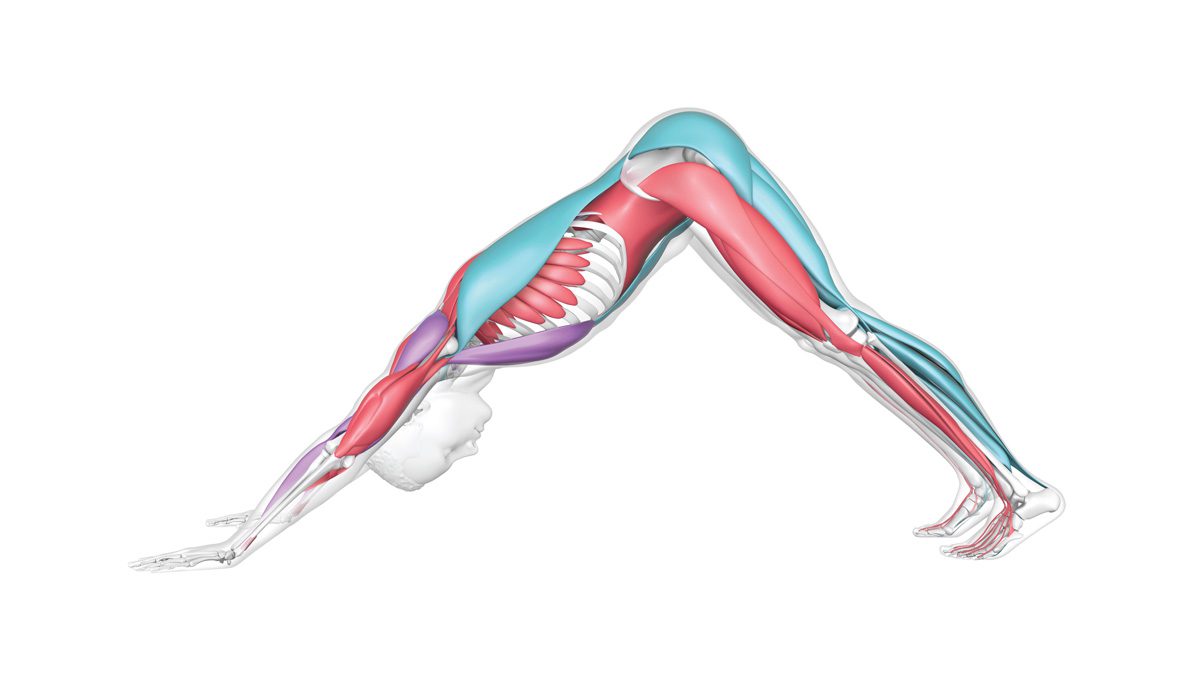
YOGA
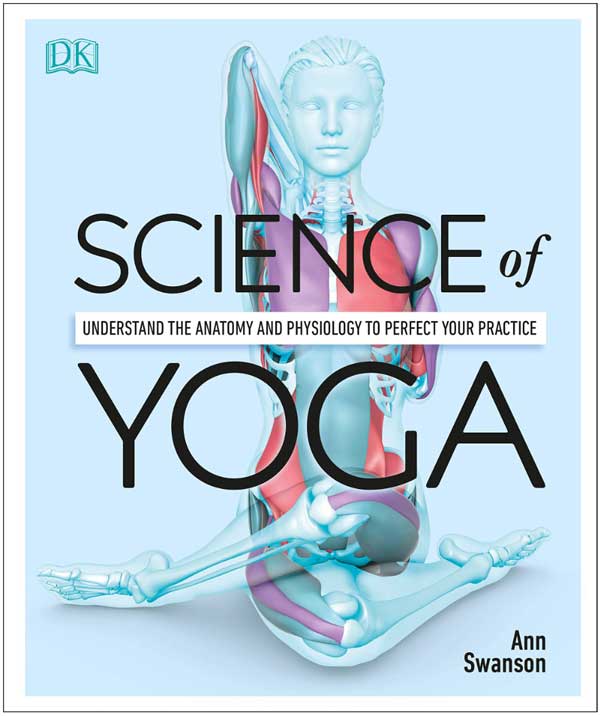
Yoga Plus Magazine - SCIENCE YOGA OF YOGA BOOK COVER
After completing my yoga teacher training, I wanted to dive deeper into anatomy but found most books too scientific and overwhelming. I immediately fell in love with the amazing visuals, relatable scientific concepts and explanations in Science of Yoga. I was beyond excited for the opportunity to interview Ann Swanson. Ann is a certified yoga therapist, speaker, and the author of Science of Yoga, which is being translated into over 10 languages. With a Master of Science in yoga therapy and roots studying yoga in India and Tai Chi/Qi Gong in China, Ann uniquely applies cutting-edge research to mind-body practices while maintaining the heart of the traditions. 

How did you discover yoga?

As a kid, I was always doing yoga, I just didn’t know it. I would spend hours thoughtfully moving and stretching alone in my room, pretending to teach my panda bear stuffed animals how to move with me. In retrospect, it was meditative for me. Then, during the crazy stress of college, I took a yoga class at the school gym. It helped me manage the stress. After college, I bought a one way ticket to China. Why China? Since I was little, I had always told my parents that I would move to China to see the pandas. So, I did. The pandas were super cool but China was tough for me. I felt isolated, depressed, and anxious. I did a lot of yoga and tai chi/qi gong to process this. That is when yoga became more than just a stress reliever. It was a life saver. I did my basic teacher training in China and the visiting teachers from India convinced me to go to India to continue my studies. My curiosity was sparked, I was hooked, and the journey began.

Your book, the Science of Yoga is filled with information on both human anatomy and asanas. How long did it take to research and write? 

The actual writing of the book took six intense months. However, it was a culmination of ten years of research and careful notes. I have always kept journals from as young as I could write. So, when I started seriously studying yoga in India with my teacher Yogi Sivadas of Kailash School a decade ago, I took tedious notes. From then on, I filled notebooks with insights from taking college courses in anatomy and biomechanics, assisting cadaver labs, workshops with master teachers, reading yoga research, and taking classes in yoga therapy grad school. I am so grateful that I took such tedious notes because when it was go time to write the book, it all came together quite quickly. 

You earned a graduate degree in yoga therapy? 

Yes, I was in the first cohort of the very first Master of Science graduate degree program in yoga therapy. It is at Maryland University of Integrative Health. It was a 2 year program that both gave me a M.S. and a C-IAYT (which means I am a certified yoga therapist through the International Association of Yoga Therapists). The program was phenomenal for me.

Was it challenging to narrow down to the thirty key poses you selected? 

Originally, my publisher DK (part of Penguin Random House) had 30 poses in mind that they wanted to do. I looked at that list and really fought for adding simple, common poses like Cat/Cow and Child’s Pose, as well as adding accessible modifications of poses using props, like a chair. They wanted what they called “aspirational” poses since that is what sells. In fact, they actually had the acrobatic forearm balance Scorpion Pose as the original cover. I explained to them that poses like this are dangerous for most people and are not the types of poses that most people are doing for the profound health benefits of yoga in the scientific research. The research on yoga is not on how to get into a fancy “peak pose” or how to get tight abs. The most compelling research supporting yoga is for areas such as back pain, anxiety, trauma, depression, arthritis, and neurological diseases like Parkinson’s disease. Researchers are doing more simple poses like Cat/Cow rather than acrobatic poses like Scorpion. I explained, if they wanted this book to be about science, we needed to include common poses that are used for therapeutic benefits. There was a lot of compromise. For example, they really wanted King Pigeon Pose because it is so beautiful. I said yes, if we can we show and describe gentler variations also. I am glad we had these debates because we ended up with a great balance in the end. The book includes some beautiful, challenging poses and suggestions for beginners or folks with limitations.

I was required to read several anatomy books for my yoga teacher training and found them challenging to understand because they were filled with so much science. The illustrations and design of Science of Yoga is absolutely beautiful, making it simple and understandable. Was that your main goal? 

I think most yogis are visual and kinesthetic learners and this book appeals to both. To create the visuals, I worked with a world-class illustration and design team, which makes this book engaging and easy to learn from. Many people tell me that it is super fun and addicting to read because of the way your eye moves around on the page. I went to art school for undergrad before I ended up studying science and doing the pre-med course load. It was a dream to work with professional illustrators. Over the years of studying and teaching anatomy and physiology to yogis, massage therapists, and college students, I have scoured the internet for the best pictures and taught from many text books. I sent my illustrator and designer my favorite images asking to combine them to make the perfect image to illustrate a concept. Sometimes, I even sent a sketch I did on a napkin at a restaurant and then they made it happen!

The book appeals to the kinesthetic learner. Kinesthetic learners understand through movement and feeling it in their bodies. The illustrations of the poses showing the muscles engaging and stretching invite you as the reader to get into the pose and visualize and feel what is going on in your body. However, remember that the images I created are a guideline. Different muscles may be stretching or activated in your body, since we all have unique bodies and compensation patterns. Use the book as a guide to your own inner experiments.

How is Science of Yoga different from other yoga anatomy books currently available?

What I love most about Science of Yoga is that I got to talk about every system of the body and how yoga impacts each one. Most yoga anatomy books emphasize the musculoskeletal systems. According to the research, some of the most profound effects of yoga are on the nervous system (through teaching our bodies to more efficiently go into the relaxation response), immune system (by lowering inflammatory markers in our blood, reducing the risk of many chronic diseases), and the cardiovascular system (with a yogic lifestyle resulting in reversing heart disease; something no pill has been able to do). I outline the key benefits according to the actual scientific research for each system, as well as many major diseases and concerns everyday folks are dealing with.

Also, I love the last section of the book: the Q&A. In this section, I cover areas such as chronic pain, mental health, yoga in schools, and more. I discuss the research on some of the areas where yoga shows the most promise for turning our healthcare system upside down. The shift to preventive and integrative health must happen because what we are doing is not sustainable. More and more doctors are recommending yoga for chronic pain, for example, because the science shows it works. Amidst an opioid epidemic, yoga practices are starting to show up in hospitals. Soon the status quo must be meditation before morphine. I love educating on these topics like yoga for chronic pain and mental health. Yoga goes so far beyond the muscles and bones…so far beyond the physical poses mosts books focus on.

Finally, all the research is cited in the back of the book. I looked at hundreds of peer-reviewed scientific research studies to support the statements I made in the book on the benefits of yoga. Other books that do this are more academic and inaccessible. This book has the science behind it but is simple to understand and apply practically, even if you don’t have a biology degree. 

How do you feel Science of Yoga will impact a teacher versus a student? 

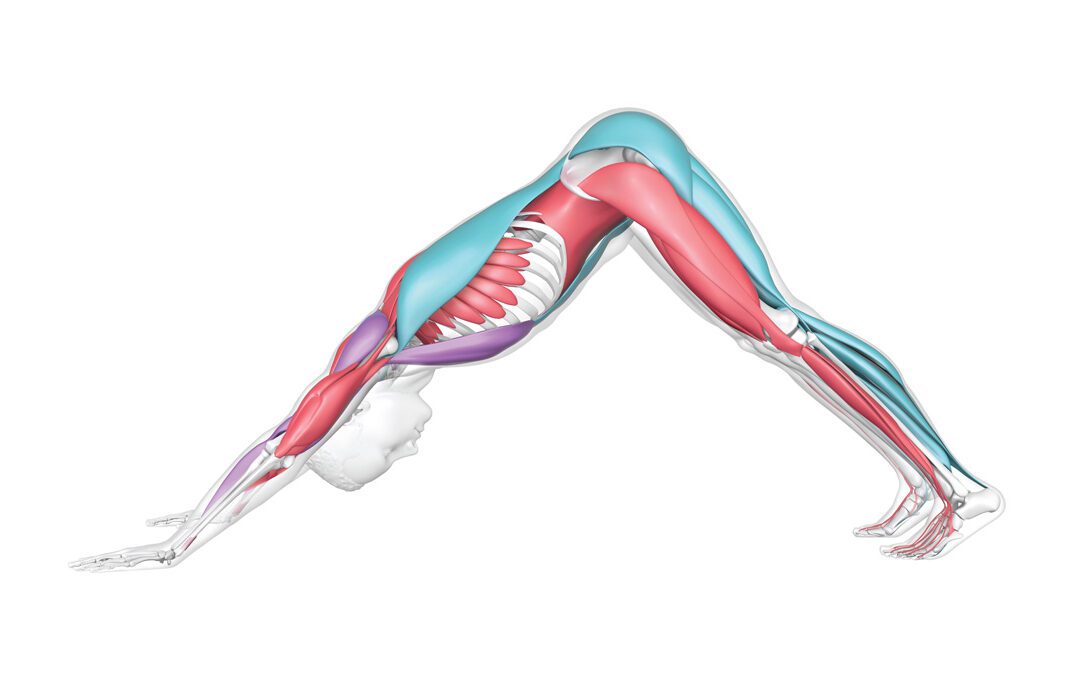
This book is really written for both yoga students and yoga teachers. Every section is written in multiple levels. For example, a pose like side plank starts with simply saying: “Side plank is a challenging arm balance that may get you sweating and your heart pounding…This pose strengthens your core, including your abdominals and back muscles. Your supporting arm and shoulder muscles are also engaging strongly to maintain balance.” That is probably enough information for most yogis. However, if you would like to go deeper, like if you are a teacher, you can read further and see exactly which muscles are likely engaging as they are pointed out on the figure. Most regular practitioners don’t care that their spinal extensors, sternocleidomastoid, and pronators are engaging. But if you do care, that info is there for you to dive deeper!

Many teachers learn cues from their mentors and/or teachers. In your book you mention wondering why certain cues and claims (about the health benefits of poses, etc) are mentioned in class, and you wanted to know why. What would you like teachers and students to take away from your book, with regards to cueing and claims? 

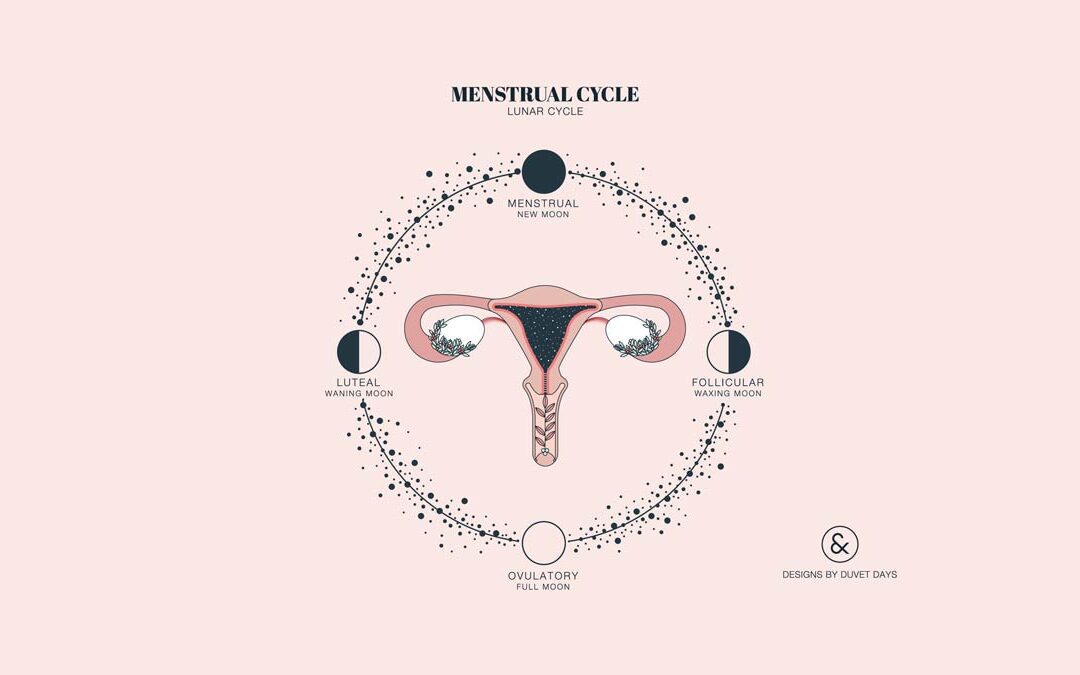
Be curious! Constantly ask, “why?” Don’t just believe what you hear. No, lying in savasana does not clear the lactic acid from your muscles. No, twisting does not wring out the toxins. No, turning upside down does not reverse your blood flow. No, doing inversions like headstand on your period does not seem to cause endometriosis. In fact, there is no known medical reason not to do inversions while menstruating. 

There are so many true benefits that are even more profound and impactful than the myths I listed above. There is so much that the ancient yogis gave us through intuition and practice that proves to be true. For example, elongating your exhales does put you deeper in the relaxation response by activating the vagus nerve to slow your heart and lower your blood pressure. This is a free, accessible tool everyone with high levels of stress and high blood pressure should know and use.

Keep learning and evolving. We all will realize at some point that something we have been hearing or saying is not correct. That is okay. We are human. Keep at it!

What would you say to someone who wants to know how to apply the information in Science of Yoga to their practice? 

Feel it in your own body. Your experiential evidence is worth more than just reading alone. Reading it will definitely help enhance your experience to make it richer and more thoughtful, but that is not enough. Don’t just take my word for it. 

Hey, do you want to know the secret to getting the most benefits from your yoga practice? You have to simply do it.

The theme of this issue of NY YOGA + LIFE is REST. How do you make time for self care and rest with your busy schedule? 

Actually, I have been thinking a lot about this lately because I am about to travel the world. Science of Yoga is being released in over 10 languages and I will be traveling to the countries it is being released in to teach from it. I am excited to go back to China with a new perspective, as well as going to Japan, Korea, France, Italy, UK, and more. I have been asking myself how in the world I will keep balanced while living out of a suitcase for a year!

I think really, it comes back to the magic of this practice. I know that even when I am stressed and have a ton of deadlines, there is an inner peace within me that is not tarnished. Even when I make mistakes, which I do often, I know there is a part of me that is pure and deeply connected to all others. The mindset shift yoga has provided helps me become more resilient amidst challenges. It isn’t a perfect process, and I am not perfect (in fact, I am a recovering perfectionist). However, the deep spiritual connection I feel from integrating the rich philosophy of yoga into my life provides the biggest benefits. Science and spirituality do not have to be mutually exclusive.

Practically, I love doing little “yoga breaks” throughout the day like a sun salutation at the wall in the airport, a breathing practice as I fall asleep, or a minute meditation before I have an important meeting. And that is what I teach my one-on-one yoga therapy clients because let’s face it, most of us are not going to wake up and do a full yoga practice every day. These practices can provide short rest periods throughout the day, which is actually more impactful to train your nervous system to facilitate that inner peace and sense of resilience.

Remember though, yoga is a process –an imperfect, fulfilling, worthwhile process. I daily remind myself: progress, not perfection. 
Yoga Plus Magazine - SCIENCE YOGA OF YOGA BOOK COVER
Nicole Jardim Interview (aka The Period GIrl)

Nicole Jardim Interview (aka The Period GIrl)

Nicole Jardim Interview (aka The Period GIrl)

By iana velez

LIFESTYLE

Yoga Plus Magazine - Period Art - Nicole Jardim Interview

Scroll through Instagram and you can’t help but pause on Nicole Jardims’ account. The self labeled “period girl” is honest, smart and always witty. Nicole educates us about our period, hormones and everything in between. We asked our NY YOGA + LIFE community and team to share all their period questions and concerns for Nicole to answer.

About half our team is in our early to mid 40s and the most common question that seemed to come up was about menopause. One person referred to it as when we “break up” with our period. What are the biggest signs that a period break up is on the horizon and what is the best way for women to prepare?

Ha! This is definitely a good way of describing menopause. Menopause has been sold to us as this terrible time when all hell breaks loose complete with debilitating hot flashes, major mood swings and vaginal dryness. However, I think women should know that menopause is not some future cliff that we all fall off of in our late 40’s or early 50’s, and in fact, our bodies are preparing for it for a good 10-15 years in many cases. This transition time period is known as perimenopause, often beginning in the mid to late 30’s. 

It’s so important for women to understand that their diet and lifestyle choices throughout their teens, 20’s and 30’s impact how their bodies are going to behave when we’re “breaking up with our periods” later down the line. No pressure, right?!

Some signs that we are entering perimenopause or the transitional time from our fertile years to our menopausal years include:

  • Estrogen dominance over its sister hormone progesterone: this often leads to a thicker endometrial lining, which often leads to heavier or longer periods than you used to experience, shorter menstrual cycles overall (shorter than 25 days), and breast tenderness or pain, migraines, irritability, heightened anxiety, or full on anger or rage.
  • Another sign of perimenopause is anovulatory cycles, or cycles where you don’t ovulate: this could result in a missed period or a few missed periods a year, or it could lead to heavier periods when you do actually get it.
  • Women also report a less than stellar sex drive and a harder time getting into the mood. And another sign is an inability to fall asleep easily and stay asleep throughout the night.

I think the best way to prepare is to pay attention to and manage your stress response as best you can. The reason for this is that once your ovaries wind down and eventually cease to make estrogen and progesterone each month, your adrenal glands take over. They’ll never make as much estrogen and progesterone as your ovaries, but they do a decent job if they are in good shape. However, our wildly stressful lives put a huge strain on our adrenal glands, and as such, many women enter this time period with “exhausted” adrenals that don’t work so well. 

With so much information available online these days, do you feel it has helped or hindered how society views menstruation? If hindered, how can we shift our perspective on our periods more positively?

I truly believe periods are having their moment, finally. There has been a buildup to this “moment” for about a decade, and then NPR named 2015 the year of the period! In my opinion, it was the year that menstruation went mainstream. 

It was the year that Kiran Gandhi, an L.A. based musician ran the London marathon on her period without using period protection. This is known as “free bleeding,” and it’s definitely become a thing for sure! It’s also the year Donald Trump attempted to insult Megyn Kelly the GOP debate moderator for having her period. There was a social media explosion after this that has continued to grow. 

Also in 2015, the word “menstruation” was mentioned in five national news outlets 167 times, which was more than triple the amount of 47 from 2010.

I truly feel that all this media attention has helped shape a more positive societal view on menstruation. It seems like everyone is talking about periods in some capacity, but that might be my own narrow world view ha ha. 

At the same time, we still have work to do. A survey by Flexx, a company that makes disposable tampon replacement discs, found that 73 percent of women across the world hide their periods from others, and 68 percent are afraid to talk about their periods with men. Another survey published by period panty maker THINX found 58 percent of women felt embarrassed simply because they had their periods, and 42 percent experienced period shame.

Here’s what I know from doing this work for many years: 

When you shine light on something that is considered taboo, it no longer feels scary or shameful, so I believe that every woman and girl should take the time to educate themselves about their body, their hormones, their period and their sexual health. In the process of educating yourself, it’s crucial that you start talking about all this stuff – that’s when we really shift into more positive dialogue. Talk to a close girlfriend, or your sister, or find a moon circle in your community (which are often hosted at yoga studios). 

Period sex: Tips? Tricks? Advice?

Ah, period sex. This is quite possibly the most controversial topic in our culture, second only to periods of course! Sex might be the last thing on your mind when you’re irritable, tired and dealing with cramps—not to mention it can be messy—but if you are in the mood, you’re not some freak of nature. In fact, research has found that many women find period sex to be the only thing that gives them any relief from their cramps and headaches.

Since levels of progesterone—the hormone that tends to suppress libido—are low after you start your period, and estrogen – one of the hormones that revs your sex drive – begins it’s ascent, your desire for sex may increase. Additionally, there may be a small uptick in testosterone (our libido stoker) during your period. All of this accounts for why some women crave sex during their periods. 

Additionally, lots of women know that this time of the month means their chances of getting pregnant are virtually impossible (not entirely though!), and they feel more open to sex.

I suggest using a towel or blanket for period sex, lots of lube and approaching it with an open mind if you’ve never done it before. Things tend to be a little sensitive down there during your period, so penetrative sex may be out of the question. I recommend focusing on external stimulation instead. And because you’re not 100% infertile during this time, consider condoms as well if you’re not on some form of birth control. 

We do a feature in the issue called “Letters to my younger self.” If you could give one piece of advice to your younger self what would it be ( about periods or anything really!)

I would tell my little girl self that there will be many surprises along the way (good and not so good), but it’s all going to work out exactly the way it’s supposed to. Life gets a whole lot better after your 20’s, but don’t rush to grow up either, because it also gets a whole lot more complicated.

I’d also say, there are no mistakes, because you have a supreme destiny calling for your life. Your job is to know that. And sometimes, when you’re not listening, you get taken off track, but it’s all leading to the same path/destiny calling. 

There is no such thing as a wrong decision in life. There is no such thing as a failure, because failure is just that thing trying to move you in another direction. So you get as much from your losses as you do from your wins. Understanding that will help you not be thrown by random circumstances, because your life is bigger than any one experience. Oh and also, give less f–ks about what others think!

As for your period, remember that your period is not just your period. She’s telling you something every time she comes to visit. Pay attention to the undesirable symptoms you experience and talk to a family member or your doctor about them. You have so much more control over your body and your period than you think you do!


nicolejardim.com

@nicolemjardim

Diversity in Yoga: Our community speaks out

Diversity in Yoga: Our community speaks out

Diversity in Yoga:
Our community speaks out

by: Bre Scullark
YOGA
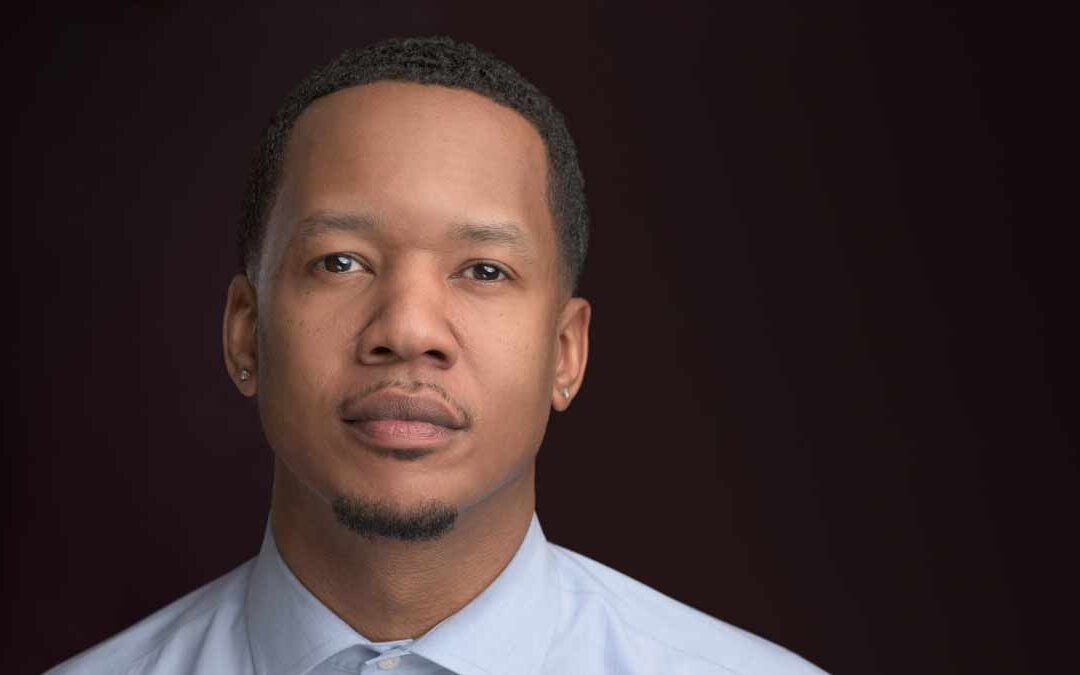
Yoga Plus Magazine - diversity featured image Quentin Vinnie

There are words that are loosely used in the wellness community such as awakening, enlightenment, and guru. We hear these terms so often that it seems the true depth of their meaning gets lost in the perception, circumstances, and beliefs of the masses. We commercialize the same words that once attracted us to this spiritual way of life. Among those are the term and language connected to healing and being a “Healer.”

I have practiced at several wellness centers and sat with many self-proclaimed healers who promise healing if only we do things in a sacred way, which has always flushed out to be “their way.” As 2020 glared the shortcomings of our country, fears, and beliefs, some of us raised our eyebrows to the response, or lack thereof, from spiritual and sacred wellness groups. Where are our healers?

The racial tension in the U.S. rapidly spread globally following the consecutive murders of African American women and men during the COVID-19 lockdown. As many began protesting in the street for weeks and months, yoga and mindfulness practitioners of color wondered, “Where are our healers?”

Many yoga and meditation spaces and practitioners had fallen silent. They preferred not to align themselves or their brand with organizations such as Black Lives Matter, which they deemed as making a political stance. There were studios who posted to social media about diversity reluctantly to avoid scrutiny. Sending positive affirmations, memes, reposted hashtags with a surface promise to support inclusivity in the holistic community. Some even proposed financial support. But, where were our healers?

Where were our self proclaimed healers and gurus? Where were our beloved studios that always offered catchy quotes in savasana, simple but tangible resolutions to all of our daily challenges? Where were our People of Peace?

I had the pleasure of virtually meeting with three of my close friends in the wellness community to discuss words like HEALING, especially during times such as these.

Joshua Dorfman is a meditation teacher, life coach, and spiritual advisor. Lauren Solomon is an international yoga instructor, birth doula, and energy worker. Quentin Vennie: International speaker, author of “Strong in Broken Places,” and advocate for humanity. Here is our talk on healing, healers and our ideals of how wellness should begin to motion forward.

What does “healing” mean to you?
Quentin: Healing is moving beyond our trauma and not allowing it to dictate the value of who we are. It’s learning from our experiences for the betterment of humanity.

Lauren: Healing is a journey of physical and metaphysical alchemy. Healing/Healer are terms used too liberally and inappropriately for capitalistic reasons/opportunity. These terms are overused and undervalued.

Joshua: Healing is a process to liberation. Liberation of being susceptible to stress, anxiety, trauma, and fear. Of course, healing is a general term. There’s the mental, physical, and spiritual level. Healing is the process of freeing ourselves from those bondages. Our eyes are open. We begin to ask questions. We begin to seek truth and we wonder, “How can things change?” ”How do I live better?” What I’ve learned is, whatever trials, tribulations, and traumas that we go through, we are supposed to share our solutions with others. We are supposed to share our tools and techniques with the world.

How would you describe the importance of wellness in communities of color?
Lauren: Holistic wellness is vital to African Americans and POC ability to survive and thrive as a people. Illness of all kinds will continue to kill and destroy. One of my favorite quotes by Toni Cade Bambara is, “Wholeness is no trifling matter.”

Sometimes generational trauma plays out in our classroom. Some instructors are more authoritarian which can be perceived as a superior/inferior dynamic and also create trauma bonds. How can non-POC instructors and students support POC on their journey to self-healing?

Joshua: We must begin by irradiating ourselves from the sickness of separatism and competitive mentality.

Lauren: Non-POC must courageously become acquainted with their own darkness. They must focus on the inner work so that they will teach and be willing to learn from a space of authenticity and balance.

PTSD and trauma informed trainings are commonly talked about in the wellness community. We don’t often talk about Post Traumatic Slave Syndrome (PTSS) or Shadow Slavery. Many POC, specifically African Americans, have been triggered by the systematic injustice and police neutrality that has gone overlooked for centuries. Have you, or do you plan to implement classes that support healing in this area?

Lauren: All people can experience PTSD but only Black People can and have experienced PTSS. Let’s unapologetically acknowledge that first, and then we can begin the work. My work, experiences, guidance, offerings, and language all implement the process of healing specifically in this area. For example, it is important to me that I am unapologetic about centering myself and my work for people who look like me without seeing it as a hindrance, limitation or exclusion.

I don’t see anything wrong with that! I think many establishments do and feel the same way. They may not openly say it but their business strategy screams it. Hiring predominantly one race, price point for classes, marketing campaigns, etc. I think sometimes we (African Americans) feel uncomfortable with saying this particular program or guidance for healing is specifically for us. We may feel bad or as though there will be a consequence for not sharing.

Joshua: I think we have POC, become conditioned to GIVE…

Ahhh! I love that! Are you proud of how the wellness community represented African Americans, POC and BIPOC during the several acts of violence from police brutality and racial injustice last year?

Lauren: No. They did not support us. What many studios and centers did at best, they showed us exactly who they are and who they are not. They engaged in superficial disingenuous optical allyship and hashtag activism. If they didn’t care, then I would prefer that they truly do not care. What many studios showed us was our money mattered but not our lives. Breonna Taylor’s face was trending. George Floyd’s video of him being murdered went viral. Our trauma became a way to monetize our suffering. To me, it felt like modern day lynching and several wellness studios participated in it. It was capitalistic and opportunist. But we didn’t need a civil rights movement to show us what African Americans, POC and BIPOC meant to these centers. We knew that based on their leadership and their marketing strategy. We always knew who and what mattered to them.

Quentin: Lauren’s sentiment is my sentiment. For real. There is nothing more that I can add to that that she hasn’t already addressed.

Quentin, your wife is white. How does that affect your household dynamic if at all? What are some of the conversations that you, your wife and your children have around race and wellness? Having two totally different ethnicities living under one roof during a civil rights movement, how has this been for you?

Quentin: The reality is that all of this is personal. And to be honest, my wife is one of the rarities in this space. She holds me when I need to be held, she can console me when my soul is weary, not as a Black man but as a human. Society will tell me I am a Black man and then society will dehumanize me for being a Black man. They limit my experience of humanity. Thinking back to the reason Blacks were selected for slavery was because of our propensity to “endure.” So if I am expected to be strong, who is going to see me when I am weak? My wife does. The conversations that we have are geared towards the Black experience and the white impression. And even with her, helping her to identify where she is actively fighting against racism and or passively moving towards it.

Joshua: When Gorge Floyd passed, it really sparked a fire under me to get the message across about racial and social injustice in the wellness community. I remember companies reaching out to me because I am a person of color just so that they could say they had a POC on their platform. It felt inauthentic so I turned them all down. It felt like a branding opportunity to say that they were a part but it did not feel like they authentically wanted to help.

How do you believe non-POC in the wellness community can authentically help?

Lauren: I don’t need to be affirmed in my life’s value from non-POC. What I would like is for non-POC to turn the work inward. Focus on you. No more “I’m not a racist” or wearing BLACK LIVES MATTERS shirts. Let’s focus on deepening the work by looking inward. “Where am I?” or “Where have I contributed to what’s at hand?”

Quentin: It starts with self, I agree. You can’t authentically do much to change the past. What you can do is begin to change self. I think it starts with acknowledging how many non-POC have upheld white supremacy subconsciously just by rules of society and continued to sustain a system of oppression. Deal with that discomfort that comes up. Sit in it and continue to heal from it.

Joshua: If non-POC want to authentically help, it has to come with humility and the acknowledgment of oppression.

What is your vision for the future of the wellness community?
Joshua: Seeking out those who have a genuine calling to serve and find truth. I want to flood the wellness community with realism. “Humans always want to do something about death when we should want to do something about life…”

Quentin: I want to see the continuation of these types of dialogue, of this level of humility and vulnerability, and stripping away the fear so we can begin to trust. Too many people have died without knowing that this can exist. This conversation was healing for me.

Lauren: We must decolonize ourselves in all ways. We must create that which we want to see, do, and be. Additionally we must be considerate of how we wield our collective energy and consciousness, and permanently do way with disempowerment.


BIOS

Quentin Vennie
@quentinvennie

Celebrated wellness expert, philanthropist, keynote speaker and author of the bestselling memoir, Strong In The Broken Places. His work has been featured in the Huffington Post, Thrive Global, Entrepreneur, Chicago Tribune, NBC News, Fox News, MindBodyGreen, and others. Quentin has been recognized as one of Black Enterprise magazine’s 100 Modern Men of Distinction and by the American Foundation for Suicide Prevention for his contribution in raising awareness for mental health and suicide prevention, as well as appearing as the wellness keynote speaker for Colin Kaepernick’s “Know My Rights” Camp. Quentin has guided meditations and given talks at the Wagner Youth Facility at Belize Central Prison, shared his journey of healing childhood trauma for the University of Maryland Medical Systems & University of Maryland Symposium “Not All Wounds Are Visible”, and was recognized by Lululemon at their annual Here To Be Conference.

Having spent years practicing yoga and meditation, Quentin has found a recent passion in gardening and interior design as forms of anxiety management. He continues to work with youth in under-resourced communities, helping them understand their traumas and turn them into triumphs. He spearheads initiatives that support positive mental health and challenges food insecurity by teaching and promoting sustainable vegetable gardening, as well as making yoga and mindfulness accessible among communities and populations that don’t ordinarily have access to them.

Lauren Solomon
lotussol.com

A former Wall Street professional and graduate of Columbia Business School, Lauren boldly transitioned from a decade-long career in Finance and Project Management to a lifetime journey as a certified international yoga instructor, reiki practitioner and birth doula.

From Lauren’s most recent feature in the 1st volume of “My Yoga. My City” photography table book showcasing Lauren as among NYC’s premier yoga instructors, to her inclusion in NY Yoga + Life Magazine recognizing her as a trailblazer in the “Teachers We Love” section and in WELL Summit’s “7 Black Women Making Waves in Alternative Medicine” – to Lauren’s leading international yoga retreats, and her dedication as a birth companion centering Black women and families on the childbirth continuum, she radically affirms her community in a myriad of meaningful and deeply impactful ways.

Joshua Dorfman
@joshua.dorfman

For over 15 years, Joshua has been self-taught, accepting wisdom and influence from teachers along the way while adhering to his inner guidance and direct connection to Source. Joshua stepped into his role of leadership in 2014 offering healing, meditation and life coaching services as a walking embodiment of Light.

He is a community builder and space holder for unity and communication, creating a safe space for people of all walks of life to evolve through self-realization and the integration of Spirit into the human experience. He has been offering his services one on one and in group
environments and has even brought meditation to corporate settings such as A&E
TV Networks, Broadway productions such as Hamilton, in addition to the fashion
industry while simultaneously working with your everyday man and woman. Joshua is a certified Reiki Master and holds multiple certifications in Vortex Healing.

Yoga Plus Magazine diversity image Joshua
Yoga Plus Magazine diversity image Lauren Solomon
Plant Medicine 101

Plant Medicine 101

Plant Medicine 101

By Vanessa Chakour

LIFESTYLE

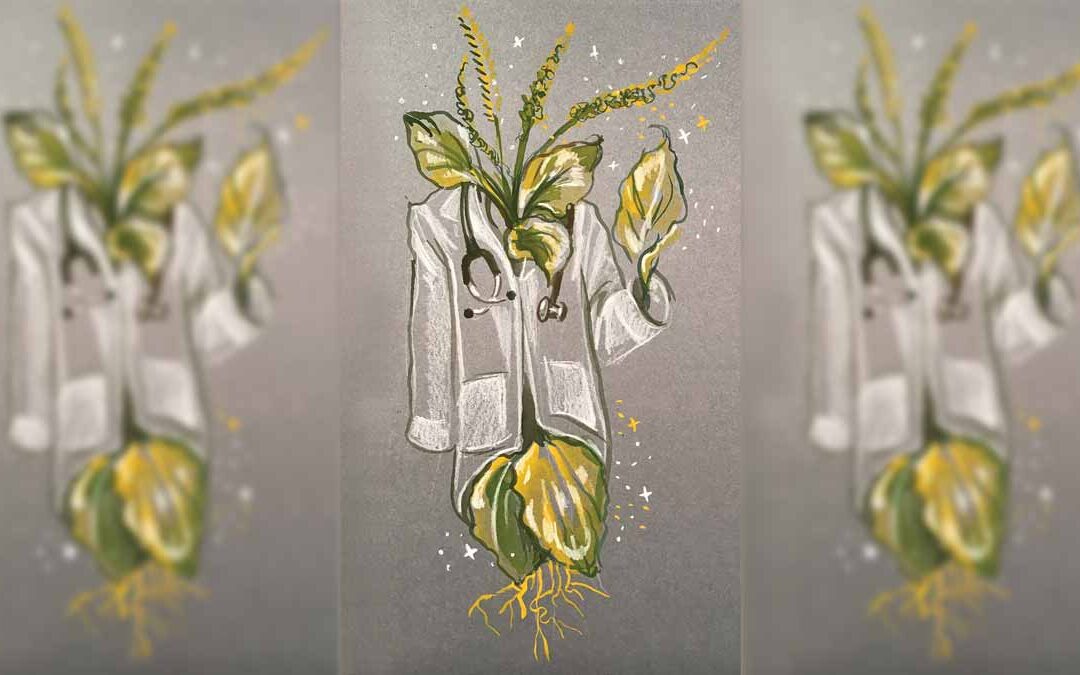
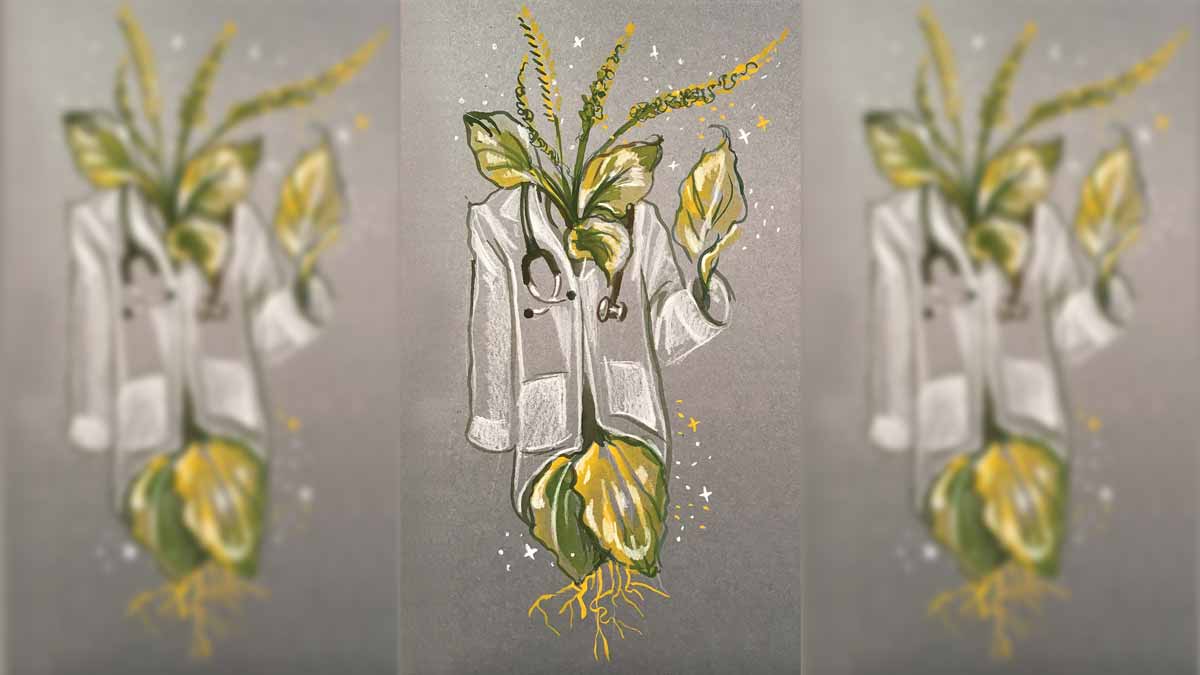
Yoga Plus Magazine - plant medicine illustration - photo credit -Chelsea Heneise
As long as humans have inhabited this earth, there has been a life-supporting, palpable connection between us and the natural world. Before grocery stores, pharmaceuticals, physicians, or farming, humans foraged, experimented and communicated with the plants around them. Over time, a huge amount of knowledge was accumulated about the power of plants to heal and nourish — from the amazing plethora of life right under our feet and all around us. In more modern times, food sources have become more centralized, people have become citified, wisewoman healers have been persecuted and indigenous tribal communities have been torn apart through colonization. As a result, much of this knowledge has been lost. More and more, people are now realizing how vital it is to reclaim our connection to nature and learn from those who tenaciously held onto this relationship and knowledge. Our relationship to nature is innate. We can recall and remember.

Conscious, direct encounters with nature are not only healing, but can develop our sense of the sacred and deeply affect our lifestyle choices. The path of herbalism has helped me heal on all levels of mind, body and spirit and it’s an honor to facilitate this remembering for others. Just as plants grow in spirals, we heal that way too. When we go inward to uncover the root cause of a mental, physical or emotional challenge and release it, we create space within and expand without. Eventually, we grow stronger and are ready to dive inward again… deeper this time, as we expand further. This journey of depth and expansion goes on and on. Along the way, we create a greater capacity for joy and are healthier for confronting our challenges. In the practice of herbalism, we’re asking for help from nature and there is no better place to begin than in the wild.

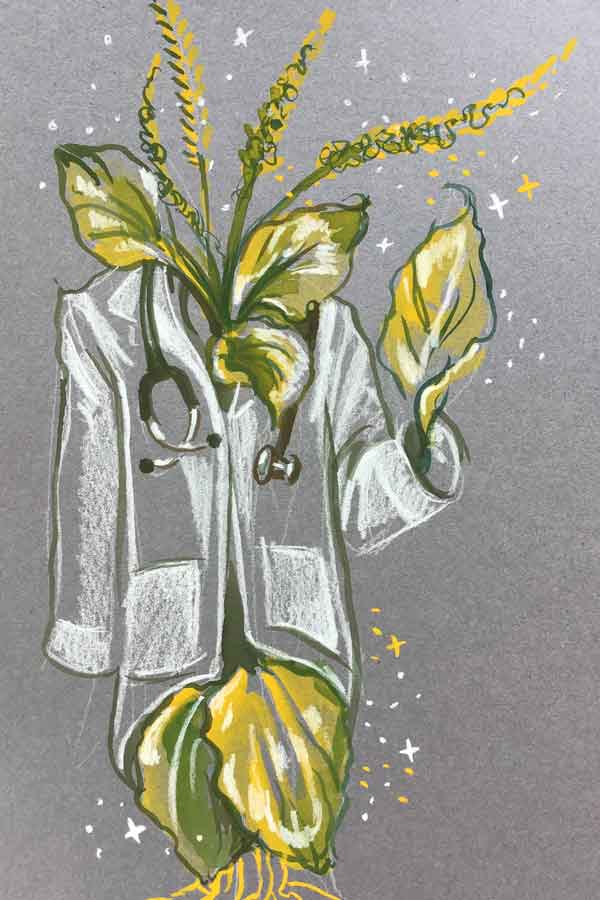
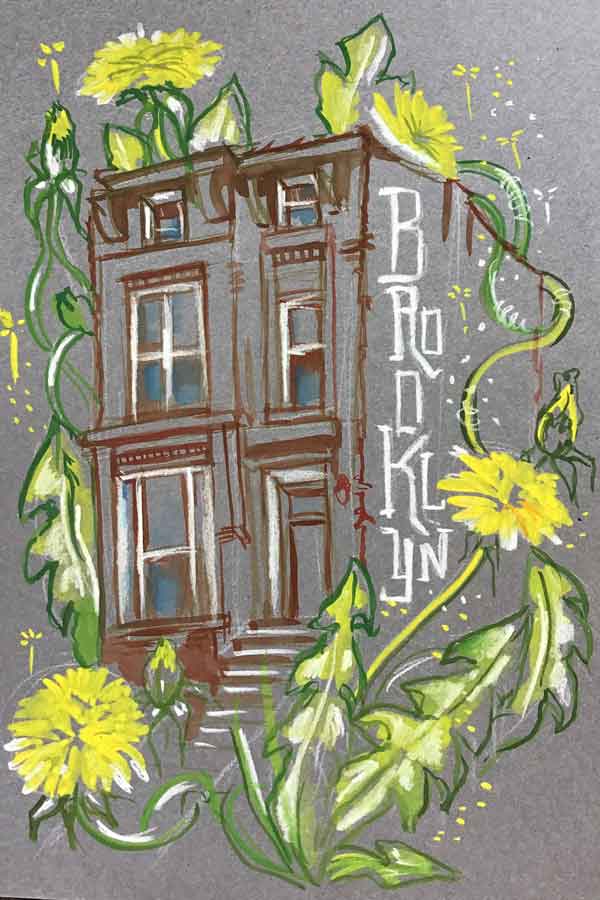
So, what is wild? Wild is our true nature freed from the bounds of social conditioning and perceived limitations. Wild is our authentic, natural self. Weeds are the epitome of wild nature. They’re strong, resilient and can’t be controlled. They live with us in rural and urban areas alike, bursting through cracks in concrete and bringing beauty, color and character to otherwise boring lawn. Weeds and wild plants like mugwort, burdock, dandelion, hawthorn and nettles are some of the most powerful guides to our true and wild selves. These guides connect us to the life force energy of earth that is some of the deepest healing we can find.

There are countless medicinal plants in New York City bursting through pavement, reclaiming abandoned lots and populating city parks. Many of my medicinal plant walks take place in Prospect Park in Brooklyn where we find all the plants mentioned above along with Linden, Cleavers, Shepards Purse, Plantain, Yellow Dock, Wild Rose, Raspberry Leaves, Red Clover, Mullein and many more. Meet a few of my favorites living right under your feet:

Mugwort helps us remember and re-wild. The botanical name for this fierce ally is Artemisia Vulgaris, named for the goddess Artemis; the huntress, protector of women, and young and fierce defender of nature. As such, Mugwort holds the boundary between the wild and domesticated self, loosening the stagnant energy of old traumas, stories, and emotions that are blocking access to our body’s innate strength. The silvery back of mugwort’s leaves let us know that this plant is medicine of the moon and womb. Mugwort is famous for helping us heal via the dream realm; moving what is hidden under the realm of conscious awareness into our dreams to confront and heal. This wild healer grows everywhere—through the sidewalks, next to parking meters, in vast fields and the edge of the forest. She is ever present and ready for us to use her medicine. 

Mulleinis a biennial plant that helps us stand tall and breathe deeply. The hair on the leaves of the mullein plant can withstand harsh winds, and the second year stalk stands tall in any situation. This plant is an expectorant, helping our lungs in expel mucous by loosening it from the walls of the lungs to be coughed up. You’ll find this plant growing in cities, on mountaintops and in fields, letting us know this is a medicine of adaptability. Mullein helps relieve our joints of tension and inflammation so we can move about the world more freely as we breathe. Though I rarely need to use mullein for asthma now, the tincture or tea is one of the first I’d turn to if I did. This plant is commonly used for hay fever, emphysema, colds, flu, hoarseness, bronchitis,

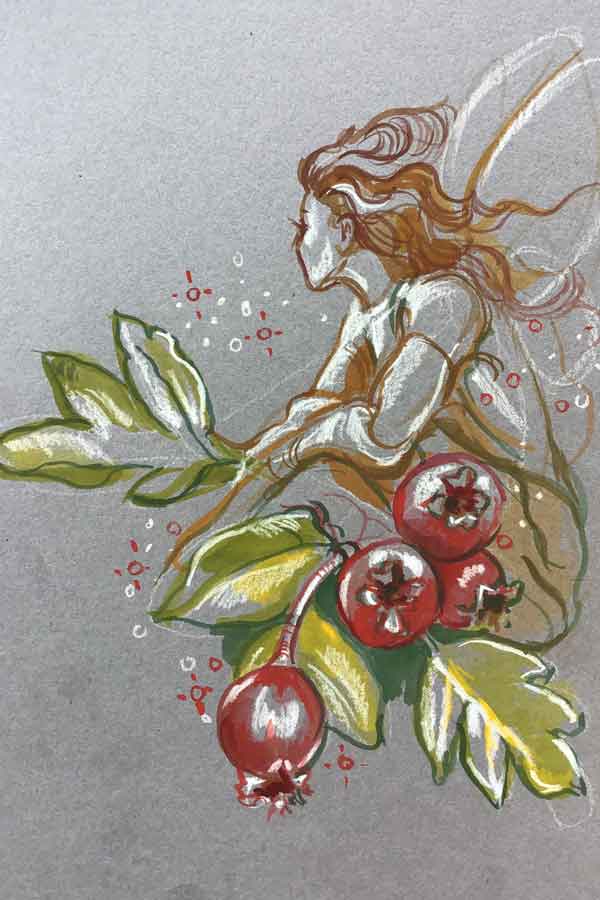
Hawthorn, a tree in the rose family, is a medicine of the heart. This fiery tree—also known as the May Tree—blooms around the Celtic holiday of Beltane and is steeped in mythology. Many believe these trees are inhabited by Faery Folk. The leaves, flowers, berries, and thorns are all used in medicine to strengthen the heart, normalize blood pressure, offer courage, promote passion and healthy circulation. You’ll find Hawthorn in many aphrodisiacal formulas. In addition to passion and protection with her long, intense thorns, working with Hawthorn helps us see other perspectives and fall more in love with ourselves.

Goldenrodis a beautiful yellow flower lights the way, late summer into autumn as the days become shorter and the nights become longer. This plant, whose botanical name is solidago (“to make whole”), is a medicine of transition, balance and integration. Goldenrod illuminates our path as we embrace change and brings warmth, and sunshine into cold, damp spaces in the body clearing mucus, fungus, unprocessed grief and congestion.

Burdock Root reaches below the surface of the soil, and deep within our bodies to connect us to source energy. Burdock root grounds us, helps the waters of the body flow, supports the livers and nourishes the adrenals. If we want an especially potent root, we’d harvest on the new moon in early spring or autumn when the sky is dark and the energy of the earth sits below the surface.

Elder trees are rich in folklore and have strong regenerative powers, growing easily from cuttings. A potent symbol for the cycle of life, this tree is deeply connected to the realms of faery and the underworld. It is said that sleeping under an Elder at midsummer may transport you to their realm. Many are familiar with Elderberry syrup, an incredible cold and flu remedy that boosts the immune system. Elder flowers help to cleanse the kidneys, blood, and skin by opening up the pores; they are healing allies for sinus issues and hay fever. Both the flowers and berries can be ingested as tea, tincture, and syrups.

Practices to engage:Embodied walks in nature; noticing the patterns of tree bark one day, and the small plants that grow close to the earth, the next. Each day, attune your awareness to something different. Depending on the season, you might look at patterns in flowers, shapes of leaves or the expression of branches. Eventually, allow yourself to be guided to one plant that calls to you, and notice something new about that plant every day. This practice awakens your instinct and ability to relate to the natural world. We can uncover many answers on our own, which is incredibly empowering.

If you’re interested in wildcrafting (harvesting plants from the wild), make sure you’re identifying the plant correctly, are harvesting somewhere safe for you and the population of the plant, and ask permission from the plant before harvesting. This engages your intuition as you approach the plant with reverence. The right way to begin a relationship.

The faster we can understand that we are nature and not separate from the web of life, the better off we’ll be as individuals, and the better off will be our shared home that is this planet. Remembrance and reconnection is a vital aspect of health and the ability to thrive.

YOGA PLUS MAGAZINE - Plant Medicine 101
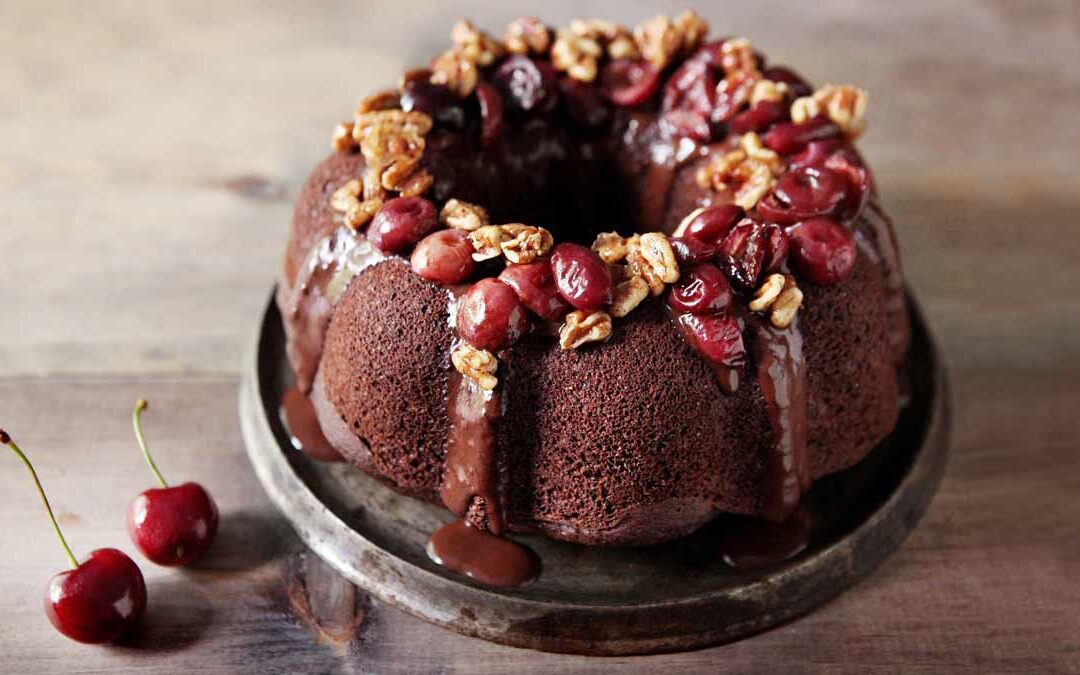
Chocolate Chipotle Cake with Roasted Cherries and Maple Salted Pecans

Chocolate Chipotle Cake with Roasted Cherries and Maple Salted Pecans

Chocolate Chipotle Cake with
Roasted Cherries & Maple Salted Pecans

By Diana Bezanski

FOOD

Yoga Plus Magazine - Chocolate Chipoltle Cake with Cherries

Cuisine: Vegan
Serves 7

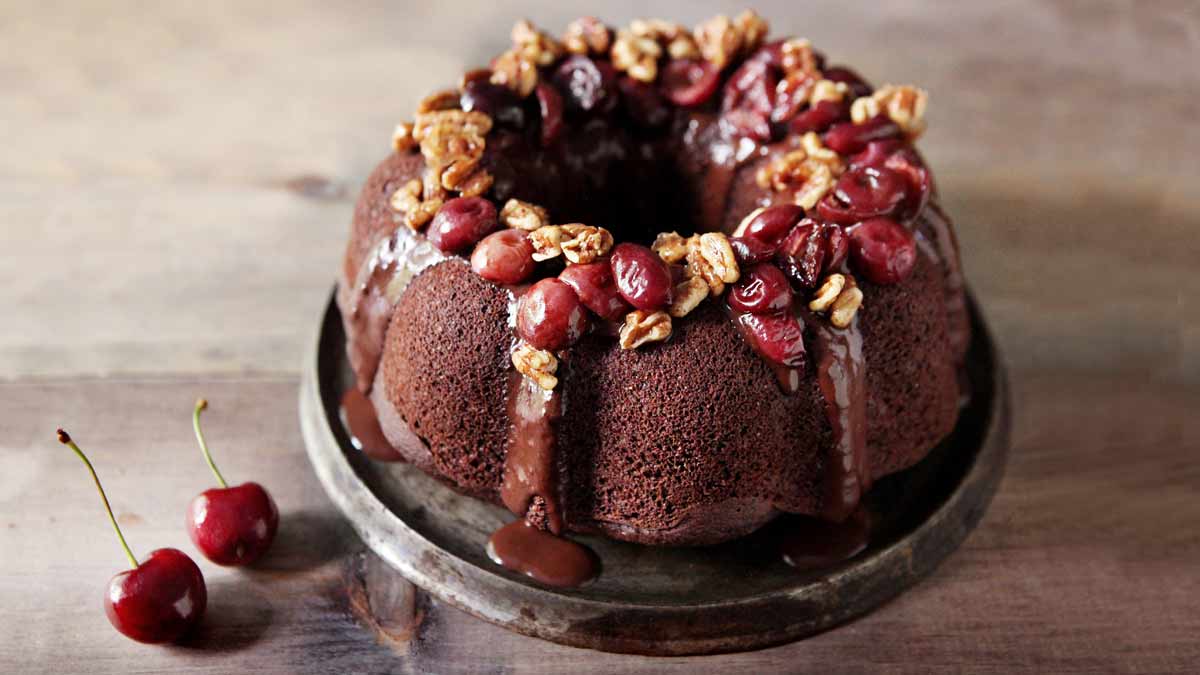
For those of you who enjoy chocolate cake and spice will love this bold, and sexy combination using chipotle powder topped with roasted seasonal cherries. There’s an element of smoky, spicy surprise balanced by the sweetness, and crunchy nuts. The cake is very moist and wonderful on it’s own or take it up a notch with your favorite nice cream or coconut whipped cream.

Note: you can swap out the chipotle powder for ancho or ¼ teaspoon less if using cayenne depending on the heat of your spice.

Banana is used as binder here, but the taste is masked by all other flavors

  • Banana is used as binder here, but the taste is masked by all other flavors o ignored
  • spelt is a whole grain flour more nutritious and less refined than white flour, contains less gluten and has a slightly sweet and nutty flavor.  Can be found in natural food stores, and some supermarkets o ignored
  • some unrefined brown sugars are course – grinding them into powder using spice grinder dissolves better in the cake. o ignored
  • because the cake is eggless the vinegar used in recipe creates a nice rise and crumb while leaving no aftertaste.


Ingredients for Cake

  • 3/4 cup whole wheat pastry flour
  • 3/4 cup spelt flour
  • 1/2 tsp fine sea salt
  • 1 ½ tsp aluminum free baking powder
  • ¾ tsp baking soda
  • ½ cup unsweetened cocoa powder
  • 1 tsp ground cinnamon
  • ½ tsp chipotle powder
  • 1 ½ tsp fine ground coffee – grind with sugar if course
  • 1/3 cup unrefined brown sugar such as coconut, sucanat or muscovado, grind to make
  • powder using spice grinder
  • 1 1/4 cup very hot filtered water
  • 1/3 cup mashed ripe banana
  • 1 tsp apple cider vinegar
  • 4 tbsp pure maple syrup
  • 1/3 cup cold pressed olive oil
  • 1 ½  tsp pure vanilla extract
  •  


Method for Cake

Pre heat the oven to 350 with rack in the middle.

  1. Lightly oil the bundt pan and dust with cocoa powder
  2. In a large bowl sift the whole wheat pastry flour, spelt, sea salt, baking powder, baking soda, cocoa powder, cinnamon, chipotle powder, ground coffee, and sugar, once passed through stir it again.
  3. In a medium bowl combine the mashed banana, vinegar, maple syrup, olive oil and vanilla extract and mix well, add the hot water and combine well, now add this to the flour mixture and using a whisk mix until just combined, do not over mix, quickly add to the bundt pan and bake for 43 minutes at 350 degrees. Toothpick inserted should come out clean and cake slightly firm to the touch. When done let it cool in the pan for 10 minutes on a wire wrack, after 10 minutes carefully flip the cake out of pan and continue to cool on rack before adding the ganache.


Roasted Cherries
Ingredients and Method
Raise oven to 400 degrees

  1. Line a baking sheet with parchment paper
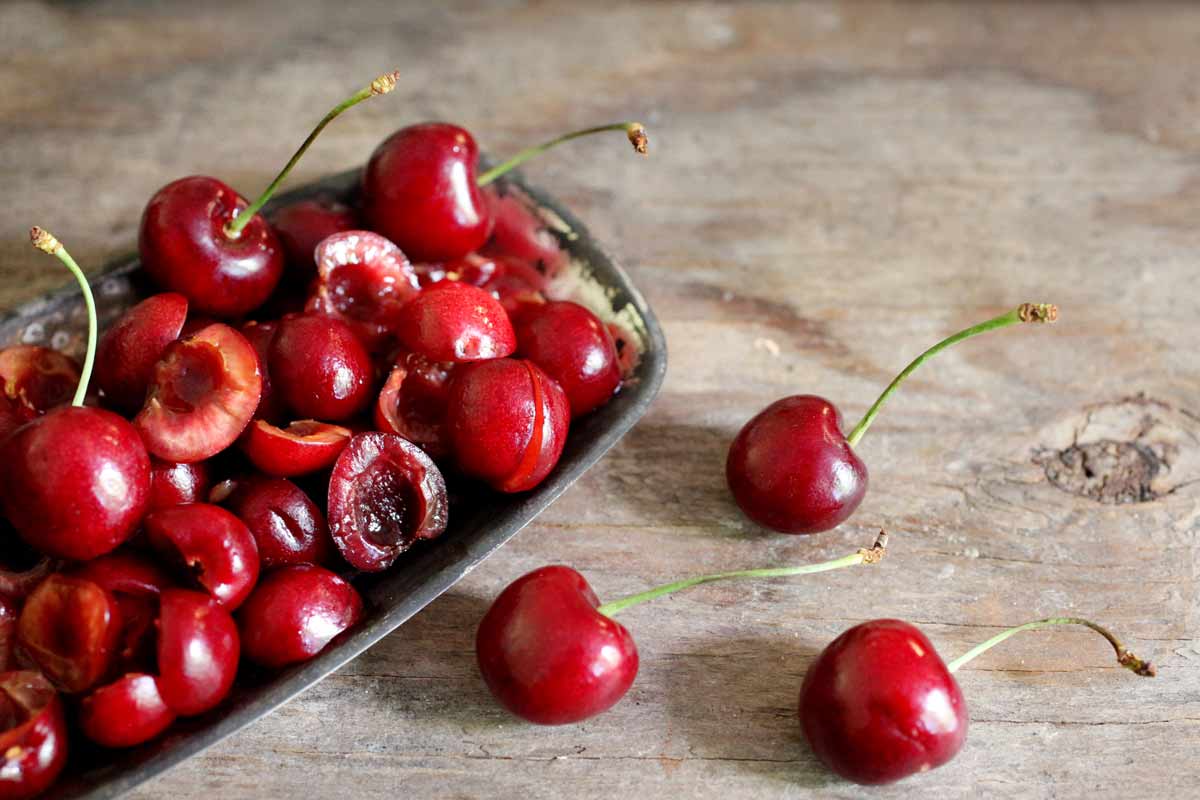
  2. 1.5 cups fresh cherries pitted and sliced in half
  3. Roast cherries for 10 minutes, remove from oven and transfer to a bowl, let cool


Maple Salted Pecans
Lower heat to 325

  • 1 cup pecans lightly chopped
  • 2 tbsp pure maple syrup
  • ¼ tsp fine ground sea salt


Method for Pecans

  1. Combine all the ingredients in a bowl and toss to coat – taste for seasoning
  2. Bake for 7-8 minutes at 325


Chocolate Ganache

  • 3.5 oz 70-72% chocolate chopped into small pieces
  • ½ cup almond or coconut milk
  • 1 tsp pure maple syrup
  • Pinch chipotle or cayenne powder
  • Small pinch sea salt


Method Chocolate

  • Chop the chocolate into small pieces and add it to a stainless steel bowl
  • Heat the milk until bubbly hot and pour it over the chocolate and let sit one minute undisturbed.
  • Stir the chocolate until melted then add the maple syrup, chipotle powder sea salt and mix well.
  • Let the chocolate sit for 5-10 minutes to thicken but still pourable.
  • Drizzle the chocolate on the cake on all sides and especially near the opening at top so the cherries and nuts can stick to it.
  • Now add the roasted cherries and pecans to the top of the cake.
Yoga Plus Magazine - Cherries for Chocolate Chipoltle Cake
Yoga Plus Magazine - Chocolate Chipoltle Cake with Cherries
Tao Porchon Lynch

Tao Porchon Lynch

Tao Porchon Lynch

By: Andrea Rice
Photos by: Robert Sturman

PROFILES

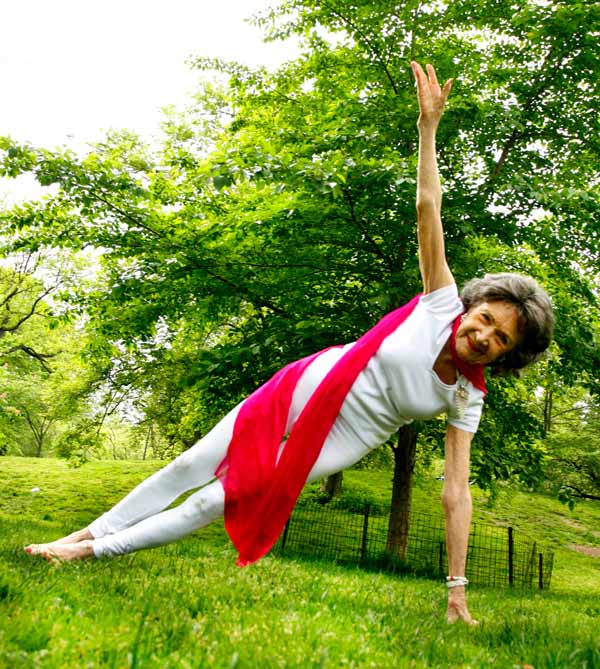
Yoga-Plus-Magazine - Tao Porchon Lynch bio pic
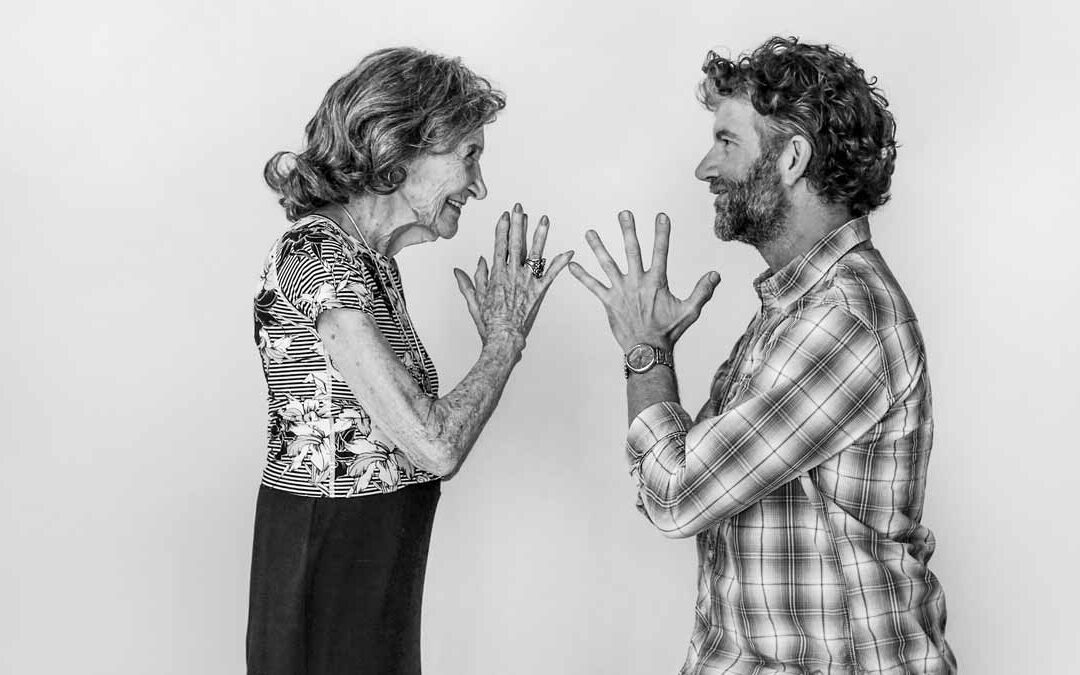
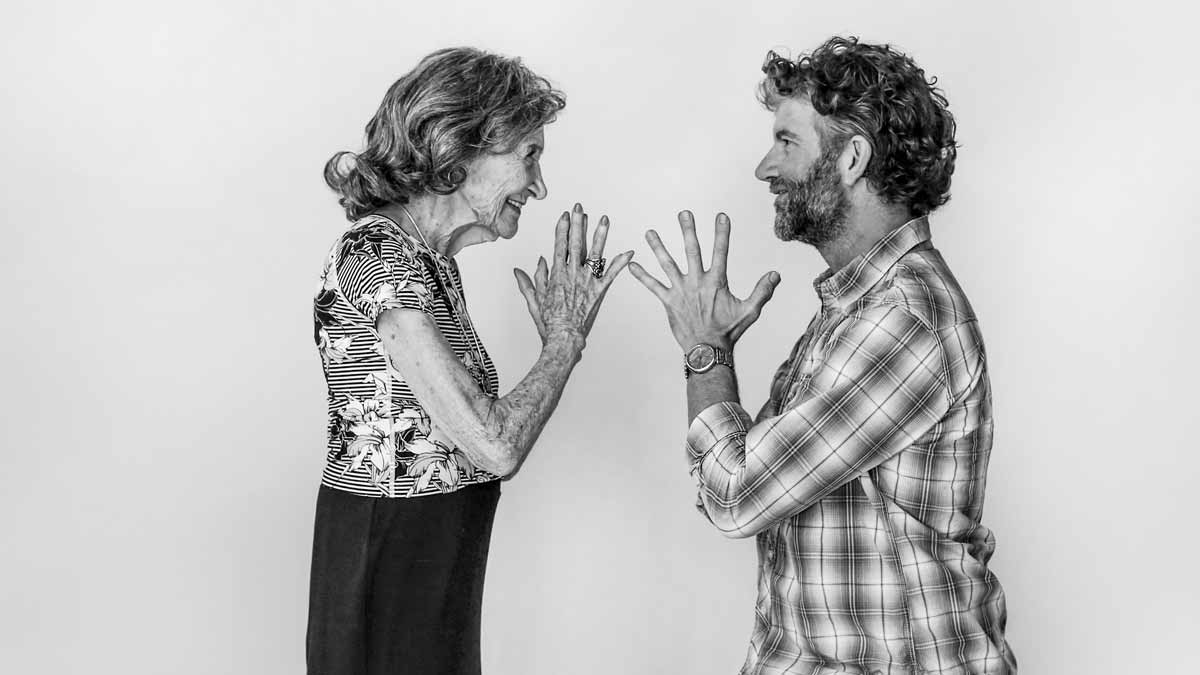
On a rainy spring afternoon in Manhattan, Täo Porchon-Lynch, the world’s oldest yoga teacher, walked into the Rubin Museum in a pair of high heels and asked for a glass of wine. She removed her black cape to reveal a Fendi scarf loosely draped around her neck, a stylistic emblem of her French heritage. A well-tailored knee-length skirt showed off an impressive pair of trim legs that only 90 years of yoga and a lifetime of dance could help shape. Perhaps the only visible evidence that the fashionable matriarch who had arrived was a yogi was the large silver amulet depicting Ganesh that hung over her heart and travels with her everywhere. She took a seat in the museum’s café next to her friend, the photographer Robert Sturman. They exchanged hugs and swapped stories as Malbec flowed generously.

Täo, who turned 99 this past August, is no average yoga teacher, nor does she fit the mold of a soon-to-be centenarian. She became a competitive ballroom dancer at 87, and appeared on “America’s Got Talent” in 2015 with a partner 70 years her junior. They performed to “Fireball,” a racy number by the rapper Pitbull — a testament to her modern edge. Täo believes there is no such thing as age and that anything is possible; she also prefers wine over water. Her thirst for life might very well be her secret to the fountain of youth.

Täo has been practicing yoga since her childhood in Pondicherry, a French colonial settlement in India at the time. “When I was very young, I saw a lot of little boys playing a new game on the beach and I asked if they would let me join them,” she said in an interview. That game, according to her aunt and uncle who raised her, was yoga, and it was not normal for girls to partake. But the eight-year-old Täo was persistent, and she partook anyway. In 1930, when she was 11, she accompanied her uncle, a student of Swami Vivekananda and a friend of Mahatma Gandhi, to join Gandhi in a protest march.

Born Andrée Porchon, Täo was named by her nursemaid in India because she was always brimming with the energy of nature. During World War II, they left India together in an attempt to locate Täo’s father. They arrived at a family vineyard in the South of France, where her father’s sister, a member of the French Resistance in Marseille, lived, worked and hid expatriates. There, Täo was asked to shed her saris in exchange for Western clothes, out of fear that the Nazis were watching. When they were nearly caught they fled the vineyard; Täo and her ayah were put on a fishing boat to Paris and another boat to London, just prior to the Nazi bombing attacks there.

Täo got her first job as a dancer in a nightclub and then a cabaret, which led her to some of the top clubs in the city. Eventually she went back to France, becoming a model for brands like Chanel and Lanvin, which led her to New York City. Determined to break into show business, she took a bus to Hollywood with a list of contacts she’d met in the London nightclubs — one of which was the founder of M.G.M., where Täo came under contract and earned smaller parts in movies. With encouragement from Indra Devi, who knew Täo as a girl in India, she began teaching yoga to Golden Age actresses like Debbie Reynolds and Kathryn Grayson.

Täo’s French-Indian accent prevented her from landing bigger roles and she became frustrated with acting, shifting her focus to screenplays and documentaries. For years, she continued writing, producing and modeling, but was also committed to her yogic studies, traveling to India to study with B.K.S. Iyengar and Pattabhi Jois. In Hollywood, Täo was under the tutelage of her guru, Swami Prabhavananda, with whom she studied meditation until his death in 1976.

Meanwhile, she met and divorced the self-described love of her life, Yvan Moynet, a French fighter pilot who relocated to Uruguay. It was heartbreak that steered Täo away from the glamour of Hollywood to focus on yoga and meditation. A journey that returned her to New York where she married her second husband, the late Bill Lynch, and settled in Westchester County where she teaches yoga to this day.

Täo’s work has put her in front of some of the biggest spiritual thought leaders of her time. In 2011, Täo earned the respect of His Holiness the Dalai Lama, when she sat on the Panel for Peace. A year later, she was recognized by Guinness World Records as the “Oldest Living Yoga Teacher.” In 2015, she received an award from the United Nations for her leadership as a female entrepreneur. Her autobiography “Dancing Light: The Spiritual Side of Being Through the Eyes of a Modern Yoga Master” was published that same year.

Though Täo did not bear any children of her own, Teresa Kay-Aba Kennedy, her biographer, said that Täo has hundreds of children around the world: her students. And one of those students gave her a very special gift a few years back — a photo shoot in Central Park with Robert Sturman. “I’ve learned so much from Robert, because he goes out into the world and brings that oneness together,” Täo said with an indelible twinkle in her eyes. “I am truly lucky that he entered my life.”

Since that first shoot, Täo and Robert meet in New York City once a year to make art together. This time at the Rubin Museum, it would be for the cover of a magazine, a first for Täo, despite that she is known far and wide as a Grand Dame of Yoga. Reunited, they took the stage and discussed the many ways in which the essence of yoga lights up the world.

The following is an edited excerpt from that conversation.

*************

RS: I’m always looking for good stories. I knew in the moment that we met that yours was a story worth telling; one that gives us hope and makes us want to be here and live life to the fullest. In a time where there is so much darkness and trouble in the world, people are hungry for great stories like yours.

TPL: I agree with you that there is so much anger around us for no reason. The mind always brings out the problems! Don’t spend your time thinking what you cannot do. Don’t let your mind take over — let your heart take over. It’s something that everyone should learn: never procrastinate. One minute after midnight it’s already today, so don’t spend your time wasting it! This is a precious gift we’ve been given. Vivekananda said, ‘don’t say I’ll do it tomorrow. Never say that there’s only one religion. Know that within us is the open door to attaining oneness with the whole world.’ This was something I always believed in. People do a lot of talking, but it’s action that matters. Robert, you not only take action, but your photos represent what I believe in. You open up that door with photography, and it doesn’t matter where you’ve been in the world — it comes to life.

RS: When I forget about everything and I’m just in the moment creating, that’s when that oneness just happens. It speaks through me, and there’s no thought about it — it just is. I think there’s a way to experience life so deeply and so presently that when you photograph it, you just press the button once and walk away — and you don’t have to question whether you missed it or not. It’s effortless — and that’s how it is whenever I’m working with you; it’s never a struggle to create something. When art is created, it’s just the natural expression of a life that’s being lived.

TPL: Well you certainly help bring it to life! You inspire me all the time. Whenever we come together, we experience that oneness. It’s easy to look and see a beautiful scene of trees, but it helps when someone can point out the very essence behind it. The American-Indians used to put their arms around the trunk of a tree and feel the energy of the sap moving up in there. We have that same thing within us — if we are in tune and just listen to our hearts, it opens the door to our whole being; it makes everything come alive. I know that nothing’s impossible — that there’s nothing we can’t do in life. If in this world I can make a little bit of difference, that’s what’s important. Every morning I say, ‘this is going to be the best day of my life.’ That’s when everything opens up to you. Other people are looking for that, but they don’t always know how to find it. This is the jewel of life: to awaken and know that nothing is impossible.

RS: To me, being awake is knowing that we’re only going to be here for a brief moment, and being present to every person I work with because it could be the last moment that we have. Sometimes I’ll work with somebody and it will be their last picture — they’ll die the next week, making me realize that it is all just going to expire. Being awake is just being so grateful for what we have now, and knowing that working through your heart and being in touch with your heart is the most sophisticated tool we have.

TPL: I don’t spend my time thinking of how I’m going to do something, because if I just sit around thinking then nothing is ever going to come. When I tune in and listen, I can feel that connection, that oneness — particularly with children. Children open up that the door to people — they don’t spend their time getting angry that they can’t do something. If I can’t do something, I’ll just decide that there is another way to do it. My uncle taught me to never look down on anybody — that there is always something good inside of them and you should try to draw it out. Don’t waste your time on things that are negative — open your heart to positive things and the whole world will come together.

RS: Whenever I think of you I just know that things are going to be okay. There’s something about you that makes life worth living, and that’s the story that I want to tell in all the work that we do together. We are so blessed to share our story with NY YOGA + LifeTM, and celebrate you on the cover of the magazine.

TPL: Thank you, that’s very special. I just hope I can live up to what you believe in.

RS: And how long are you going to live?

TPL: Oh at least 100… I have to live to 100! I have a lot of things I still want to accomplish, and so I better start working at it now — no words, just action. Every morning when I get up, I look outside and I witness the beauty of the birds flying around. Everything has energy within it, and all we have to do is bring that into play. I’m just spending my time making sure I’m doing everything that I believe in. Anyone can be filled with beautiful ideas, but we must put them into practice. That’s what you’ve materialized with your photographs: you bring in the beauty of the world everywhere.

RS: As Rumi said, ‘I can’t stop pointing to the beauty.’

Yoga-Plus-Magazine - Tao Porchon Lynch bio pic