Nicole Jardim Interview (aka The Period GIrl)

Nicole Jardim Interview (aka The Period GIrl)

Nicole Jardim Interview (aka The Period GIrl)

By iana velez

LIFESTYLE
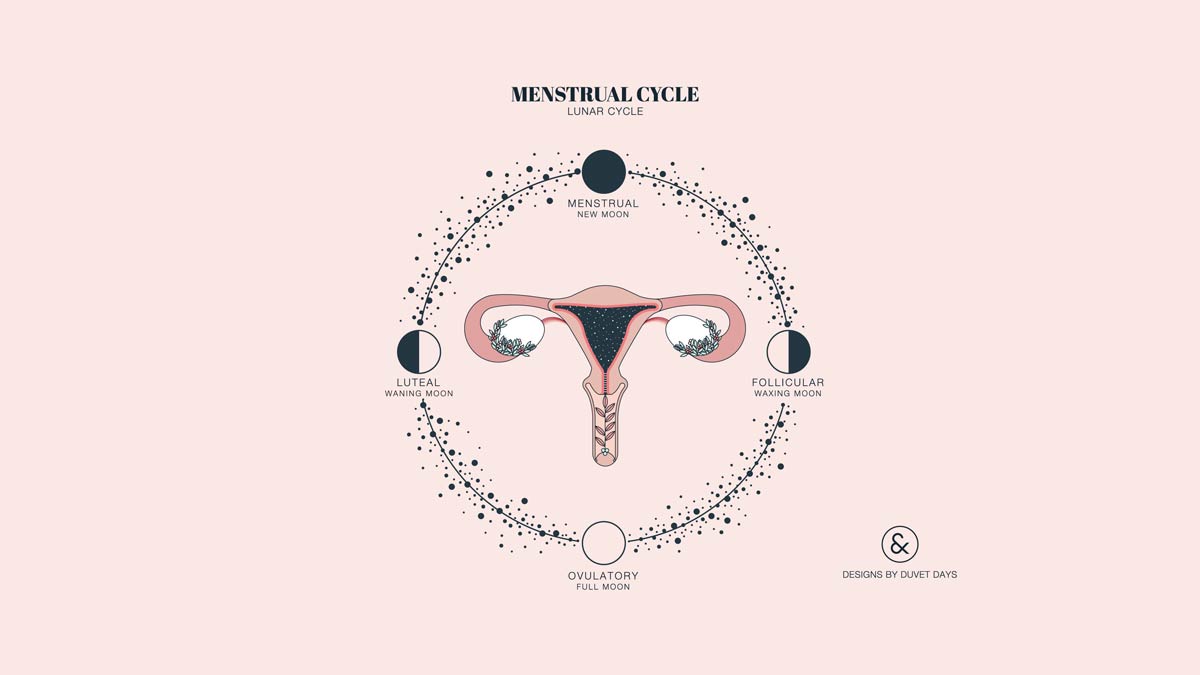
Yoga Plus Magazine - Period Art - Nicole Jardim Interview

Scroll through Instagram and you can’t help but pause on Nicole Jardims’ account. The self labeled “period girl” is honest, smart and always witty. Nicole educates us about our period, hormones and everything in between. We asked our NY YOGA + LIFE community and team to share all their period questions and concerns for Nicole to answer.

About half our team is in our early to mid 40s and the most common question that seemed to come up was about menopause. One person referred to it as when we “break up” with our period. What are the biggest signs that a period break up is on the horizon and what is the best way for women to prepare?

Ha! This is definitely a good way of describing menopause. Menopause has been sold to us as this terrible time when all hell breaks loose complete with debilitating hot flashes, major mood swings and vaginal dryness. However, I think women should know that menopause is not some future cliff that we all fall off of in our late 40’s or early 50’s, and in fact, our bodies are preparing for it for a good 10-15 years in many cases. This transition time period is known as perimenopause, often beginning in the mid to late 30’s. 

It’s so important for women to understand that their diet and lifestyle choices throughout their teens, 20’s and 30’s impact how their bodies are going to behave when we’re “breaking up with our periods” later down the line. No pressure, right?!

Some signs that we are entering perimenopause or the transitional time from our fertile years to our menopausal years include:

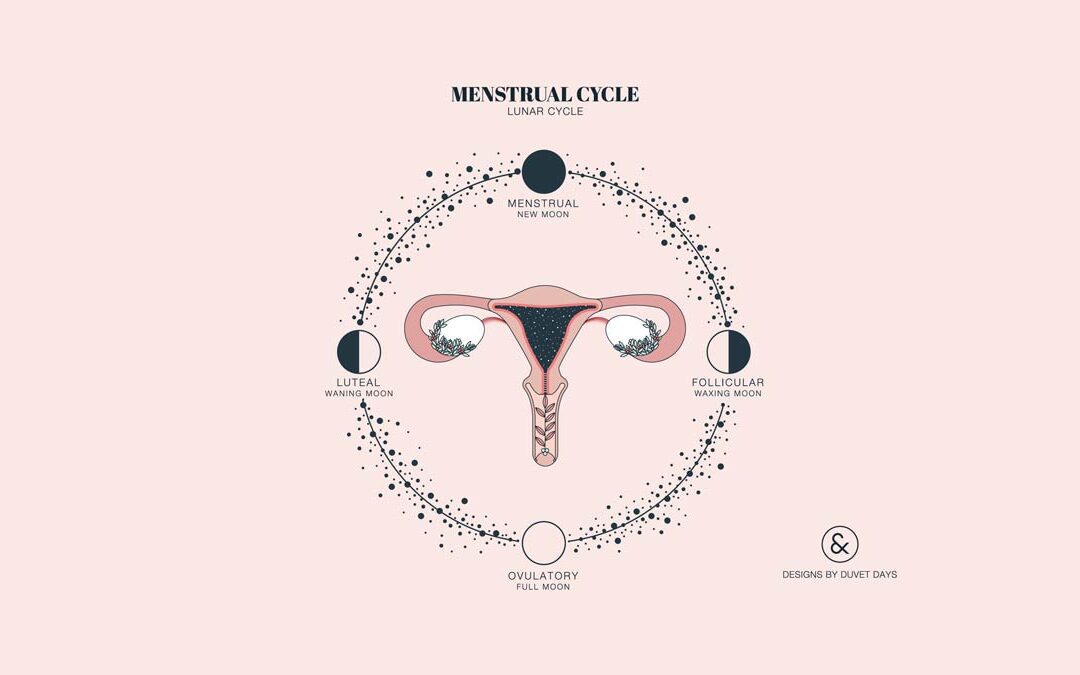
  • Estrogen dominance over its sister hormone progesterone: this often leads to a thicker endometrial lining, which often leads to heavier or longer periods than you used to experience, shorter menstrual cycles overall (shorter than 25 days), and breast tenderness or pain, migraines, irritability, heightened anxiety, or full on anger or rage.
  • Another sign of perimenopause is anovulatory cycles, or cycles where you don’t ovulate: this could result in a missed period or a few missed periods a year, or it could lead to heavier periods when you do actually get it.
  • Women also report a less than stellar sex drive and a harder time getting into the mood. And another sign is an inability to fall asleep easily and stay asleep throughout the night.

I think the best way to prepare is to pay attention to and manage your stress response as best you can. The reason for this is that once your ovaries wind down and eventually cease to make estrogen and progesterone each month, your adrenal glands take over. They’ll never make as much estrogen and progesterone as your ovaries, but they do a decent job if they are in good shape. However, our wildly stressful lives put a huge strain on our adrenal glands, and as such, many women enter this time period with “exhausted” adrenals that don’t work so well. 

With so much information available online these days, do you feel it has helped or hindered how society views menstruation? If hindered, how can we shift our perspective on our periods more positively?

I truly believe periods are having their moment, finally. There has been a buildup to this “moment” for about a decade, and then NPR named 2015 the year of the period! In my opinion, it was the year that menstruation went mainstream. 

It was the year that Kiran Gandhi, an L.A. based musician ran the London marathon on her period without using period protection. This is known as “free bleeding,” and it’s definitely become a thing for sure! It’s also the year Donald Trump attempted to insult Megyn Kelly the GOP debate moderator for having her period. There was a social media explosion after this that has continued to grow. 

Also in 2015, the word “menstruation” was mentioned in five national news outlets 167 times, which was more than triple the amount of 47 from 2010.

I truly feel that all this media attention has helped shape a more positive societal view on menstruation. It seems like everyone is talking about periods in some capacity, but that might be my own narrow world view ha ha. 

At the same time, we still have work to do. A survey by Flexx, a company that makes disposable tampon replacement discs, found that 73 percent of women across the world hide their periods from others, and 68 percent are afraid to talk about their periods with men. Another survey published by period panty maker THINX found 58 percent of women felt embarrassed simply because they had their periods, and 42 percent experienced period shame.

Here’s what I know from doing this work for many years: 

When you shine light on something that is considered taboo, it no longer feels scary or shameful, so I believe that every woman and girl should take the time to educate themselves about their body, their hormones, their period and their sexual health. In the process of educating yourself, it’s crucial that you start talking about all this stuff – that’s when we really shift into more positive dialogue. Talk to a close girlfriend, or your sister, or find a moon circle in your community (which are often hosted at yoga studios). 

Period sex: Tips? Tricks? Advice?

Ah, period sex. This is quite possibly the most controversial topic in our culture, second only to periods of course! Sex might be the last thing on your mind when you’re irritable, tired and dealing with cramps—not to mention it can be messy—but if you are in the mood, you’re not some freak of nature. In fact, research has found that many women find period sex to be the only thing that gives them any relief from their cramps and headaches.

Since levels of progesterone—the hormone that tends to suppress libido—are low after you start your period, and estrogen – one of the hormones that revs your sex drive – begins it’s ascent, your desire for sex may increase. Additionally, there may be a small uptick in testosterone (our libido stoker) during your period. All of this accounts for why some women crave sex during their periods. 

Additionally, lots of women know that this time of the month means their chances of getting pregnant are virtually impossible (not entirely though!), and they feel more open to sex.

I suggest using a towel or blanket for period sex, lots of lube and approaching it with an open mind if you’ve never done it before. Things tend to be a little sensitive down there during your period, so penetrative sex may be out of the question. I recommend focusing on external stimulation instead. And because you’re not 100% infertile during this time, consider condoms as well if you’re not on some form of birth control. 

We do a feature in the issue called “Letters to my younger self.” If you could give one piece of advice to your younger self what would it be ( about periods or anything really!)

I would tell my little girl self that there will be many surprises along the way (good and not so good), but it’s all going to work out exactly the way it’s supposed to. Life gets a whole lot better after your 20’s, but don’t rush to grow up either, because it also gets a whole lot more complicated.

I’d also say, there are no mistakes, because you have a supreme destiny calling for your life. Your job is to know that. And sometimes, when you’re not listening, you get taken off track, but it’s all leading to the same path/destiny calling. 

There is no such thing as a wrong decision in life. There is no such thing as a failure, because failure is just that thing trying to move you in another direction. So you get as much from your losses as you do from your wins. Understanding that will help you not be thrown by random circumstances, because your life is bigger than any one experience. Oh and also, give less f–ks about what others think!

As for your period, remember that your period is not just your period. She’s telling you something every time she comes to visit. Pay attention to the undesirable symptoms you experience and talk to a family member or your doctor about them. You have so much more control over your body and your period than you think you do!
nicolejardim.com

@nicolemjardim

Plant Medicine 101

Plant Medicine 101

Plant Medicine 101

By Vanessa Chakour

LIFESTYLE

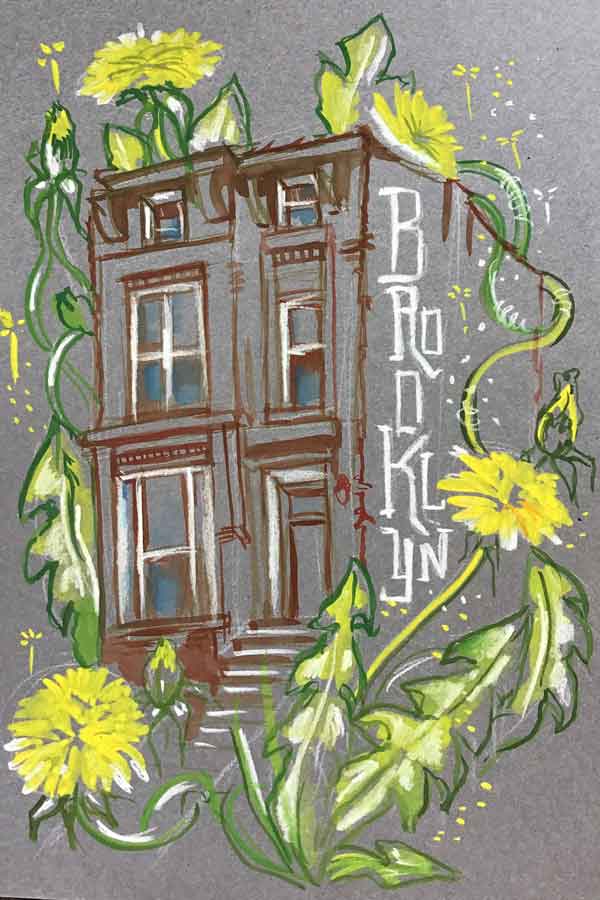
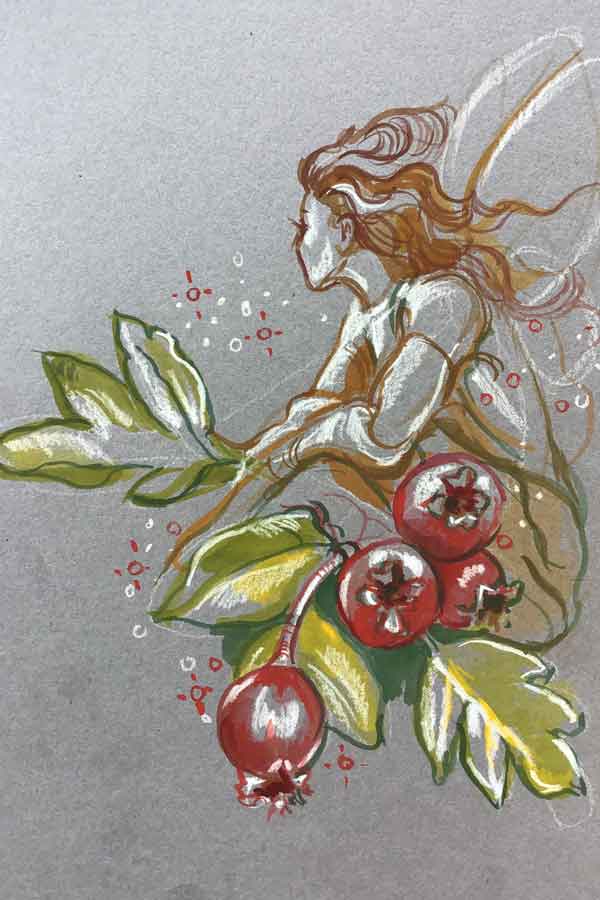
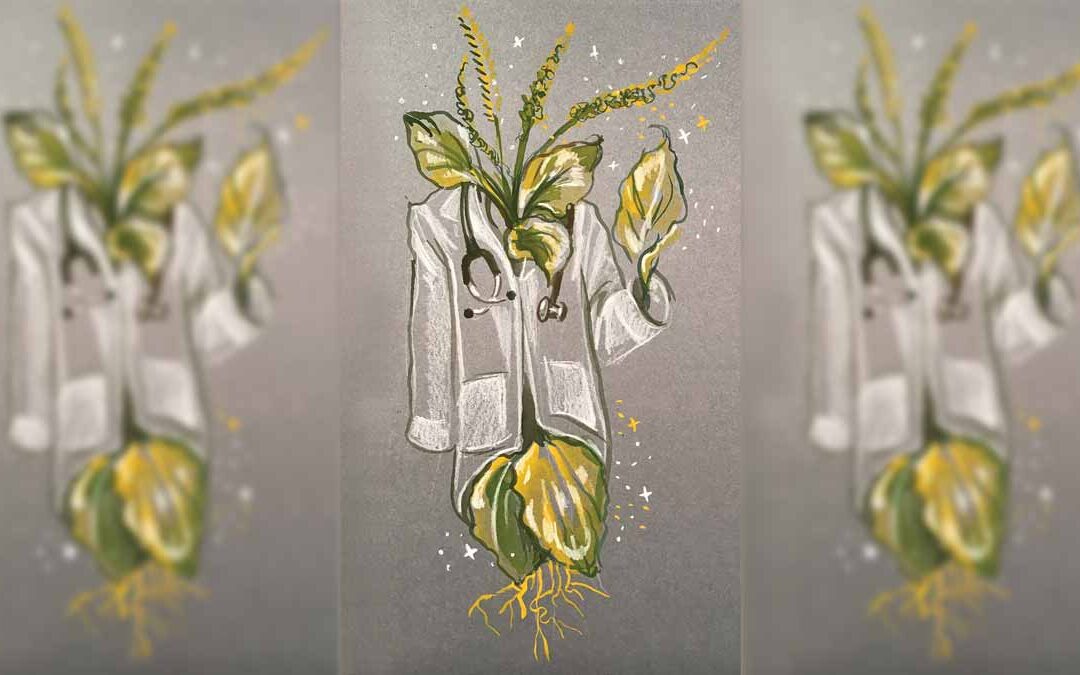
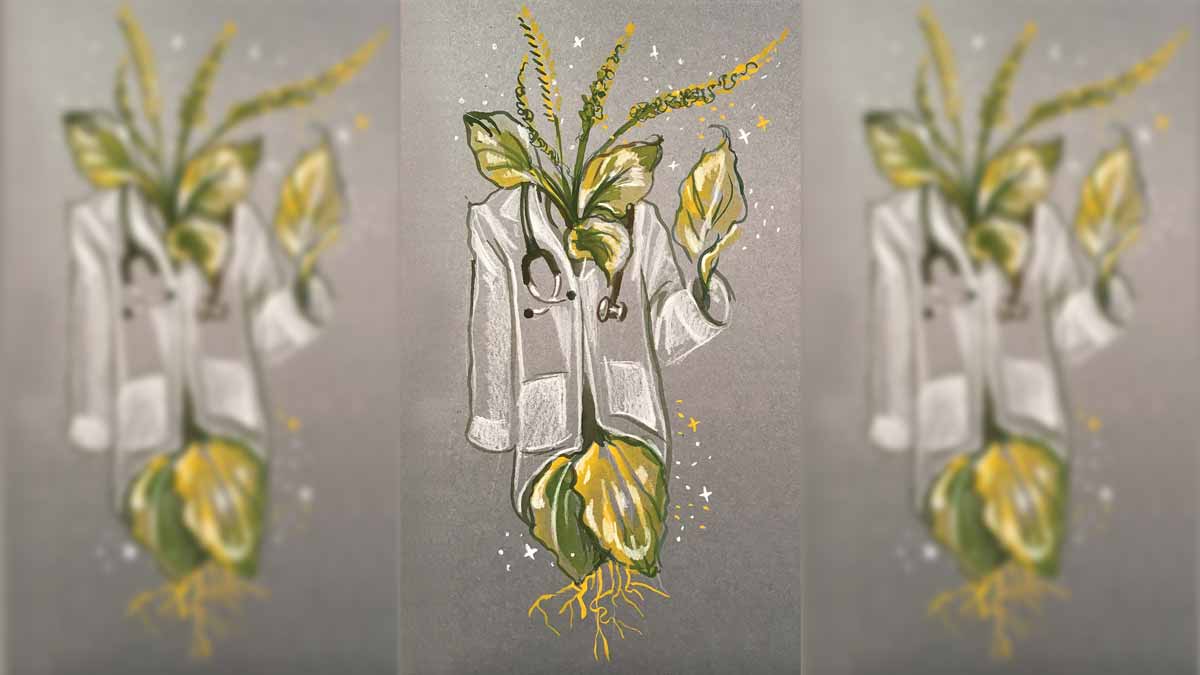
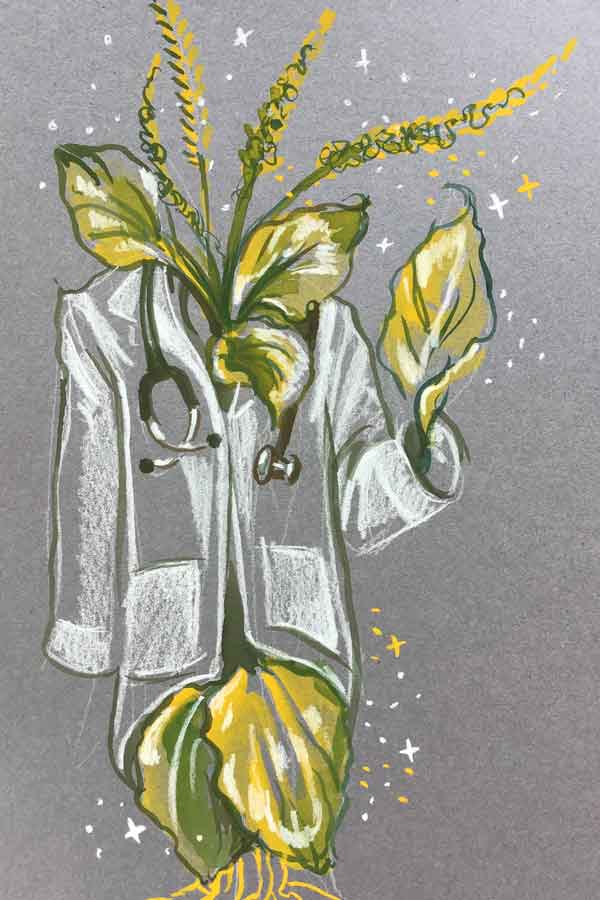
Yoga Plus Magazine - plant medicine illustration - photo credit -Chelsea Heneise
As long as humans have inhabited this earth, there has been a life-supporting, palpable connection between us and the natural world. Before grocery stores, pharmaceuticals, physicians, or farming, humans foraged, experimented and communicated with the plants around them. Over time, a huge amount of knowledge was accumulated about the power of plants to heal and nourish — from the amazing plethora of life right under our feet and all around us. In more modern times, food sources have become more centralized, people have become citified, wisewoman healers have been persecuted and indigenous tribal communities have been torn apart through colonization. As a result, much of this knowledge has been lost. More and more, people are now realizing how vital it is to reclaim our connection to nature and learn from those who tenaciously held onto this relationship and knowledge. Our relationship to nature is innate. We can recall and remember.

Conscious, direct encounters with nature are not only healing, but can develop our sense of the sacred and deeply affect our lifestyle choices. The path of herbalism has helped me heal on all levels of mind, body and spirit and it’s an honor to facilitate this remembering for others. Just as plants grow in spirals, we heal that way too. When we go inward to uncover the root cause of a mental, physical or emotional challenge and release it, we create space within and expand without. Eventually, we grow stronger and are ready to dive inward again… deeper this time, as we expand further. This journey of depth and expansion goes on and on. Along the way, we create a greater capacity for joy and are healthier for confronting our challenges. In the practice of herbalism, we’re asking for help from nature and there is no better place to begin than in the wild.

So, what is wild? Wild is our true nature freed from the bounds of social conditioning and perceived limitations. Wild is our authentic, natural self. Weeds are the epitome of wild nature. They’re strong, resilient and can’t be controlled. They live with us in rural and urban areas alike, bursting through cracks in concrete and bringing beauty, color and character to otherwise boring lawn. Weeds and wild plants like mugwort, burdock, dandelion, hawthorn and nettles are some of the most powerful guides to our true and wild selves. These guides connect us to the life force energy of earth that is some of the deepest healing we can find.

There are countless medicinal plants in New York City bursting through pavement, reclaiming abandoned lots and populating city parks. Many of my medicinal plant walks take place in Prospect Park in Brooklyn where we find all the plants mentioned above along with Linden, Cleavers, Shepards Purse, Plantain, Yellow Dock, Wild Rose, Raspberry Leaves, Red Clover, Mullein and many more. Meet a few of my favorites living right under your feet:

Mugwort helps us remember and re-wild. The botanical name for this fierce ally is Artemisia Vulgaris, named for the goddess Artemis; the huntress, protector of women, and young and fierce defender of nature. As such, Mugwort holds the boundary between the wild and domesticated self, loosening the stagnant energy of old traumas, stories, and emotions that are blocking access to our body’s innate strength. The silvery back of mugwort’s leaves let us know that this plant is medicine of the moon and womb. Mugwort is famous for helping us heal via the dream realm; moving what is hidden under the realm of conscious awareness into our dreams to confront and heal. This wild healer grows everywhere—through the sidewalks, next to parking meters, in vast fields and the edge of the forest. She is ever present and ready for us to use her medicine. 

Mulleinis a biennial plant that helps us stand tall and breathe deeply. The hair on the leaves of the mullein plant can withstand harsh winds, and the second year stalk stands tall in any situation. This plant is an expectorant, helping our lungs in expel mucous by loosening it from the walls of the lungs to be coughed up. You’ll find this plant growing in cities, on mountaintops and in fields, letting us know this is a medicine of adaptability. Mullein helps relieve our joints of tension and inflammation so we can move about the world more freely as we breathe. Though I rarely need to use mullein for asthma now, the tincture or tea is one of the first I’d turn to if I did. This plant is commonly used for hay fever, emphysema, colds, flu, hoarseness, bronchitis,

Hawthorn, a tree in the rose family, is a medicine of the heart. This fiery tree—also known as the May Tree—blooms around the Celtic holiday of Beltane and is steeped in mythology. Many believe these trees are inhabited by Faery Folk. The leaves, flowers, berries, and thorns are all used in medicine to strengthen the heart, normalize blood pressure, offer courage, promote passion and healthy circulation. You’ll find Hawthorn in many aphrodisiacal formulas. In addition to passion and protection with her long, intense thorns, working with Hawthorn helps us see other perspectives and fall more in love with ourselves.

Goldenrodis a beautiful yellow flower lights the way, late summer into autumn as the days become shorter and the nights become longer. This plant, whose botanical name is solidago (“to make whole”), is a medicine of transition, balance and integration. Goldenrod illuminates our path as we embrace change and brings warmth, and sunshine into cold, damp spaces in the body clearing mucus, fungus, unprocessed grief and congestion.

Burdock Root reaches below the surface of the soil, and deep within our bodies to connect us to source energy. Burdock root grounds us, helps the waters of the body flow, supports the livers and nourishes the adrenals. If we want an especially potent root, we’d harvest on the new moon in early spring or autumn when the sky is dark and the energy of the earth sits below the surface.

Elder trees are rich in folklore and have strong regenerative powers, growing easily from cuttings. A potent symbol for the cycle of life, this tree is deeply connected to the realms of faery and the underworld. It is said that sleeping under an Elder at midsummer may transport you to their realm. Many are familiar with Elderberry syrup, an incredible cold and flu remedy that boosts the immune system. Elder flowers help to cleanse the kidneys, blood, and skin by opening up the pores; they are healing allies for sinus issues and hay fever. Both the flowers and berries can be ingested as tea, tincture, and syrups.

Practices to engage:Embodied walks in nature; noticing the patterns of tree bark one day, and the small plants that grow close to the earth, the next. Each day, attune your awareness to something different. Depending on the season, you might look at patterns in flowers, shapes of leaves or the expression of branches. Eventually, allow yourself to be guided to one plant that calls to you, and notice something new about that plant every day. This practice awakens your instinct and ability to relate to the natural world. We can uncover many answers on our own, which is incredibly empowering.

If you’re interested in wildcrafting (harvesting plants from the wild), make sure you’re identifying the plant correctly, are harvesting somewhere safe for you and the population of the plant, and ask permission from the plant before harvesting. This engages your intuition as you approach the plant with reverence. The right way to begin a relationship.

The faster we can understand that we are nature and not separate from the web of life, the better off we’ll be as individuals, and the better off will be our shared home that is this planet. Remembrance and reconnection is a vital aspect of health and the ability to thrive.

YOGA PLUS MAGAZINE - Plant Medicine 101
What is Reiki?

What is Reiki?

What is Reiki?

By: Melissa Honkanen
By: Sarah Biffen, L.Ac DACM
Photos: Chas Kimbrell
Pillows: Chattra
Yoga Mat: Jade

LIFESTYLE

Yoga Plus Magazine - Life Reiki session

What the heck is Reiki? We sent our friend Melissa to experience a session with Dr. Sarah Biffen and to report back to us about her experience. We also asked Dr. Biffen to share with us what a Reiki experience is like from her perspective, and what you can expect. We share both their perspectives with you here.


REIKI: Students Perspective

By: Melissa Honkanen

“Whoa! I just won Monday!” Or at least that’s how I felt after I completed my first 60-minute Reiki session. Who knew that midday Reiki would prove to be exactly what this gal needed to start the year. Here’s what happened.

Dr. Sarah Biffen was warm and inviting, and I immediately felt at ease in her office. We sat down for an initial consultation, detailing I had no major ailments. She explained that reiki would engage the parasympathetic nervous system, or simply put, our “rest and digest” system, the opposite of our sympathetic nervous system, or our “fight or flight” response. Dr. Biffen iterated that she would be transferring energy using a light and gentle pulsating touch. I was still mystified.

As I settled onto the heated massage table, I couldn’t help but wonder if the experience would feel like a deluxe yoga savasana. The room began to fill with scents of sage and lavender, and an eye pillow was appropriately placed. Although Dr. Biffen highlighted she would use her acupuncture expertise during the session, I knew she wouldn’t be using needles. Could Reiki also target specific medians?

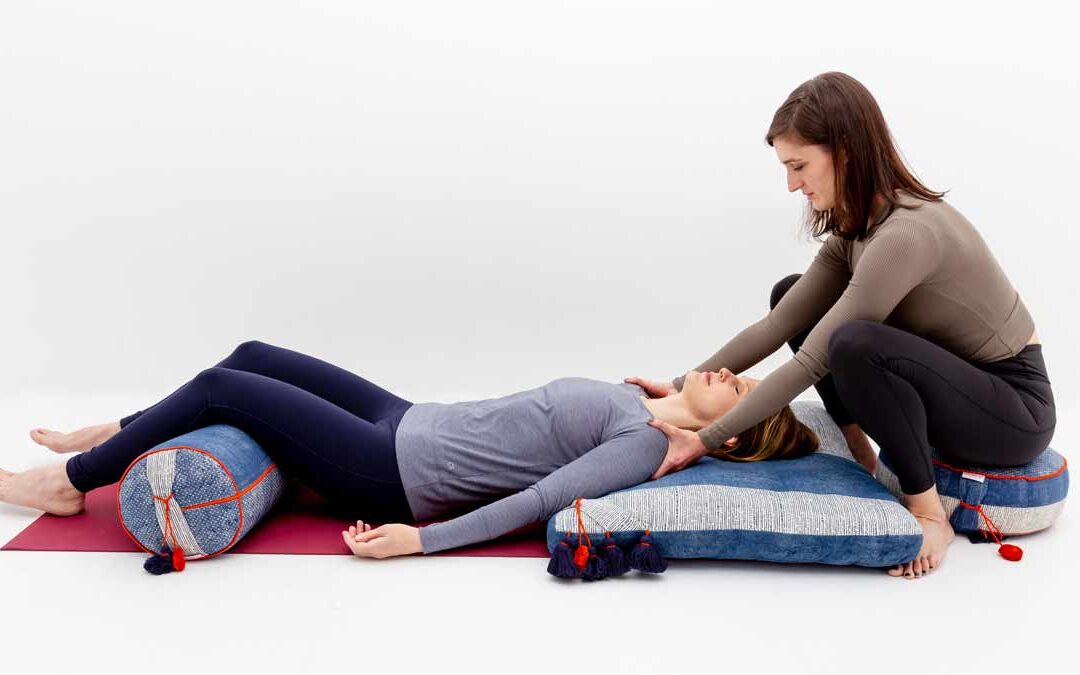
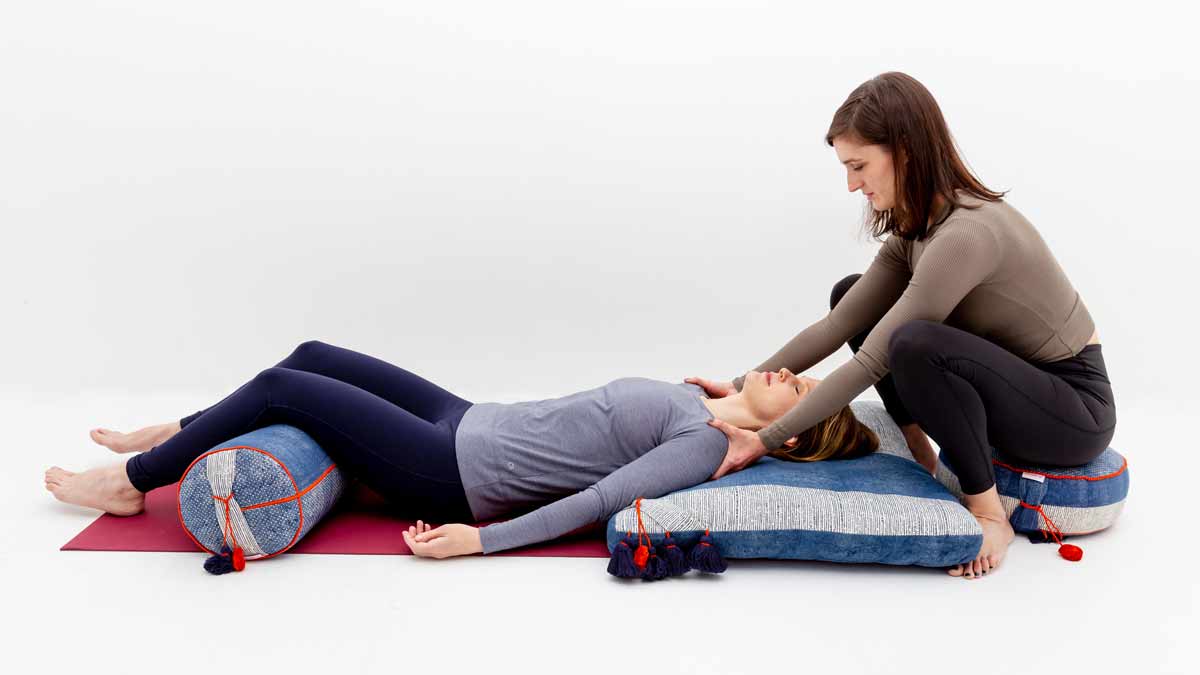
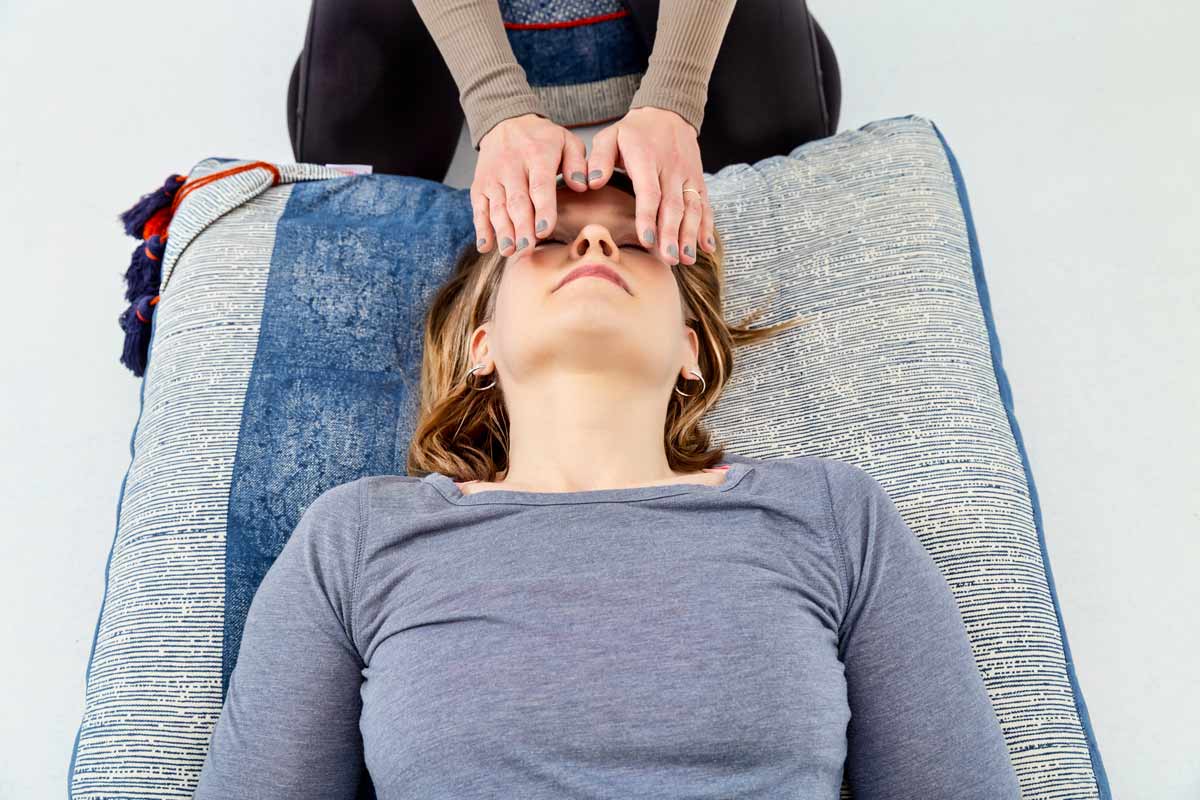
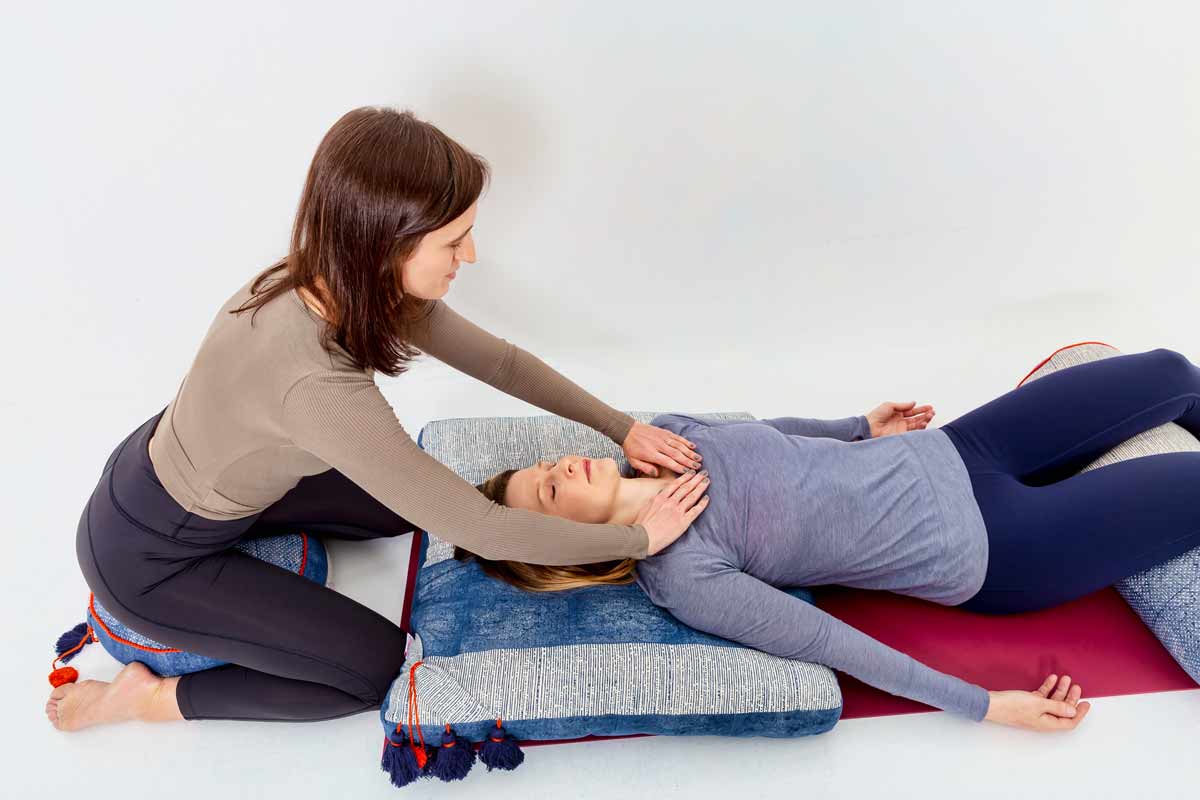
Dr. Biffen began the Reiki session with a sustained light pressure with fingertips on my brow ridge. The sensation made me feel more relaxed. In fact, being so relaxed the entire time, I didn’t peek to check to see what was actually happening. Nonetheless, I surely felt like her entire palm or hand creating an energy force on specific points along my ribs, hip points, calf and knee. The light and sustained pressure exuded a positive, warm and healing energy. The session ended with a light sensation of her fingertips on the knuckle points on my big toes.

Although the reiki session was completely relaxing, I was curious about the energy exchange. Did she realize I felt exhausted? I received a hard yes in our post-Reiki discussion. Dr. Biffen had absolutely sensed my energy was depleted. I was impressed. As Nikola Tesla famously said, “If you want to find the secrets of the universe, think in terms of energy, frequency and vibration.”

Are you ready to let the power of reiki balance your energy? Here are 10 tips to help you enjoy your Reiki experience.

  1. No Shoes, No Socks, No Worries

I discovered that Reiki is best with exposed feet. However, I am sure Dr. Biffen would have made an exception if requested.

  1. Mindful Breathing

Slow it down. Let your breath move deeper and slower.

  1. Meditate

The Reiki table is definitely an opportunity for meditation as well as relaxation.

  1. Aromatherapy

Dr. Biffen allowed a choice. I love lavender!

  1. Vulnerability

There were definitely moments I felt vulnerable and unsure of what would happen next. If you feel triggered, don’t hesitate to tell your Reiki practitioner.

  1. Ghost Hands

I felt the phenomenon of the Reiki practitioner’s hands on my body after they’d been removed. Crazy!

  1. Tummy Rumbles

‘Tis a rest-and-digest experience, so I appreciated that Dr. Biffen alerted me that my stomach may rumble. It did!

  1. Emotional Release

She mentioned I may have an emotional release within 24 hours after a Reiki session. I didn’t notice any particular emotion, but I did feel more energetic.

  1. Water

Dr. Biffen recommends drinking lots of water afterwards. Let any toxins be released.

  1. Follow-Up

Expect a neat follow-up email from her detailing how to increase the benefits of Reiki.


REIKI: The Teachers Perspective

By: Sarah Biffen, L.Ac DACM

The origins of Reiki begin a long way from New York City. Roughly translated from Japanese to mean “universal life energy,” this increasingly popular form of light or non-touch energy work was developed by Dr. Mikao Usui. Revealed to him by way of his own spiritual quest, Dr. Usui sought to find a form of medicine accessible to all. Introduced to the United States by Hawayo Takata in the 1930s, it dwelled quietly among the American public for decades.

By the time I connected with this practice 10 years ago, the quietness of Reiki in American culture had elevated to a murmur. While it was often recognized in wellness circles as an effective energy therapy, it had yet to develop a popular understanding. In fact, I feel it’s safe to say it was still largely considered “fringe.” When I first sought out training, the options were limited and relatively difficult to find, even in a progressively-minded hub like New York City. Finally settling on a small training group held in an Upper West Side apartment, I received my first attunement and certification.

The landscape has changed drastically within that time, as people continually seek out complementary therapies. With a wellness industry nearing $5 trillion, Reiki has rightfully attained a place within the American cultural consciousness. It has gone from “woo woo” to an increasingly recognized form of adjunct therapy. Now you can find Reiki trainings in the city with relative ease, with the therapy widely offered by private practitioners, at wellness centers and even hospitals. The word is officially out, and even the government is taking note. Several intriguing National Center for Biotechnology Information(NCBI) studies are examining Reiki’s efficacy in controlling heart rate variability, decreasing cortisol levels and regulating body temperature. In short: tackling burnout.

Reiki was only the beginning of my healers’ journey. Shortly thereafter diving headfirst into a master’s degree in acupuncture and Chinese medicine. However, a Reiki practice remained throughout, and enabled me to course correct my own burnout along the way. Now, as a private practitioner, I often incorporate this healing modality into my work. Having an extensive background in Chinese medicine, and primarily working as an acupuncturist, I’ve been able to recognize the synergistic relationship between these two forms of medicine. Reiki like acupuncture is a powerful tool to stimulate the meridian channels of the body. This partly works by activating the parasympathetic nervous system (our “rest and digest” functions) and calming our sympathetic nervous system (our “fight or flight” responses). I often give clients the example of a tried-and-true test of patience in New York City: the subway system. Not only do our meridians comprise our body’s circulatory, lymphatic and metabolic transit systems, but a backup on one will almost assuredly inhibit the others. Easing flow within meridians is crucial for systemic health, and these interventions nurture an optimal healing environment.

Proprioception is another important mechanism in Reiki response, and one I like to draw attention to in my discussion with clients. This is our body’s innate ability to sense where and what it’s doing, without us having to actively think about it. It’s sometimes lovingly referred to as our “sixth sense,” and I like to think of it as part of our aura. This hardwired extra-sensory perception is sensitive to the intention of what is in our personal field. Again, thinking back to the subway. We may walk on to a train feeling wonderful, but if that’s not the general vibe, you will almost certainly walk off feeling very different. Even without physical aggression. The same goes for who and/or what is in our sensory field. Reiki therapy partially works by tapping into that innate DNA-level intelligence.

Being such an individualized experience, the reactions of each client are incredibly personal. For this reason, I like to be in touch with patients both before and after Reiki treatments. Offering guidance on how to prepare and what to expect. Here you’ll find some of my favorite tips for before and after your treatment. Always remembering that we are our greatest healers.

How to Prepare:

  • Have a light meal. Don’t arrive hungry or incredibly full.
  • Wear comfortable, preferably unrestrictive, clothing.
  • Avoid caffeine and alcohol consumption both before and after treatment.
  • Keep an open mind!

Post-Reiki Self-Care:

  • Stay Hydrated: be sure to drink lots of non-caffeinated fluids for the rest of the day. This continues to help fluid metabolism and lymphatic drainage in your body. Plus, water is an excellent energetic conduit.
  • Nourish Yourself: a sense of hunger post-Reiki is not uncommon. Be sure to listen to your body and nourish it with a healthy snack or light meal in the hours following your session.
  • Gentle Movement: Moving your body with light activity and gentle stretching is an important way to increase the calming effects of your treatment and continue to clear the mind. This can take the form of a long walk, restorative yoga or simply stretching at home.
  • Meditation and Mindfulness: Buzz words these days, but for good reason. The benefits of these mental states are being studied, and are widely shown to increase mental function and clarity throughout the day. This practice offers the perfect support for Reiki treatments.
  • Go With the Flow: Reiki can bring up various emotional responses. This looks different for everyone and is often something dormant that’s finally able to release. Don’t fear this: our bodies and minds need an emotional release. I find it helpful to channel this into whatever creative way speaks to you. Find something that is relieving for you to express. Whatever helps you relax and reflect.
Yoga Plus Magazine - Life Reiki session