CHAKRAS LEADING THE WAY

CHAKRAS LEADING THE WAY

CHAKRAS LEADING THE WAY

By Dr. Donna Jagielski, Founder & CEO of Blessings Balance Breath Yoga

PROFILES
BEN CLARK INTERVIEW

Yoga practitioners are already aware of chakras, the energy centers, each one representing a different area that helps us to live a fruitful and balanced life on and off the mat. Based on life circumstances, chakras may become out of balance, and the strengths any individual exhibits will result in one or two chakras being more predominant. Many times people of faith may feel conflicted believing in chakras, whereas in fact during my in-depth work and practice of Christ-centered yoga, chakras are referred to as “our God-given energy centers.” These powerful energy centers are a gift to perform impactful work, especially off the mat.

During both the practice of yoga and yoga therapy approaches, discussion can be given to how the strength and predominance of particular chakras can be witnessed in one another, especially among both secular and religious leaders throughout history. Here we will explore each chakra’s characteristics and the alignment of a historical leader. You are invited to reflect on the impactful work you do, and the subtle understanding of tapping into the strength of your chakras.

Root Chakra (Muladhara): Located at the base of the spine, it represents stability, security, and basic needs (grounding).

Historical alignment: Nelson Mandela, born in 1918, stands as a towering figure in the global struggle against oppression and apartheid and an example of cultivating characteristics of your Root Chakra. As a South African anti-apartheid revolutionary, political leader, and philanthropist, Mandela dedicated his life to fighting racial injustice and inequality. His unwavering commitment to peace and reconciliation led to his enduring legacy as a symbol of hope and resilience.

Sacral Chakra (Svadhishthana): Located in the lower abdomen, it is associated with creativity, emotions, and sexual energy.

Historical alignment: Cleopatra, born in 69 BCE in Alexandria, Egypt, was the last active ruler of the Ptolemaic Kingdom of Egypt and exemplifies a strong focus on tapping into the Sacral Chakra. Known for her beauty, intelligence, and political acumen, Cleopatra’s reign was marked by her strategic alliances and diplomatic prowess. She famously formed relationships with Julius Caesar and later Mark Antony, solidifying her position as a formidable leader in the ancient world.

Solar Plexus Chakra (Manipura): Located in the upper abdomen, this is the center of personal power, confidence, and self-esteem.

Historical alignment: Malala Yousafzai was born on July 12, 1997, in Mingora, Pakistan. She gained international attention as a young activist for girls’ education after surviving an assassination attempt by the Taliban in 2012. Malala’s advocacy work began at an early age when she wrote a blog for BBC Urdu under a pseudonym, detailing her life under Taliban rule and her fight for education exemplifies characteristics found in cultivating the Solar Plexus Chakra.

Heart Chakra (Anahata): Located in the center of the chest, it is the bridge between the lower and higher chakras, governing love, compassion, and connection.

Historical alignment: Jane Goodall was born on April 3rd, 1934, known as a remarkable primatologist and anthropologist. Equipped with little more than a notebook, binoculars, and her fascination with wildlife, Jane Goodall braved a realm of unknowns to give the world a remarkable window into humankind’s closest living relatives. Through nearly 60 years of groundbreaking work, Dr. Jane Goodall has not only shown us the urgent need to protect chimpanzees from extinction; she has also redefined species conservation to include the needs of local people and the environment.

Throat Chakra (Vishuddha): Located in the throat, it is responsible for communication, self-expression, and truth.

Historical alignment: Martin Luther King Jr., born in 1929, was a towering figure in the American Civil Rights Movement. As a Baptist minister and activist, King dedicated his life to advocating for racial equality, nonviolent resistance, and social justice. His eloquent and extremely articulate speeches are etched in the history books forever.

Third-Eye Chakra (Ajna): Located between the eyebrows, it governs intuition, imagination, and wisdom.

Historical alignment: Joan of Arc, born in 1412, was a pious peasant in medieval France who believed that God had chosen her to lead France to victory in its long-running war with England. With no military training, Joan convinced Crown Prince Charles of Valois to allow her to lead a French army to the besieged city of Orléans, where they achieved a stunning victory. After seeing the prince crowned King Charles VII, Joan was captured by enemy forces, tried for witchcraft, and burned at the stake at the age of 19. By the time she was canonized in 1920, Joan of Arc was considered one of history’s greatest martyrs and the patron saint of France.

Crown Chakra (Sahasrara): Located at the top of the head, it represents spiritual connection, enlightenment, and unity with the divine.

Historical alignment: Mother Teresa, born Agnes Gonxha Bojaxhiu in 1910, dedicated her life to serving the poorest of the poor in Calcutta, India, and around the world. Renowned for her compassion, humility, and unwavering commitment to helping the destitute, she founded the Missionaries of Charity, a religious congregation that provided care for those suffering from poverty, disease, and neglect.

Another historical figure that celebrates a powerful Crown Chakra center is Mahatma Gandhi, born in 1869, remains one of the most revered figures in the history of India and the world. Renowned for his philosophy of nonviolent resistance, Gandhi led India’s struggle for independence from British colonial rule, employing methods of civil disobedience, fasting, and peaceful protest.

No matter where any one is during that path and journey in life, each person has received their gifts through the energy centers. Using free will, it is a choice to either harness and use those gifts and strengths or let them lay dormant. Just imagine a world if each of the above leaders noted here had ignored their gifts and the strength within their predominant energy centers. Heed the invitation to lead with yours and make your impact.


Dr. Donna Jagielski is the Founder & CEO of Blessings Balance Breath Yoga, RYT-500, RCYT-95, R-YFMT- 500, R-CYAMT. Dr. Jagielski is dedicated to bringing yoga and yoga therapy to underserved, underrepresented, marginalized, and system/justice-impacted populations. Providing the healing practice of yoga to reclaim empowerment and harmony. Restoring self-esteem, self-efficacy, and individualism.
THE RIVER OF GRACE

THE RIVER OF GRACE

THE RIVER OF GRACE

By: MC Yogi

ART & MUSIC

BEN CLARK INTERVIEW

When I first started practicing yoga at 17, my life was a mess. I was struggling with depression, trauma, addiction, and confusion. I felt lost — without purpose or direction — uncomfortable in my own body and mind. I was insecure and self-critical, my body was stiff, and anger and stress were my constant companions.

Then came Hatha Yoga. Thanks to my dad, who was my first teacher, I found a practice that began to realign my mind and my life. Yoga gave me the structure and stability I desperately needed — it grounded me in my body, quieted my mind, and introduced me to deeper states of natural bliss.

Now, nearly 30 years later, my practice has matured. The ongoing process of alignment feels more effortless, more subtle. It’s no longer driven by personal willpower but guided from within. I’ve learned that simple, repeatable practices — like shifting my focus toward gratitude, lengthening my exhale, relaxing my body, and letting go of control — help me reconnect with a deeper current I call the River of Grace. This sacred stream is always flowing, infinitely accessible, and constantly renewing.

When I was younger, I believed that the harder I practiced, the greater the results. That intensity served me for a time, deepening my commitment — but I eventually realized that my own effort was unsustainable. I needed to surrender to something larger, something more luminous and enduring. Meditation revealed that surrendering to a higher power is the master key to remaining relaxed, receptive, and open to this vast ocean of Grace.

Grace isn’t something we earn. It’s a natural, divine force — like a river that’s always flowing if we allow ourselves to receive it.

Yoga first taught me to draw my senses inward into the present moment, but my mind would still wander. Through meditation and prayer, I discovered that the awareness within never changes. It is still, quiet, ancient, innocent, wise, all-loving, and awake. It does not judge or condemn — it simply is. The more I practiced resting in this sacred awareness — without my ego pushing, pulling, or trying to escape — the more I began to see myself with compassion.

That’s when yoga became truly alive for me. I realized that when we rest in Spirit, Spirit does the rest. This universal presence of pure, loving attention is radiant, blissful, and infinitely kind. It is always here. As the great saint Paramahamsa Ramakrishna said, “The winds of grace are always blowing, but you have to raise the sail.”

This loving awareness — the light shining through our eyes — is like that gentle wind, always blowing. To catch it, we must simply relax, open, and receive. Once we raise the sail, the wind will carry us exactly where we need to be.

Over the years, I’ve learned that while effort is important — especially at the beginning — it’s incomplete without surrender. Every inhale needs an exhale. The true treasure of yoga reveals itself when we open, relax, and surrender to Grace.

In one of my songs, “Treasure in the Center,” I wrote:

“There’s a treasure in the center,
A treasure in the center,
A treasure in the center that’s too deep to measure,
It can never be destroyed, it can never be severed,
And it shines forever.”

Grace is that treasure — the radiant jewel at the heart of our being. It emanates from within as pure, unconditional, divine love, shining equally in all directions like the sun. When we soften our grip, slow our breath, and shift into gratitude, the clouds of the mind part and Grace shines through. That’s why great saints like Ramana Maharshi, Neem Karoli Baba, and Anandamayi Ma seem to beam love and peace through their eyes — the clouds are gone, and only Grace remains.

All the practices of yoga — asana, pranayama, mantra, pilgrimage, ritual — are beautiful tools, but they all point to one essential truth: to relax, open, and rest in Spirit so that Grace can flow through us.

After nearly three decades of practice and learning from incredible teachers, I’ve gathered everything I’ve learned into one resource: the MC YOGI Meditation & Yoga App. The app includes guided meditations, short yoga practices, weekly prayer podcasts, my full music library, lyrics, and a growing collection of deep sleep audios.

Because the more we relax, the more we remember.
And the more we remember, the more we relax.
Over time, this simple rhythm becomes a living prayer —
a natural flow back into the River of Grace.

ANCIENT PRACTICE, MODERN IMPACT: HOW MORE YOGA CAN BUILD A BETTER WORLD

ANCIENT PRACTICE, MODERN IMPACT: HOW MORE YOGA CAN BUILD A BETTER WORLD

ANCIENT PRACTICE, MODERN IMPACT: HOW MORE YOGA CAN BUILD A BETTER WORLD

Content from our sponsors at Yoga Alliance

YOGA
BEN CLARK INTERVIEW
Age is often measured in years, but in the yoga community, we measure it in impact. Just as a practitioner’s understanding deepens, time has given us clarity into a single truth - yoga is for everyone.

At Yoga Alliance, our mission is rooted in service: to support the yoga community in advancing high-quality, accessible, and equitable yoga over the past 27 years. We believe meaningful change happens when we listen deeply and collaborate with those who are already doing the work on the ground.

Across the globe, yoga professionals are partnering with their communities to create spaces of healing, resilience, and connection. Through providing funding, resources, and ongoing support, Yoga Alliance works alongside teachers and organizations expanding access to yoga in schools, shelters, hospitals, refugee camps, rural areas, and other underserved spaces.

The stories below reflect the many ways yoga becomes more than a practice; it becomes a pathway to empowerment, belonging, and collective well-being.

Building Bridges Through Yoga in Venezuela | Brirkellia Álvarez Franquiz

“Yoga has given me a greater awareness of myself, the cultivation of mindfulness, and inner harmony.”

Brirkellia Álvarez Franquiz is a lawyer and Hatha Vinyasa teacher (RYT 200), and the founder of Todos En Yoga in Caracas, Venezuela. Her journey began at a community event, where she was struck by the calm focus and grounded presence of the practitioners around her.

Growing up amid economic hardship, Brirkellia felt called to social justice work early in life. She has collaborated with international organizations advocating for human rights and views yoga as a complementary tool for resilience and empowerment.

Through Todos En Yoga, she brings accessible classes to communities navigating economic instability and chronic stress. Participants report reduced anxiety, relief from physical pain, and a strengthened sense of solidarity. What began as a physical practice has evolved into a network of support: neighbors connecting with neighbors, building empathy, and shared strength through yoga.

—----------------------------
 

Yoga as a Tool for Community Healing in Bangalore: Sowmya Ayyar

“Yoga gave me a calling—to develop myself through the capacity of yoga to serve in a multitude of ways in the world.”

Sowmya Ayyar is the Founder-Director of Prafull Oorja Charitable Foundation, a Bangalore-based NGO dedicated to training yoga therapists to serve vulnerable populations. With a background in social work, she witnessed firsthand the toll of trauma and systemic inequity and the profound potential of yoga as a tool for both individual and collective healing.

Introduced to yoga through her mother and great-grandmothers, Sowmya later returned to the practice during her own healing journey. Restorative yoga became a refuge, eventually leading her to pursue teacher training and therapeutic applications.

Through Prafull Oorja, yoga reaches children with special needs, incarcerated individuals, and women in rural communities. Programs support motor skill development, trauma recovery, and self-agency. Across each setting, yoga is offered not as a luxury, but as a practical tool for dignity, stability, and empowerment.

For Sowmya, the heart of the work is unity. By equipping communities with accessible therapeutic tools, she nurtures environments where compassion and resilience can take root.

—----------------------------
 

Making Yoga Accessible in Lebanon: Sandy Boutros

“Introducing yoga to the communities I work with is like an introduction to the Self. The hardships of life make us forget to embrace the body, breath, and mind. Yoga brings back self-awareness and self-love.”

Based in Beirut, Lebanon, Sandy Boutros is a yoga teacher and founder of Koun, an NGO committed to expanding access to yoga in underserved communities. Her initial curiosity about yoga emerged through her interest in psychology and philosophy, particularly the spiritual dimensions explored by Carl Jung.

After experiencing the transformative power of yoga on retreat, Sandy returned home with a renewed sense of purpose. She observed that yoga in Lebanon was often concentrated in affluent communities, leaving many without access. In response, she began volunteering in refugee camps and migrant centers, offering trauma-informed classes to individuals navigating displacement and economic hardship.

Through Koun, she partners with local organizations to provide sustainable programming in shelters and community centers. For her students, yoga becomes a way to reconnect with the body, regulate stress, and rebuild a sense of agency.

—----------------------------
 

Creating Space for Healing in Indigenous Communities: Roxanne Sanchez

“Yoga is a lifelong practice of deepening your connection to the breath to be fully present and aware—aware of your contribution to the present moment and how you choose to cultivate peace for all.”

Roxanne Sanchez, known by her native name Toh’tcho-OhLonē, Baby Hummingbird, Sister of WolfClan, Guardian of the North and Wisdom Keeper of the Earth, is a yoga teacher from New Mexico whose work bridges Indigenous traditions and yogic principles.

Yoga entered her life at age 21 while navigating chronic pain and injury. Breathwork and meditation became powerful tools for managing physical discomfort and deepening self-connection. Over time, her practice evolved into a lifelong path of healing and service.

Recognizing a need for accessible wellness spaces in her rural community—where poverty, addiction, and historical trauma are ongoing realities—Roxanne opened a studio rooted in cultural respect and inclusivity. She offers classes to Indigenous communities, people of color, and individuals seeking healing from intergenerational trauma.

Her studio serves as a safe, nonjudgmental space where movement, spirituality, and cultural identity coexist. For many, yoga becomes a bridge—honoring traditional healing practices while embracing contemporary tools for well-being.

Moving Forward, Together

These stories are just a glimpse at the teachers and organizations working every day to make yoga more accessible, inclusive, and responsive to community needs.

At Yoga Alliance, we remain committed to listening, learning, and collaborating with practitioners around the world who are using yoga as a force for connection and care. When yoga is rooted in community, it becomes more than individual transformation; it becomes collective impact.

To learn more about how yoga professionals worldwide are fostering healing and resilience, visit yogaalliance.org/love.

A WEEKEND THAT BROUGHT ME BACK TO MYSELF

A WEEKEND THAT BROUGHT ME BACK TO MYSELF

A WEEKEND THAT BROUGHT ME BACK TO MYSELF

SPONSORED CONTENT FROM OUR PARTNERS

TRAVEL

BEN CLARK INTERVIEW
A Weekend That Brought Me Back to Myself
Looking for a yoga retreat in Northern California? Mount Madonna Center offers Personal Retreats, yoga classes, meditation, hiking, wellness services, and overnight stays among the redwoods near Santa Cruz.

Why I Needed a Weekend Away
The past few weeks have been nothing short of a whirlwind of events. I spent over 50 hours completing my Pilates training, flew to Los Angeles for a week-long work trip, got approved for a new apartment, and started packing up my life. This was just the last two weeks! 

When it rains, it pours. That is exactly how the last month of my life has felt: nonstop running around, busy days, working constantly, and falling asleep as soon as my head hits the pillow from exhaustion. But I know this pace of life is not sustainable. And that is why I carved out a weekend retreat at Mount Madonna.

The best time for relaxation is when you feel like you have no time for it. We need to intentionally place times of rest, otherwise, we will never get to it and eventually experience burnout. 

Camping at Mount Madonna Center
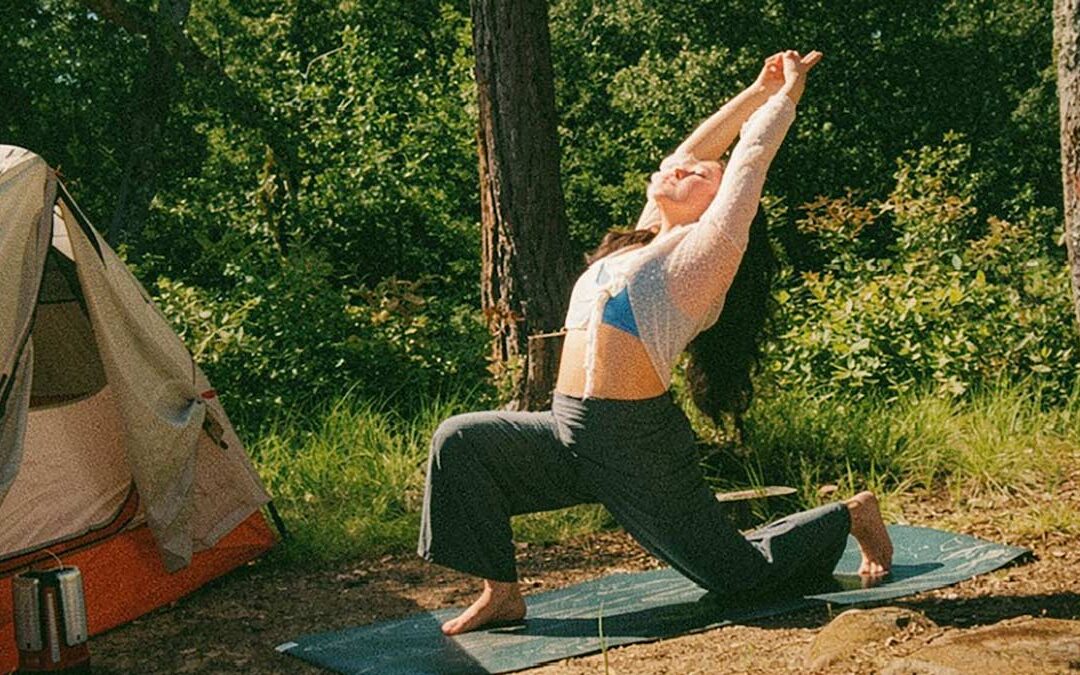
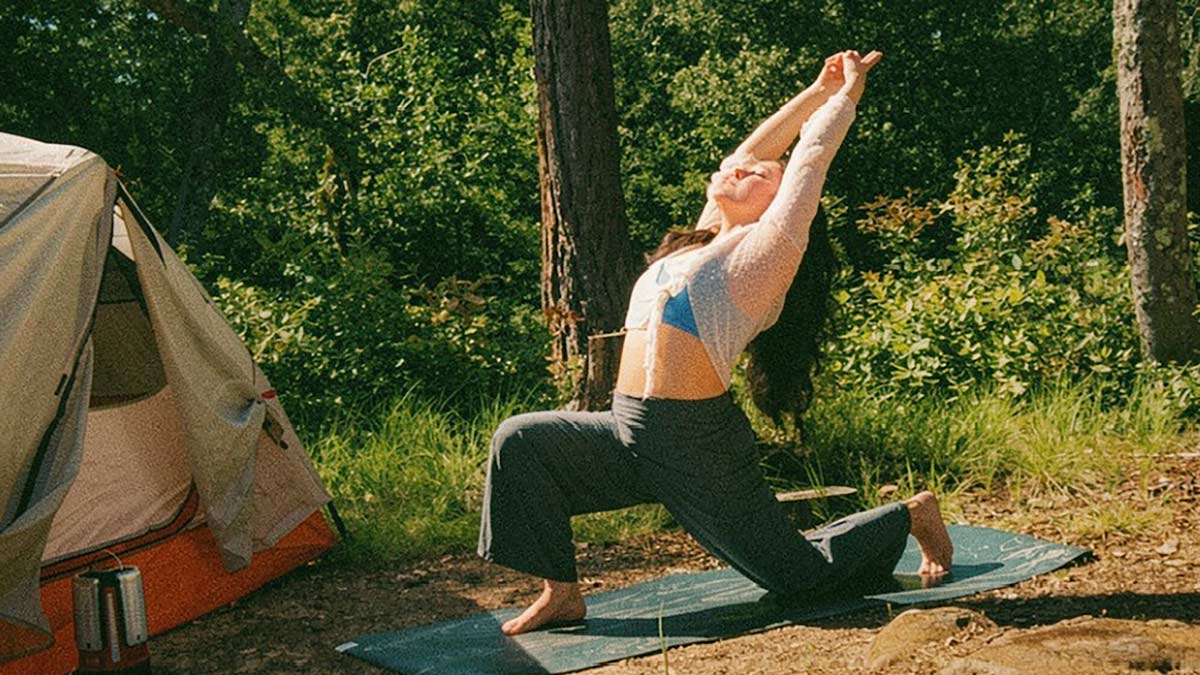
This weekend, I went camping in the mountains of Northern California. The Mount Madonna Center is a serene yoga retreat center. I opted for a Personal Retreat weekend, where I got to create my own schedule and choose which of their offerings I wanted to enjoy. 

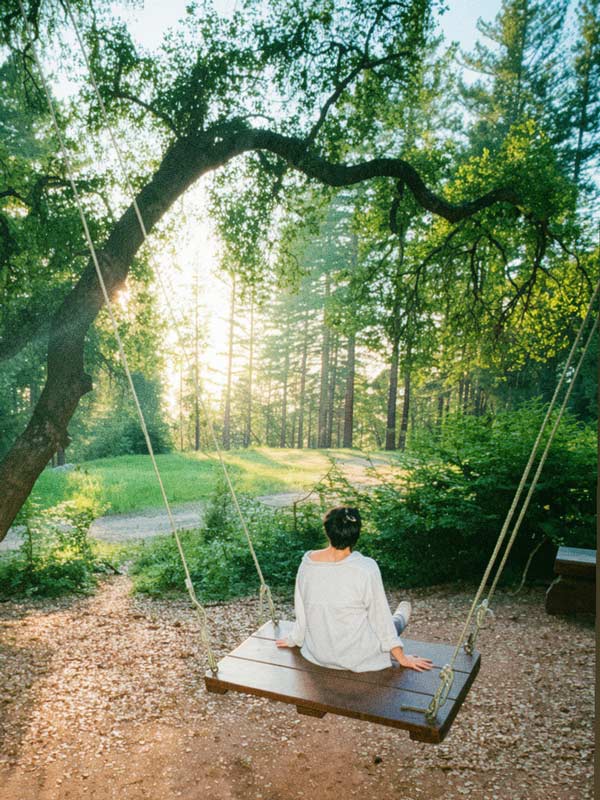
To ground myself a little more deeply this weekend, I chose to camp, though they also offer beautiful rooms, cabins, and yurts. Nothing relaxes me more than sleeping among the trees and waking to birdsong. One of my favorite parts of the weekend was sitting quietly at the campsite in a meditative state, simply watching the sun rays shine through the trees. Mount Madonna was a perfect choice because of how easy and convenient they make it to truly slow down. They offer delicious, nourishing meals, yoga and meditation classes, spa and massage services, and scenic hiking trails that are all easily accessible. 

Yoga, Nature, and Slowing Down

Often, we are asked to do more, stay busy, work harder, and give more of ourselves. This weekend, my main goal was to move slowly and intentionally, and to give myself the gift of presence. One of my preferred ways to embody presence is through yoga. I teach yoga three days a week and recently haven’t had time to enjoy being a student in someone else’s class. While it is one of my life’s greatest honors to teach yoga, I don’t get the same reprieve in yoga when I’m teaching compared to when I am simply practicing. 

This weekend, I did several self-guided yoga flows in nature right outside my campsite. I also took a yoga class in the Redwood Yoga Room, which had all the props a yogi could need. Not only did I get to enjoy moving my body, I left feeling more inspired than ever to take these lessons with me during my next opportunity to teach. The more deeply I connect with myself, the more I am able to open up and serve my yoga community.

The Benefits of a Personal Retreat
The next time you are “too busy” to slow down, consider booking a weekend away. A weekend dedicated to self-care, connection to nature, and coming back home to yourself.

Explore Personal Retreats and wellness getaways at
Mount Madonna Center in Northern California.

Author Bio:
Matia’s decade-long journey with yoga transformed into a profound calling after settling in Santa Cruz in 2022. Here, she discovered yoga’s true essence as a pathway to building meaningful connections with community, with self, and with the innate wisdom of the body.Having completed her 200-hour teacher training, The Embodied Breath, at Pleasure Point Yoga in Santa Cruz, Matia brings a nurturing and inclusive approach to her teaching. She creates a welcoming space where students of all levels can explore their practice authentically, honoring their body’s unique needs and capabilities.

SRI DHARMA MITTRA

SRI DHARMA MITTRA

SRI DHARMA MITTRA

By Joneil Adriano – Owner, Living Yoga

PROFILES

BEN CLARK INTERVIEW
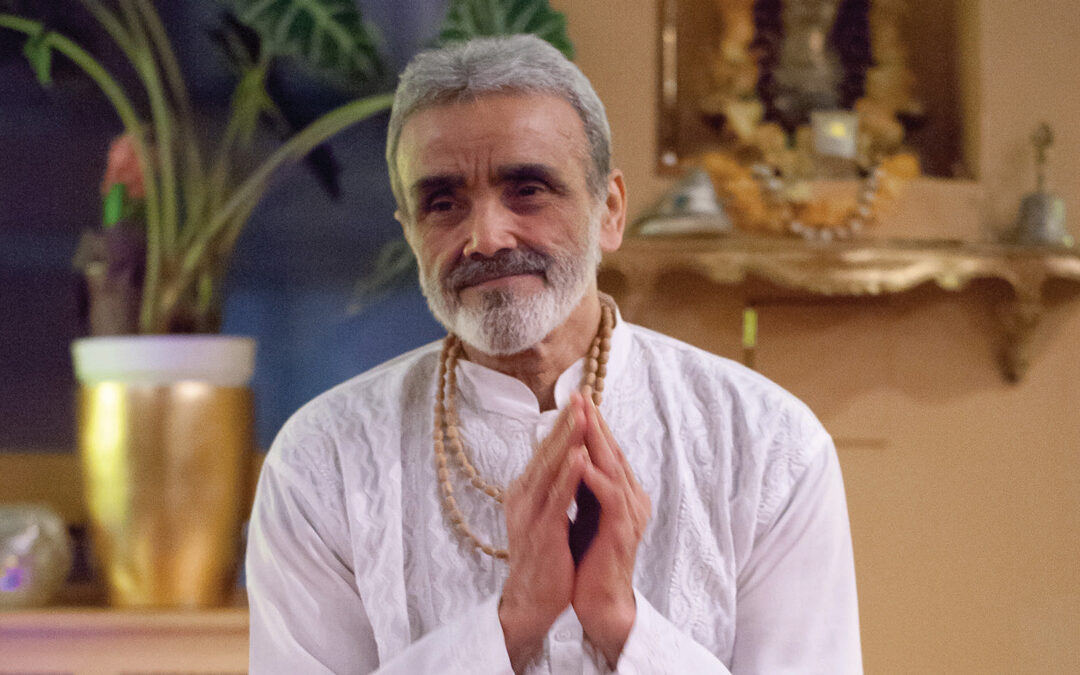
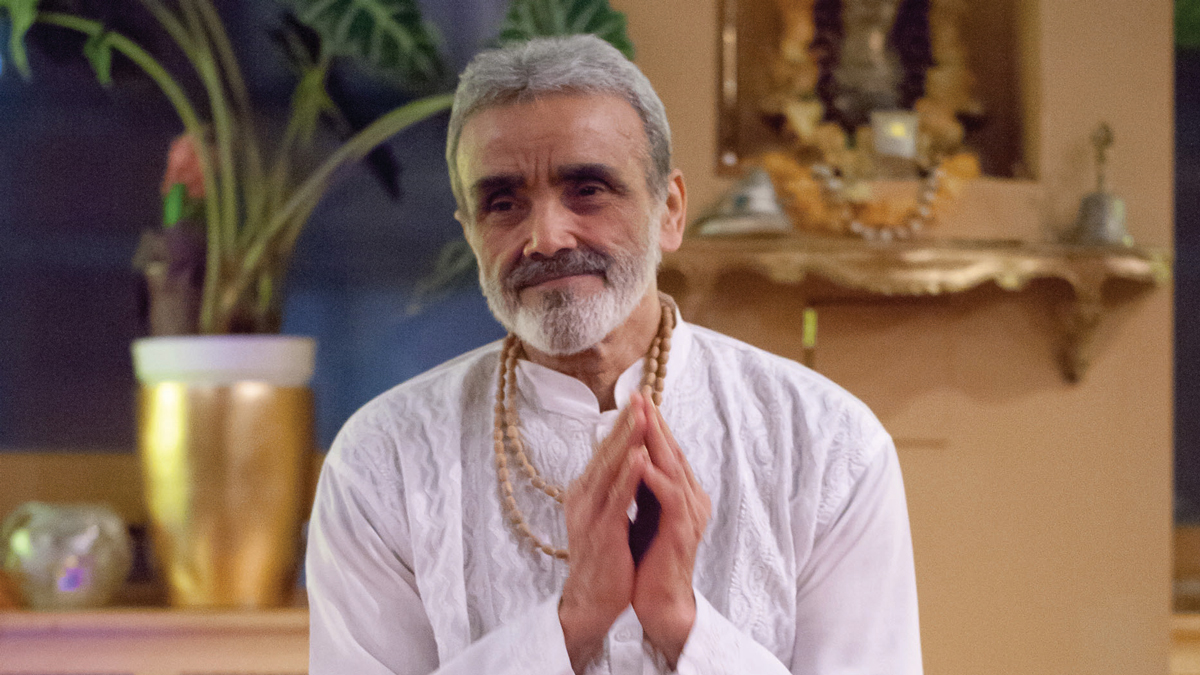
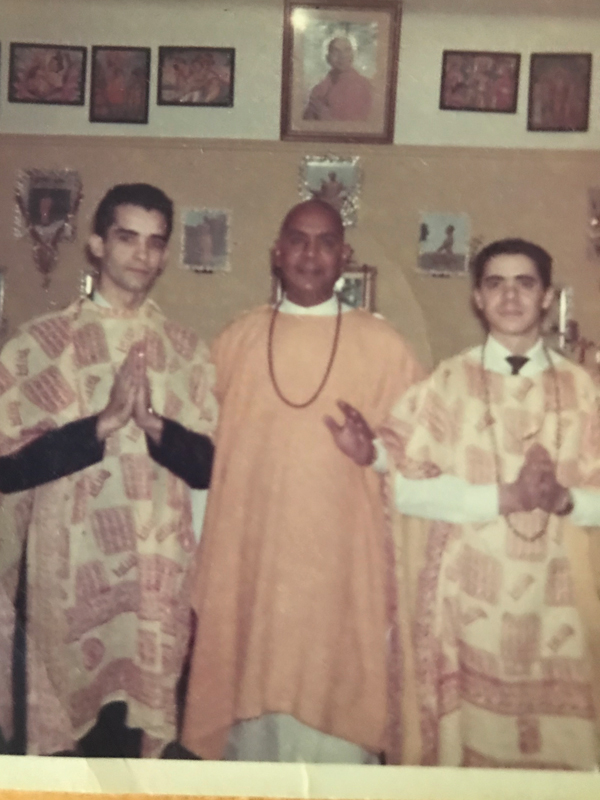
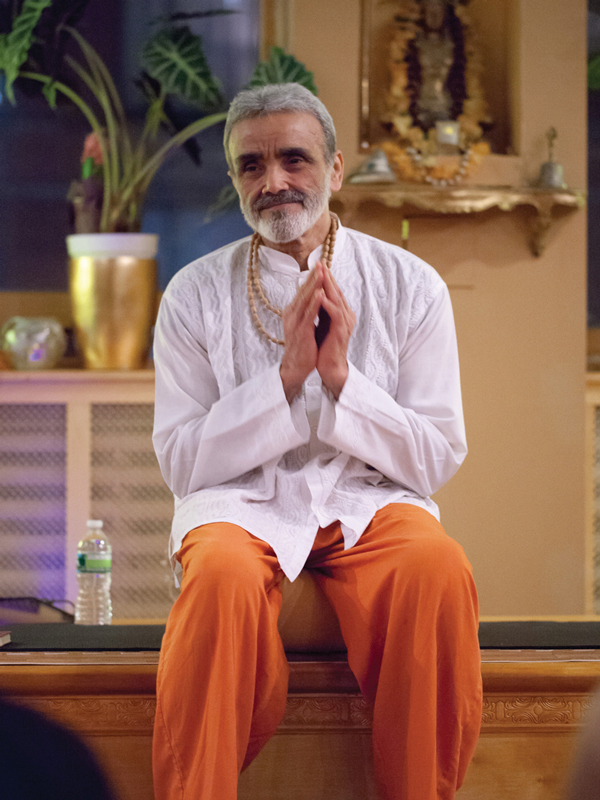
For nearly 15 years, I’ve had the great blessing of studying with Sri Dharma Mittra, whose humility, humor, and unwavering devotion have profoundly shaped my understanding of yoga. Long before yoga became a global phenomenon, Dharma-ji left his home in Brazil with few possessions and only a rudimentary grasp of English. He was answering a deep inner call to study with his guru, Sri Swami Kailashananda, in New York City. 

From those early, austere, and lonely years in the ashram, he went on to establish one of New York City’s first yoga centers, eventually becoming a world-renowned yoga teacher. Now in his late 80s, and with more than half a century of teaching, Dharma-ji’s path has been one of discipline, service, and compassion. In this intimate conversation, he reflects on his formative experiences and offers timeless guidance for anyone called to create a space for yoga and community today.

When you first met Yogi Gupta, how did you know he was going to be your guru?
Well, that is one thing that is beyond belief. I felt that he was the right guru, especially after our first meeting. Just like when you’re trying to find a spouse, right? Sometimes at first sight, you feel – that’s it! 

You did not speak English at the time, right? 
No, I knew one or two sentences, “I am hungry. I need money. Thank you.”

How difficult was it to communicate with him?
My younger brother had to do the translation. I bought a little book about Moby Dick. It’s a book to teach people how to improve their English. So I started copying and memorizing, little by little. Trying to listen to the TV and to the radio. And gradually, I started getting better. 

My goal first was to learn English enough to conduct a class. You see, for many years, my English was just enough to conduct a hatha yoga class and a pranayama class, but I could not read the scriptures or explain the Bhagavad Gita. So I did more silent meditation. If the student asked me any question that I could not answer, I said to him, “Why don’t you talk to my guru?” But it was extremely difficult if you cannot communicate. I’m still having lots of problems with English! In order to share knowledge, you have to speak well to give the right knowledge. I am still working on it.

How long before you taught your first yoga class under Yogi Gupta?
That was about three years, in 1967. I went to teach my first class in a health club and my English was just enough to conduct the class. But I didn’t succeed much. When you don’t speak well, they don’t understand. They fire you.

How many years did you spend in the ashram with Yogi Gupta?
I lived in the ashram, maybe 11 or 10 years. The main ashram was located on 56th Street, close to Lexington [in New York City]. It was an old brownstone building that was close to being demolished. Then we decided to rent and fix the building. I was the handyman. Then we moved into this ashram. We have maybe 5-10 disciples giving classes.

What were some of the most important things you learned there?
Well, my goodness. First, what struck me was to learn how to cope with loneliness and pain when you don’t have anything outside anymore. No money, no family, not what you want to eat, no cigarettes, no alcohol. You understand? No movies, no friends. Since I could not speak English, I had no friends, no communication. 

When we were in the ashram, I learned about my level of ignorance. I learned how stupid I was, how ignorant, and how I lacked self-control. I realized we have to purify the mind in order to feel, not in peace, but to feel ready to concentrate on knowledge. To follow some of these instructions, you need discipline. I learned how to get healthy. Also, — the most important — I learned how to gradually cope with obstacles. When you feel depressed, when you feel temptations. So you learn how to cope with them. I had difficulties going through it, but I knew how to go through it with faith. 

I also learned that the action of compassion is to see yourself in others, and see the discomfort there. The same technique I used to place myself in the guru and try to force myself to feel what he’s feeling. You learn to place yourself in others for different purposes. So that’s part of compassion, empathy. 

How did he tell you that you were ready to start your own yoga school?
Actually, he didn’t tell me when I was ready. I was the one who told him I had enough of hearing his lectures for 20 years!

My younger brother was also there, so when he left, I was in total darkness. My brother later opened a little yoga center, teaching at a hotel. I said, “Why am I not doing the same? I don’t need anything here anymore.” So I left the ashram. Before I left, I asked the guru. He said, “That’s fine. Do your best. If you need help, use the phone.”

I didn’t have any money. I met one of my students and he said,  “Why don’t you go downtown? I have a loft there, 3,000 square feet. Why don’t you go there? You can fix it and start teaching.” Then I received a call from a student. This lady, she lives on the East Side, near Central Park, she sent me some money to pay for a private class. I remember it was $200. It was exactly what I needed! I fixed the place and in one week, I had a full class.

A full class? In one week?
Yeah, $1 or $1.50 classes. But at that time, everything was not too expensive.

It was almost like God was watching you and giving you what you needed to start your yoga center.
Oh, yes, little by little. I remember in one year, I had $1,350. That was enough to rent another place on 29th Street. One of my students’ husband owns a little building on 29th Street and Seventh Avenue. The second floor is empty, he said he can rent that to me for $230. So I bought a neon sign to put in the window, and after a few days, I had a full class.

You used to make the signs, too, right? The neon?
Yeah, I went downtown to a school where you learn how to bend them. You burn your hand, though!

What are some of the differences between the students you had then versus the students you have now?
Remember, everything evolves. Today, technology – cell phones, internet – is a very strong distraction. The students change a little bit, they are not that reverent and obedient anymore because there are so many choices.

A good teacher adjusts the yoga according to the lifestyle of today. If I ran a class here the way it should be, the way I learned in a traditional way, this room would be empty. Today, people are more active. They are restless. So we have to adjust the poses according to their conditions.

Today, it’s also a blessing because we have the internet. You can have your vegan diet online. If you’re lazy, you can order from Juice Press. So you can make students succeed much easier. You can find any scripture on the internet overnight. So students change, we change, and the techniques to share the divine knowledge change.

With all of the changes, how do you still honor tradition and the lineage?
Tradition, I understand, but lineage, what means lineage? Like my guru, I don’t know which lineage. I don’t care what lineage. I never even understand this word. It doesn’t make no difference to me. But tradition, my tradition is just a tradition, but that tradition keeps moving. (Laughter) Tradition has to keep updating. Not the essence. Everything needs some updates.

If somebody came to you and said, “I want to start a yoga center,” what is your advice to them?
Sit quietly. No distractions, no cell phone, no food, no watching TV. Then see where you want your yoga center, the location. It has to be comfortable. It has to be soft.

Remember, if you rent a place in a building today, you have different laws. You have to have access for [disabled people] to go up. And get ready for the first day, the second, even a week, you won’t have much business. That’s why I have three months [saved up] already. If I don’t have any money for three months, I still can pay all the bills.

Is there anything else you want to share?
The first thing you have to do with the students: get them in good health. Force them to improve their compassion, because that leads to the rest. You get more enthusiasm to ask, “Who am I? What’s next?” When a student comes to you, pay attention. Your communication is very important.

Remember, we are not pure enough, we have not achieved anything yet. We’re just sharing what we have here. I’m still learning so many things every day. So keep sharing, but don’t share too much. Keep your secrets. Share only for those who are ready. Because if you start opening too much, giving, you’re losing your energy and you’ll be empty. Every year, you may notice you are at a different level. You may notice your students are at different levels. So as you grow, you attract the crowd of people with you.

Last thing — very important: Tell them not to forget to pay.


Learn more:dharmayogacenter.com

ACROSS THE RIVER, ACROSS THE METRO:  HOW TWIN CITIES WELLNESS COMMUNITIES ARE HOLDING EACH OTHER THROUGH GRIEF, FEAR, AND CARE

ACROSS THE RIVER, ACROSS THE METRO: HOW TWIN CITIES WELLNESS COMMUNITIES ARE HOLDING EACH OTHER THROUGH GRIEF, FEAR, AND CARE

ACROSS THE RIVER, ACROSS THE METRO: HOW TWIN CITIES WELLNESS COMMUNITIES ARE HOLDING EACH OTHER THROUGH GRIEF, FEAR, AND CARE

By: Melissa Honkanen

TRENDING

BEN CLARK INTERVIEW

In moments of collective trauma, the Twin Cities of Minneapolis and Saint Paul often move like a single body; sometimes tense, sometimes trembling, but rarely disconnected. While Minneapolis has been the epicenter of national attention following the killings of Alex Pretti and Renee Good, the reverberations are deeply felt across the river in St. Paul and outward into the suburbs. What emerges, again and again, is a quieter story of care: practitioners holding space, neighbors watching out for one another, and communities choosing service over spectacle. 

In St. Paul, that care looks intimate and immediate. Amy DePoint, an acupuncturist and mother living in a diverse neighborhood describes the past weeks as a movement from shock into a kind of weary flow. “We’re exhausted,” she says plainly, “but we’ve also found a rhythm in the community.” That rhythm is punctuated by fear that feels too close to home. ICE vehicles idling near schools, neighbors disappearing from daily routines, children instructed to run to safe houses if something goes wrong. The contrast between what residents witness on their own streets and what they hear on the news is jarring. “What’s being said doesn’t match what we’re seeing,” she explains. “It’s not agitators. It’s moms and grandmas texting each other, saying, ‘They’re staking out my neighbor’s house! Can you keep eyes on it?’”

“The contrast between what residents witness on their own streets and what they hear on the news is jarring. ‘What’s being said doesn’t match what we’re seeing,’ she explains. ‘It’s not agitators. It’s moms and grandmas texting each other, saying, They’re staking out my neighbor’s house! Can you keep eyes on it?’”
Inside her acupuncture practice, that disconnect shows up somatically. Patients arrive depleted, angry, scared. One man admits he’s consumed by thoughts of retribution. Another can’t sleep. The work, she says, becomes about nervous system repair, sometimes without ever naming it as such. “I try to bring every session back to gratitude, even briefly. Otherwise we’re completely fried.” Anger, she believes, isn’t the enemy; it can be a bridge from fear into action, if it’s held carefully. 

Care also extends beyond clinic walls.Through networks like Acupuncture Without Borders, practitioners across the metro, and even from out of state, are quietly organizing pop-up treatments, ear acupuncture kits, and in-home support for people sheltering in place. The emphasis is on safety, structure, and sustainability. “If I get followed or detained, I can’t help anyone anymore,” she notes. So roles are distributed. Some patrol. Some deliver food. Some offer bodywork behind closed doors. Showing up, she says, looks different for everyone. And that’s the point.

“…roles are distributed. Some patrol. Some deliver food. Some offer bodywork behind closed doors. Showing up, she says, looks different for everyone. And that’s the point.”

-Amy DePoint

If St. Paul’s response is grounded in proximity, the suburbs are responding through scale and steadiness. In Plymouth, about 25 minutes from Minneapolis, Honest Yoga studio owner Nicole Byars describes a different but connected energy. There are no protests outside her doors, no sirens echoing through class. Instead, there’s a palpable heaviness and an unmistakable pull toward community. Studio attendance is up more than 40 percent from last year. “People aren’t coming to argue or vent,” she observes. “They’re coming to be together. To process quietly. To move.”

Her studio has long been trauma-informed in practice, if not in marketing, and right now that shows up as familiarity rather than novelty. Teachers lean into repetition, silence, candlelit rooms, what one instructor called “yoga as comfort food.” The goal isn’t commentary; it’s containment. “Our job isn’t to narrate the news,” Nicole says. “It’s to give people something steady when everything else feels chaotic.” 

Service, however, is where the suburban response reaches outward. The studio has mobilized support for local and Minneapolis-based food shelves and partnered with grassroots organizations DHH Church delivering groceries to immigrant families afraid to leave their homes. A recent donation-based Himalayan sound healing event directs all proceeds to a Colectivia Bilingue, a bilingual shared relief fund providing emergency rent assistance and housing support. “If you’re going to make a statement about your values,” Nicole states, “you have to put service behind it.” 

“If you’re going to make a statement about your values, you have to put service behind it.” 

-Nicole Byars

What’s striking is not just what these communities are doing, but how thoughtfully they’re doing it. Both practitioners speak to the tension of wanting to help without appropriating, of acting without centering themselves. Listening first. Showing up when asked. Acknowledging fear without amplifying it. “Everybody has a different capacity,” Amy reflects. “Showing up might mean patrolling, or it might mean making soup, or it might mean holding someone’s hand while they cry.” 

Across the Twin Cities, that ethic of care is threaded with a deeper awareness. What’s happening now is not new for many communities of color, even if it’s newly visible to others. There is anger in that realization, and grief. But there is also resolve. Monarca Rapid Response Line is providing nonviolence training rooted in the teachings of Martin Luther King Jr. and Gandhi are circulated alongside somatic practices and sound baths. Singing protests and candlelit yoga classes coexist. Fear and hope sit side by side. 

Minnesota has been here before, thrust into the international spotlight with the murder of George Floyd in 2020. The state was forced to grieve publicly and compelled to organize quickly. What feels different this time, many say, is the infrastructure of care already in place. Mutual aid networks. Wellness practitioners willing to step beyond their job descriptions. Studios and clinics that understand healing as communal, not transactional. 

From St. Paul kitchens where neighbors keep watch, to Plymouth studios quietly filling with breath and movement, the message is consistent: the Twin Cities are holding each other. Not perfectly. Not without exhaustion. But with intention, humility, and a fierce love of neighbor.