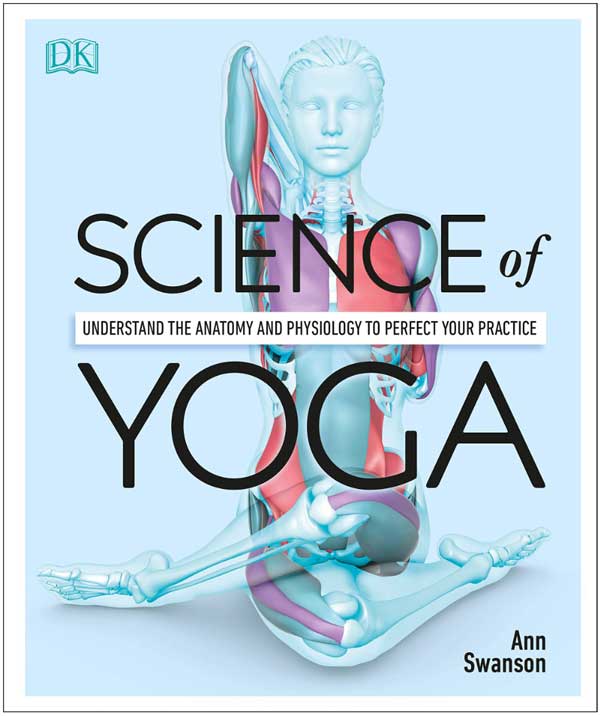
After completing my yoga teacher training, I wanted to dive deeper into anatomy but found most books too scientific and overwhelming. I immediately fell in love with the amazing visuals, relatable scientific concepts and explanations in Science of Yoga. I was beyond excited for the opportunity to interview Ann Swanson. Ann is a certified yoga therapist, speaker, and the author of Science of Yoga
, which is being translated into over 10 languages. With a Master of Science in yoga therapy and roots studying yoga in India and Tai Chi/Qi Gong in China, Ann uniquely applies cutting-edge research to mind-body practices while maintaining the heart of the traditions.
How did you discover yoga?
As a kid, I was always doing yoga, I just didn’t know it. I would spend hours thoughtfully moving and stretching alone in my room, pretending to teach my panda bear stuffed animals how to move with me. In retrospect, it was meditative for me. Then, during the crazy stress of college, I took a yoga class at the school gym. It helped me manage the stress. After college, I bought a one way ticket to China. Why China? Since I was little, I had always told my parents that I would move to China to see the pandas. So, I did. The pandas were super cool but China was tough for me. I felt isolated, depressed, and anxious. I did a lot of yoga and tai chi/qi gong to process this. That is when yoga became more than just a stress reliever. It was a life saver. I did my basic teacher training in China and the visiting teachers from India convinced me to go to India to continue my studies. My curiosity was sparked, I was hooked, and the journey began.
Your book, the Science of Yoga is filled with information on both human anatomy and asanas. How long did it take to research and write?
The actual writing of the book took six intense months. However, it was a culmination of ten years of research and careful notes. I have always kept journals from as young as I could write. So, when I started seriously studying yoga in India with my teacher Yogi Sivadas of Kailash School a decade ago, I took tedious notes. From then on, I filled notebooks with insights from taking college courses in anatomy and biomechanics, assisting cadaver labs, workshops with master teachers, reading yoga research, and taking classes in yoga therapy grad school. I am so grateful that I took such tedious notes because when it was go time to write the book, it all came together quite quickly.
You earned a graduate degree in yoga therapy?
Yes, I was in the first cohort of the very first Master of Science graduate degree program in yoga therapy. It is at Maryland University of Integrative Health. It was a 2 year program that both gave me a M.S. and a C-IAYT (which means I am a certified yoga therapist through the International Association of Yoga Therapists). The program was phenomenal for me.
Was it challenging to narrow down to the thirty key poses you selected?
Originally, my publisher DK (part of Penguin Random House) had 30 poses in mind that they wanted to do. I looked at that list and really fought for adding simple, common poses like Cat/Cow and Child’s Pose, as well as adding accessible modifications of poses using props, like a chair. They wanted what they called “aspirational” poses since that is what sells. In fact, they actually had the acrobatic forearm balance Scorpion Pose as the original cover. I explained to them that poses like this are dangerous for most people and are not the types of poses that most people are doing for the profound health benefits of yoga in the scientific research. The research on yoga is not on how to get into a fancy “peak pose” or how to get tight abs. The most compelling research supporting yoga is for areas such as back pain, anxiety, trauma, depression, arthritis, and neurological diseases like Parkinson’s disease. Researchers are doing more simple poses like Cat/Cow rather than acrobatic poses like Scorpion. I explained, if they wanted this book to be about science, we needed to include common poses that are used for therapeutic benefits. There was a lot of compromise. For example, they really wanted King Pigeon Pose because it is so beautiful. I said yes, if we can we show and describe gentler variations also. I am glad we had these debates because we ended up with a great balance in the end. The book includes some beautiful, challenging poses and suggestions for beginners or folks with limitations.
I was required to read several anatomy books for my yoga teacher training and found them challenging to understand because they were filled with so much science. The illustrations and design of Science of Yoga is absolutely beautiful, making it simple and understandable. Was that your main goal?
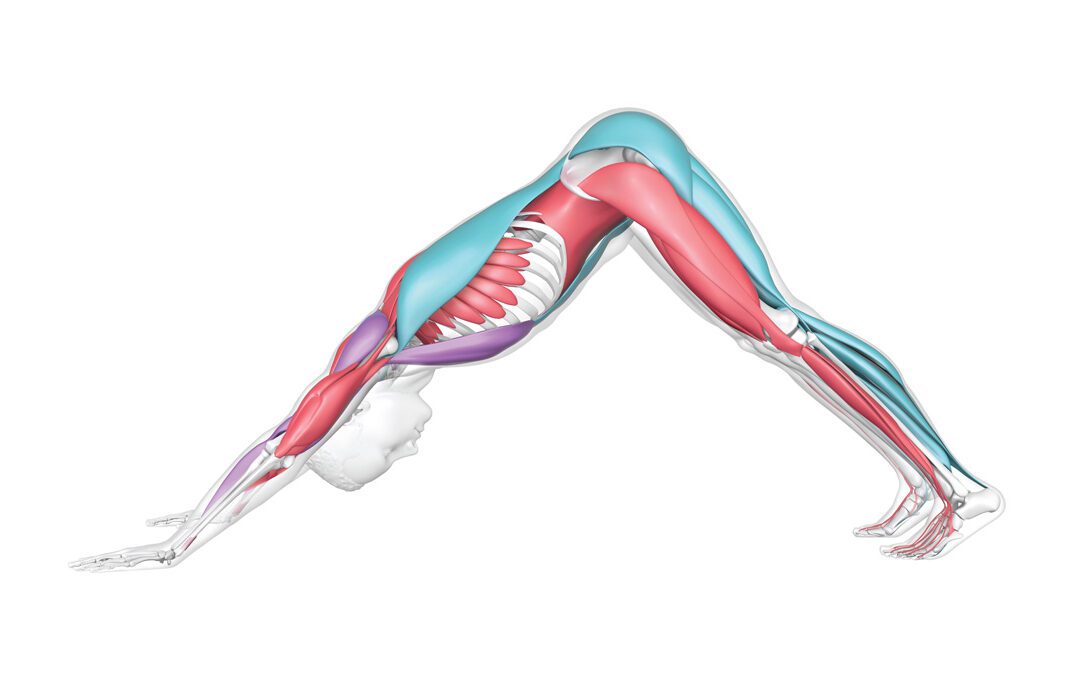
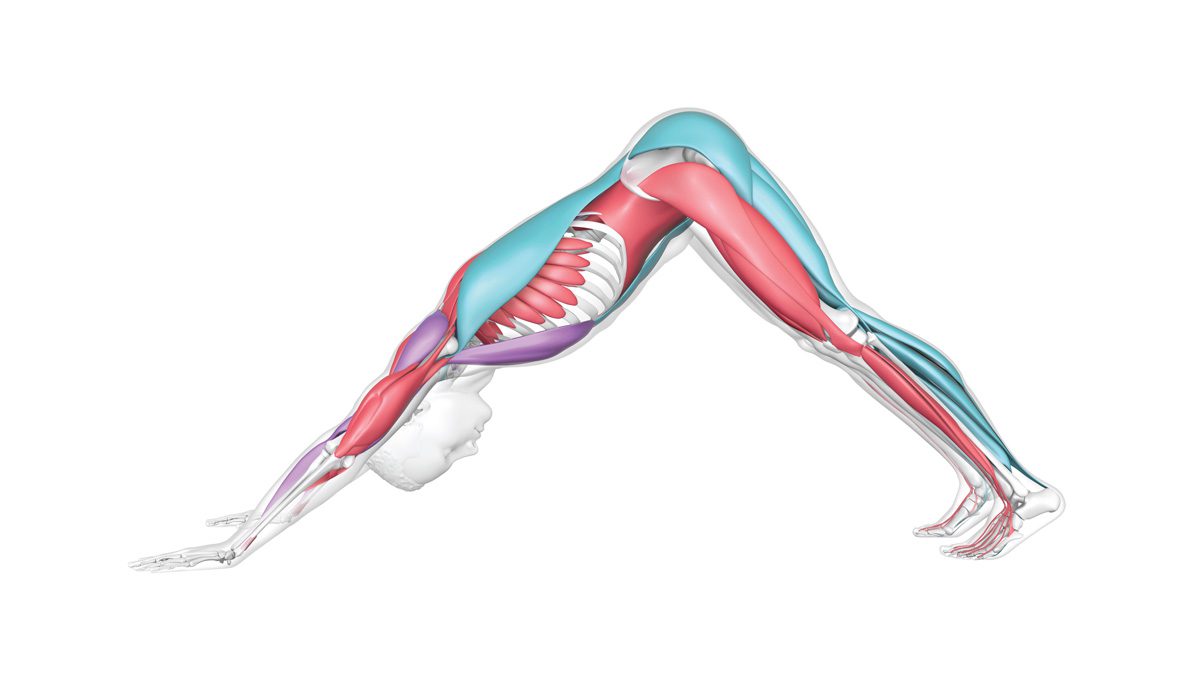
I think most yogis are visual and kinesthetic learners and this book appeals to both. To create the visuals, I worked with a world-class illustration and design team, which makes this book engaging and easy to learn from. Many people tell me that it is super fun and addicting to read because of the way your eye moves around on the page. I went to art school for undergrad before I ended up studying science and doing the pre-med course load. It was a dream to work with professional illustrators. Over the years of studying and teaching anatomy and physiology to yogis, massage therapists, and college students, I have scoured the internet for the best pictures and taught from many text books. I sent my illustrator and designer my favorite images asking to combine them to make the perfect image to illustrate a concept. Sometimes, I even sent a sketch I did on a napkin at a restaurant and then they made it happen!
The book appeals to the kinesthetic learner. Kinesthetic learners understand through movement and feeling it in their bodies. The illustrations of the poses showing the muscles engaging and stretching invite you as the reader to get into the pose and visualize and feel what is going on in your body. However, remember that the images I created are a guideline. Different muscles may be stretching or activated in your body, since we all have unique bodies and compensation patterns. Use the book as a guide to your own inner experiments.
How is Science of Yoga different from other yoga anatomy books currently available?
What I love most about Science of Yoga is that I got to talk about every system of the body and how yoga impacts each one. Most yoga anatomy books emphasize the musculoskeletal systems. According to the research, some of the most profound effects of yoga are on the nervous system (through teaching our bodies to more efficiently go into the relaxation response), immune system (by lowering inflammatory markers in our blood, reducing the risk of many chronic diseases), and the cardiovascular system (with a yogic lifestyle resulting in reversing heart disease; something no pill has been able to do). I outline the key benefits according to the actual scientific research for each system, as well as many major diseases and concerns everyday folks are dealing with.
Also, I love the last section of the book: the Q&A. In this section, I cover areas such as chronic pain, mental health, yoga in schools, and more. I discuss the research on some of the areas where yoga shows the most promise for turning our healthcare system upside down. The shift to preventive and integrative health must happen because what we are doing is not sustainable. More and more doctors are recommending yoga for chronic pain, for example, because the science shows it works. Amidst an opioid epidemic, yoga practices are starting to show up in hospitals. Soon the status quo must be meditation before morphine. I love educating on these topics like yoga for chronic pain and mental health. Yoga goes so far beyond the muscles and bones…so far beyond the physical poses mosts books focus on.
Finally, all the research is cited in the back of the book. I looked at hundreds of peer-reviewed scientific research studies to support the statements I made in the book on the benefits of yoga. Other books that do this are more academic and inaccessible. This book has the science behind it but is simple to understand and apply practically, even if you don’t have a biology degree.
How do you feel Science of Yoga will impact a teacher versus a student?
This book is really written for both yoga students and yoga teachers. Every section is written in multiple levels. For example, a pose like side plank starts with simply saying: “Side plank is a challenging arm balance that may get you sweating and your heart pounding…This pose strengthens your core, including your abdominals and back muscles. Your supporting arm and shoulder muscles are also engaging strongly to maintain balance.” That is probably enough information for most yogis. However, if you would like to go deeper, like if you are a teacher, you can read further and see exactly which muscles are likely engaging as they are pointed out on the figure. Most regular practitioners don’t care that their spinal extensors, sternocleidomastoid, and pronators are engaging. But if you do care, that info is there for you to dive deeper!
Many teachers learn cues from their mentors and/or teachers. In your book you mention wondering why certain cues and claims (about the health benefits of poses, etc) are mentioned in class, and you wanted to know why. What would you like teachers and students to take away from your book, with regards to cueing and claims?
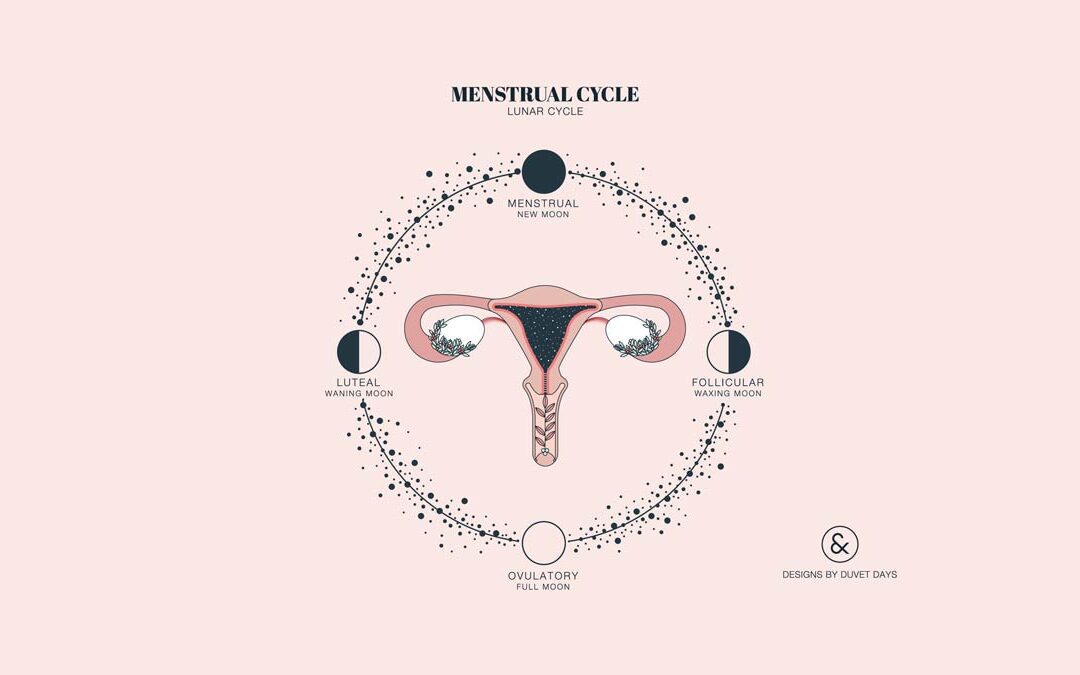
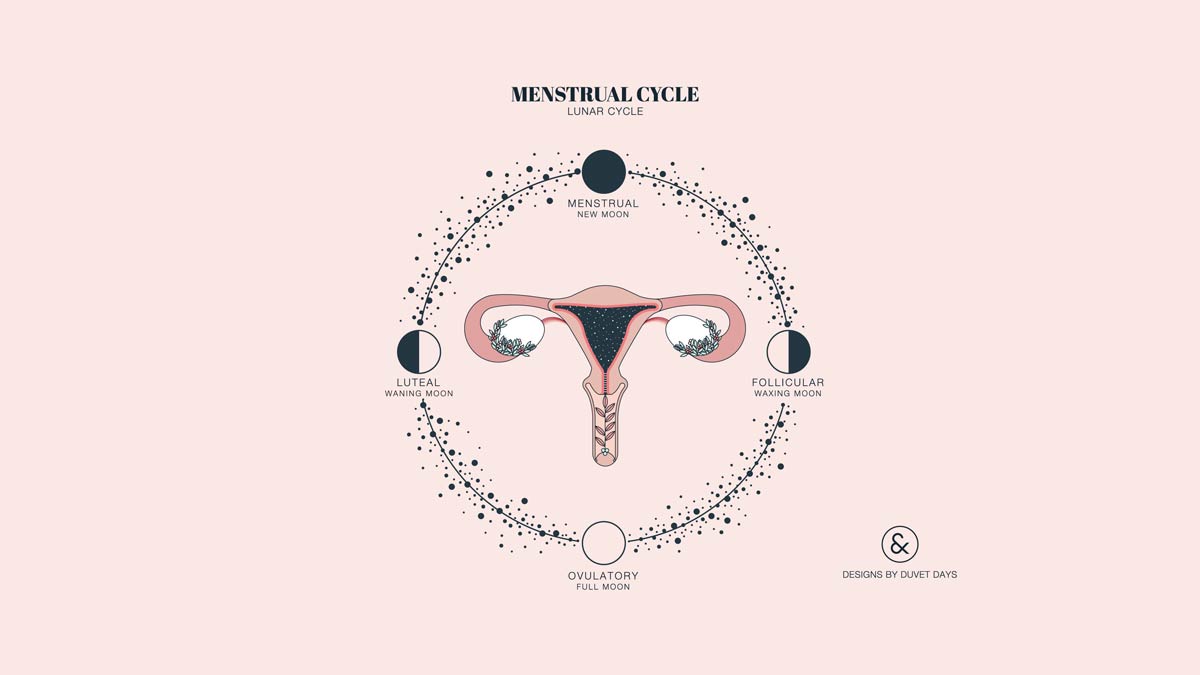
Be curious! Constantly ask, “why?” Don’t just believe what you hear. No, lying in savasana does not clear the lactic acid from your muscles. No, twisting does not wring out the toxins. No, turning upside down does not reverse your blood flow. No, doing inversions like headstand on your period does not seem to cause endometriosis. In fact, there is no known medical reason not to do inversions while menstruating.
There are so many true benefits that are even more profound and impactful than the myths I listed above. There is so much that the ancient yogis gave us through intuition and practice that proves to be true. For example, elongating your exhales does put you deeper in the relaxation response by activating the vagus nerve to slow your heart and lower your blood pressure. This is a free, accessible tool everyone with high levels of stress and high blood pressure should know and use.
Keep learning and evolving. We all will realize at some point that something we have been hearing or saying is not correct. That is okay. We are human. Keep at it!
What would you say to someone who wants to know how to apply the information in Science of Yoga to their practice?
Feel it in your own body. Your experiential evidence is worth more than just reading alone. Reading it will definitely help enhance your experience to make it richer and more thoughtful, but that is not enough. Don’t just take my word for it.
Hey, do you want to know the secret to getting the most benefits from your yoga practice? You have to simply do it.
The theme of this issue of NY YOGA + LIFE is REST. How do you make time for self care and rest with your busy schedule?
Actually, I have been thinking a lot about this lately because I am about to travel the world. Science of Yoga is being released in over 10 languages and I will be traveling to the countries it is being released in to teach from it. I am excited to go back to China with a new perspective, as well as going to Japan, Korea, France, Italy, UK, and more. I have been asking myself how in the world I will keep balanced while living out of a suitcase for a year!
I think really, it comes back to the magic of this practice. I know that even when I am stressed and have a ton of deadlines, there is an inner peace within me that is not tarnished. Even when I make mistakes, which I do often, I know there is a part of me that is pure and deeply connected to all others. The mindset shift yoga has provided helps me become more resilient amidst challenges. It isn’t a perfect process, and I am not perfect (in fact, I am a recovering perfectionist). However, the deep spiritual connection I feel from integrating the rich philosophy of yoga into my life provides the biggest benefits. Science and spirituality do not have to be mutually exclusive.
Practically, I love doing little “yoga breaks” throughout the day like a sun salutation at the wall in the airport, a breathing practice as I fall asleep, or a minute meditation before I have an important meeting. And that is what I teach my one-on-one yoga therapy clients because let’s face it, most of us are not going to wake up and do a full yoga practice every day. These practices can provide short rest periods throughout the day, which is actually more impactful to train your nervous system to facilitate that inner peace and sense of resilience.
Remember though, yoga is a process –an imperfect, fulfilling, worthwhile process. I daily remind myself: progress, not perfection.