Yoga Plus Magazine Logo with white border
Head to Toe

Head to Toe

Head to Toe

By LouLou Piscatore

BEAUTY

Head To Toe Beauty products

Your skin is a living, breathing organ. It is your largest organ, and it needs the same level of care as other organs. It needs nourishment, hydration, sleep, oxygen and apparently lots of moisturizer. For thousands of years, Ayurveda has associated aging with “drying out.” Now western science is catching up. According to recent research, some of the systemic inflammation associated with chronic diseases of aging has been linked to — dry skin!

In a recent article, Mariana Lenharo documents the research going on at the University of California, San Francisco, and the links between dry skin and inflammation.The inflammation response is part of the body’s immune system and plays an important part in healing tissue damage and fighting viruses and bacteria. But chronic, low-level inflammation has been linked to common age-related degenerative conditions (like Alzheimer’s, arthritis, and cardiovascular disease). As you age, the skin barrier deteriorates, and is unable to keep the skin hydrated. So the skin sends out signals to the immune system to try and repair itself. Those signals, and the immune system’s response, creates systemic inflammation, which can lead to chronic disease.

This creates exciting possibilities. They found that if you improve skin function, you can reduce inflammation. Basically If you moisturize your skin, you can improve your health. And one of the most exciting findings is that treating even part of the skin has enough of an impact to make a difference.

So skin care is health care, and Ayurveda was right all along. Stay moisturized. Pick a body part and start with any of these great products:


Belly Mask, Belly Oil

hatchcollection.com

Lip Serum, Lip Mask, Citrus Hand Cream

henneorganics.com

Smooth Operator Intimate Serum

itsquim.com

Line-filling Eye Balm

alpynbeauty.com

Ad Astra Nighttime Eye Cream Emulsion

Kyprisbeauty.com

Precious Sea Hand Saviour

ediblebeautyaustralia.com

Thigh Rescue

Megababebeauty.com

Happy Pits

megababebeauty.com

Stretch Mark Cream, Stretch Mark Serum,

loveanybody.com

Founders Blend Scalp and Hair Treatment

rahua.com

Foot Treatment

aylabeauty.com

Lip Patch, Eye Patch, Foot Mask

lapcosusa.com

Butt Masks

Bawdybeauty.com

Himalayan Body Buff

Osmiaorganics.com

Barrier+Triple Lipid-Peptide Cream

Skinfixinc.com

Body Cream

ayuna.co

Body Butter

mutha.com

Stone Crop Body Oil

emstore.com


Body Salve

sparitual.com


Creme No. 3

lamarue.nyc


Ceramide Refuel Soap Jel

bodybarrier.com

Head To Toe Beauty products
Letter to my Younger Self

Letter to my Younger Self

Letter to my Younger Self

By Steven G. Medeiros
Photo: Robert Sturman

PROFILES

Steven Young yoga on the beach at sundown

Dear Steven,
While this letter is not intended to shield you from life’s adversities, it will hopefully provide you with some level of comfort, despite how bleak things may seem at the moment.

Your mother’s death will have a profound effect on you for years to come, forcing you to grapple with the questions of life early on and the legacy your parents have left you. Don’t fret, your path has not been written. At this young age, you have yet to fully conceptualize this idea of choice and the role it will play in your life.

You will learn many of life’s lessons the hard way. However, it will be to your amazement that your tribulations will inspire potential in others. Lean into those opportunities to connect with others for your gifts were not meant for you alone.

Forgiveness will play a critical role in your ability to heal and move forward in life. It will be nothing short of transformative. It will allow you to be free from the burdens of your past—enabling you to live freely in the present. What will soon follow is this unwavering awareness of self and others. This awareness will become your motivation to want and strive for better; to want and create a legacy far different than the one your parents have left you.

Listen carefully: do not let fear preclude you from sharing your light and love with the world. Learn to embrace vulnerability and to use the time you have been gifted with intentionality. Your intuition is strong, pay attention to it, it will serve you well. Find people and activities that help to ground and nurture your spirit.

Steven, know that you are more than the sum of your past mistakes, but remember to always stay rooted to where you come from.

The totality of your earlier lived experiences is the bedrock of who you are today and will continually inform your interests, the person you aspire to be, and how and where you invest your time and energy.

The adversity you endure will reveal to you your capabilities, your strengths, and your fullest potential. You will defy the odds and challenge the status quo, a testament that one’s plight can be altered—with the motivation and desire to seek change—and the humility to never forget what it took to get there.

Me Ke Aloha (With Love),

Your Older Self

Steven Young youth photo
THE BREATHING ROOM YOGA STUDIO

THE BREATHING ROOM YOGA STUDIO

PARTNER

THE BREATHING ROOM YOGA STUDIO

THEBRYOGA.COM

Fundamentally focused on individual practice, the philosophy of the teachings at The Breathing Room Yoga Studio is that your yoga practice is an extremely personal endeavor. We have gathered together some outstanding, engaging and inspiring yoga teachers to offer ongoing classes that will improve your life by reducing stress and making you healthier and more centered. The style of our classes is primarily Hatha Yoga and Vinyasa Yoga based, which indicates a blend of alignment-based yoga combined with creative sequencing and an emphasis on moving in synch with the breath. Breath-work with the combination of various and unique props and assists will engage you to find your way to your optimal yoga practice.

THE BREATHING ROOM YOGA STUDIO

63 Hamburg Turnpike
Riverdale, NJ 07457

63 Hamburg Turnpike
Riverdale, NJ 07457

Contactus@theBRyoga.com

The Breathing Room Yoga Studio logo
The Breathing Room Yoga Studio
Bone Broth

Bone Broth

Bone Broth

By Andrew Sterman

FOOD

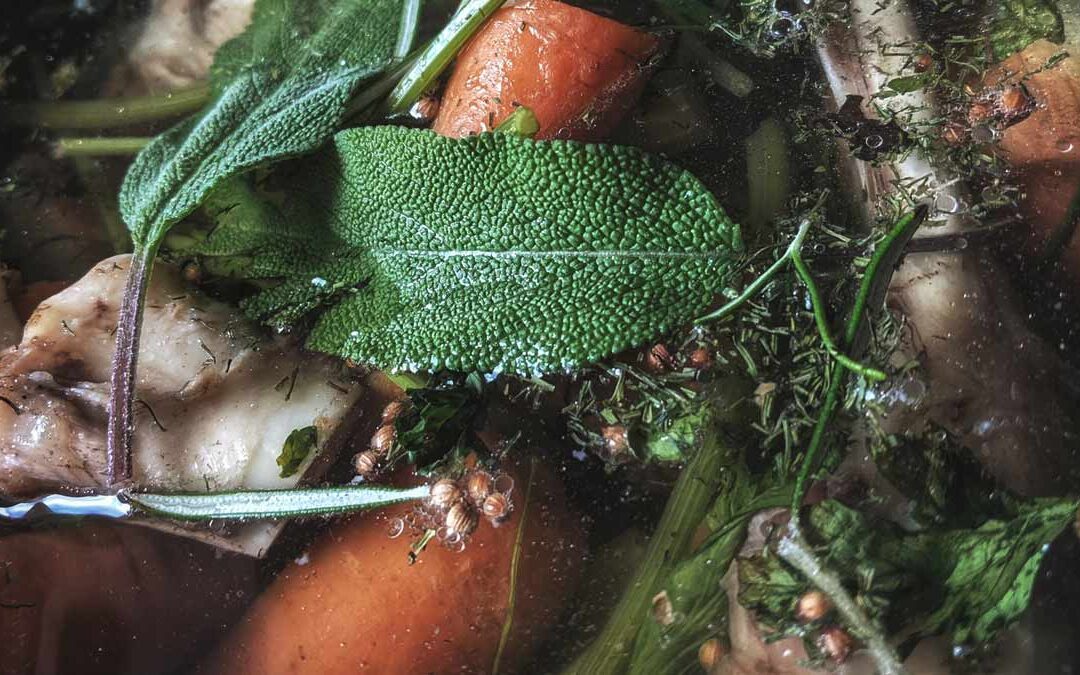
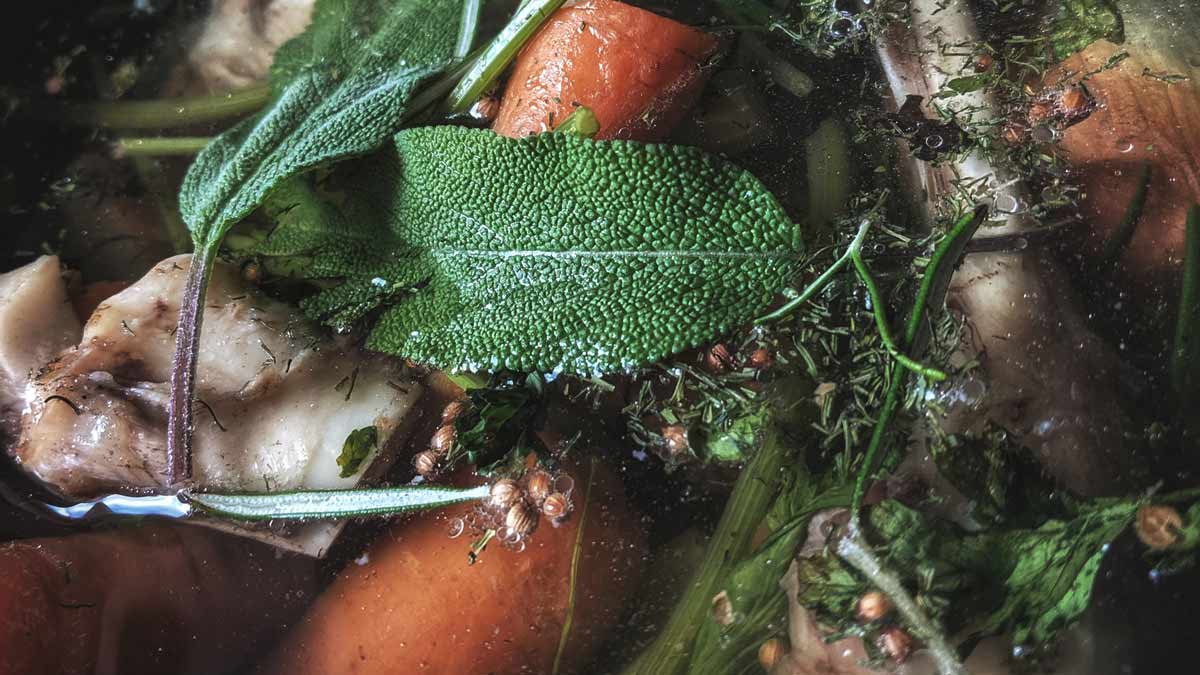
Bone broth

Bone broth has long been a secret both of fine restaurant kitchens and food therapists, but in the last few years it has become easy to find in food markets, restaurants, and even take-out places that specialize in chef-made broths. Bone broth has now come into the spotlight.

Is it a Paleo drink? Hardly. Do we really have to discuss the plausibility of prehistoric hunters cooking bones for two days, fighting off scavengers, patiently waiting for their broth, discussing how to skim foam or when to add aromatics, all tens of thousands of years before the invention of the first cooking pot?

In the dietary branch of Chinese Medicine, cooking bones into stock is a method to extract the essence of the animal for easiest digestion and assimilation. There is something shamanic about it; we are trying to absorb the deepest digestible energy of the animal. High cuisine chefs rely on stocks for finesse and depth, but the focus in dietary therapy is on the deep resonance between the bone essence of a long-cooked stock and our own deepest level: bones, joints, blood building marrow, kidneys, reproductive system and the very special organ that resides surrounded by bone, the brain.

That’s the theory, but does it do anything in practice? I’ll leave the studies to others, but in my experience, bone stocks are extremely helpful for individuals who are depleted or run down from stressful lifestyles, overexertion, poor diet, sleep problems, specific illnesses or old age.  Drinking good bone stock is grounding, fortifying, and stimulating all at the same time.

Making bone stock at home is easy, but it’s not for the fainthearted. There are bones in there, and the best stock is made from knuckles, knees, tendons… there’s no getting around it. This may not be paleolithic, but it certainly is primal.

According to the classical teachings of Chinese Medicine, each type of bone stock has a different influence within us:

  • Beef bone broth: strengthens our constitutional health and is very anchoring.
  • Chicken stock: stimulates our immune response and is more warming.
  • Turkey and duck stock: somewhere in between.
  • Fish bone broth: often forgotten but is fantastic as both a cooking stock and a health tonic, resonating with the skeletal and reproductive level. Fish bone stock cooks more quickly (fish bones are softer and quite skinny); 6-8 hours is ideal, but even one hour will make a good fish bone broth, useful for sipping or as a base for other cooking.
  • Shellfish: offers a wide variety to work with: lobster and crab shell (more stimulating or warming, for adrenal exhaustion), or oyster and clam shell (more calming or cooling, for emotional stress).

Although not bones, broth made from dried scallops, mussels, shrimp, abalone and other shellfish are also common and important, particularly in Asian cuisine. Shellfish are constantly in the process of creating their shells and are therefore seen as particularly supportive to our own bone maintenance level. All of these stocks provide minerals, including calcium. Vegetarian stocks can also be made. To make a vegetarian stock that approximates a bone broth, use seaweed (usually kombu/kelp) and dried mushrooms. These vegetarian foods resonate at the constitutional level.  I make vegetarian stocks often, for sipping or as a soup base, and they’re ready in only 20 minutes.

Stock recipes are personal. They have been the secret of the kitchen, and rightly so. These stocks reach deeply within us, and the constitutional level of our own health is private, it’s hidden, it is the reservoir of life’s mysteries. In the kitchen, what lurks beneath the surface of an ever-so-slightly gurgling stock pot is mysterious, like what lurks below the surface of the sea.  It’s always a surprise when you see something pop up from under the surface. But the mysterious quality of bone stock is not based on the recipes being secret, rather, it’s the mysterious level at which they work within us. This is not diminished at all by sharing the recipe.  Below is my recipe for basic beef bone broth, rich enough with vegetables and kitchen herbs to be called a soup.

If this is all it takes to be an urbane caveman, I’m in.

Beef Bone Broth Recipe
Serves: 4-8 quarts (depending on pot capacity)
Prep time: 30 minutes
Total time: two days
Ingredients:
fresh or frozen beef knee bones | 3-5 pounds
leek | 1 large or 2 small, white part and some green, chunked
carrots | 3 or more, medium, chunked
celery | 2-3 stalks, trimmed and coarsely chopped
olive oil | 1-2 Tbsp
salt | 1-3 Tbsp
vinegar (apple cider vinegar, red wine vinegar, or balsamic) | 1/4 cup
dried mushrooms (black or porcini) | 6-8 whole mushrooms, 1-2 ounces if porcini (or combine)
kombu | 2 strips
bay leaf | 2
seed spices | 1 tsp each of mustard seed, black peppercorns, fenugreek seed; 1/2 tsp allspice, 3-5 star anise pods, 6 green cardamom pods
other kitchen herbs | 6 red jujube dates, 1/2 handful goji berries, peel from 1/2 tangerine or mandarin orange (omit if not available)
water | 4-8 quarts, depending upon your pot size

Shopping Note: Buy knee and ankle bones from a good butcher shop.  They will quarter them with a table saw to allow best cooking.  Marrow bones are a delicacy for some but avoid them for making broth.  We are looking for the collagen in the bone joints, not the marrow of the long bones.

Directions

Roast the bones on a baking sheet in 350˚F oven for 20-30 minutes.

While bones are roasting, coarsely chop the leek, carrot, celery and any other root vegetable that you may have ready for the stock pot (try daikon, parsnip, etc.)  Toss the vegetables into the largest pot you have, add the olive oil, start them over medium-high heat with a good pinch of salt. Add the dried mushrooms and the kombu strips. Add the seeds spices and kitchen herbs.  Use aromatic spices but avoid hot peppers or garlic; those spices are too stimulating to be used here for best health.  Bone broth resonates with our deepest level of health, a level that deserves the cook’s respectful support and should not be overly stimulated.

When the bones have browned, move them from the oven to the stock pot (discard the fat they give off). Cover with plenty of water (your pot should be about 3/4 full of water). Bring to a simmer but not a full boil—boiling can turn the broth cloudy and slightly bitter.  The stock should have a slow-rising bubble every few seconds, no more.

Add the vinegar (I often include two or three types of vinegar to add complexity). The acidity of vinegar draws calcium and collagen from the bones into the broth.  The finished broth will not be acidic.

Simmer, partially covered for one or two days, non-stop. I often let bone stock cook for two and a half days. Check periodically that it is hot enough for an occasional bubble but not hot enough to reach a true boil. Too cool won’t extract essence from the bones and could at least potentially allow some bacteria to grow; too hot and the stock isn’t of the highest quality. Add water if needed.

After a day or two, pour the stock through a strainer into another pot, and discard the bones, vegetables and herbs. When cool enough, ladle the strained broth into refrigerator containers; refrigerate overnight. Fat will separate to the top for easy removal and the stock will show its character by congealing through the natural gelatin from the bones. Some may wish to reserve the beef fat for other uses, but fat is not needed in the bone broth itself—it’s the essence from bones and vegetables rendered through the cooking process that we’re after.    

Warm portions in a saucepan to use. Some people like to sip bone broth straight, others like to open its taste by diluting it with some warm water. Salt to taste as desired. For superbly nourishing cooking, use beef bone stock as the foundation for soups, braise dishes, sauces and stews. For the home cook, the addition of a great stock is the secret you need to match fine restaurant cooking.


Andrew Sterman is author of Welcoming Food: Diet as Medicine for Home Cooks and Other Healers, available Fall 2019. He sees patients in New York City for Chinese medicine dietary therapy, medical qigong and meditation.  Mr Sterman began studying cooking in 1988 at the Natural Gourmet Cookery School and at the same time entered Chinese medicine through qigong and tai chi. In order to deepen his understanding of food energetics, in 2001 Mr Sterman began formal study of Chinese herbal medicine, diagnostics, medical theory, and dietary therapy with Daoist master Jeffrey Yuen. Mr Sterman writes a regular dietary column for the Golden Flower Chinese Herbs newsletter.  In addition to his extensive travel schedule, Mr Sterman teaches food theory and practical home cooking in Manhattan, where he lives with his family. 

andrewsterman.com/food

Fermented

Fermented

Fermented

By LouLou Piscatore

FOOD

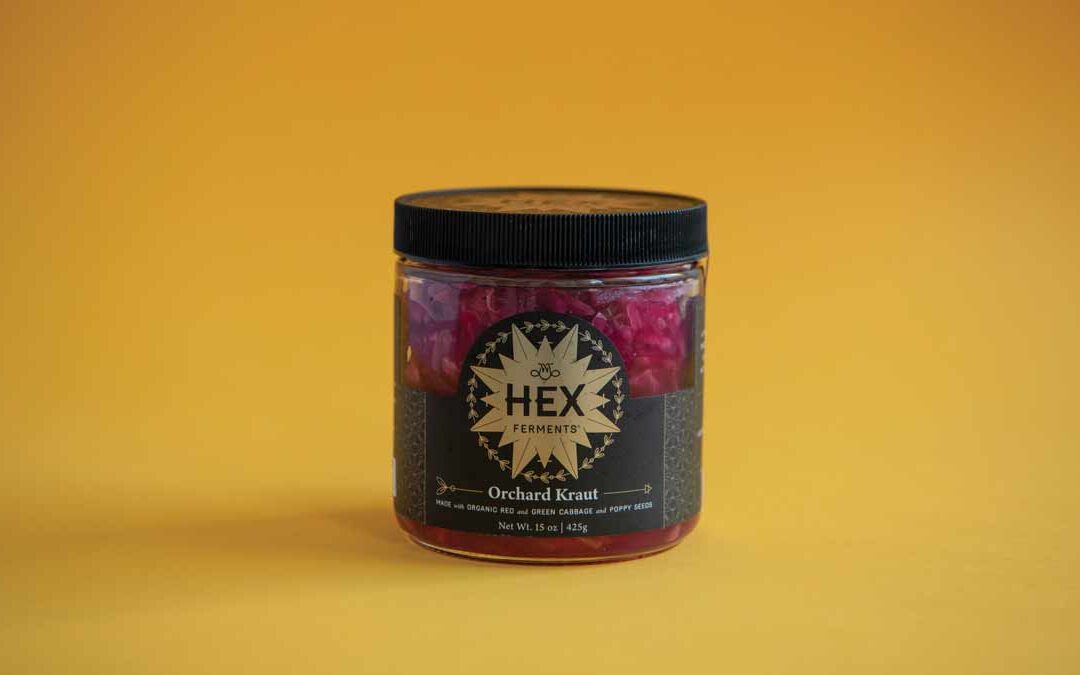
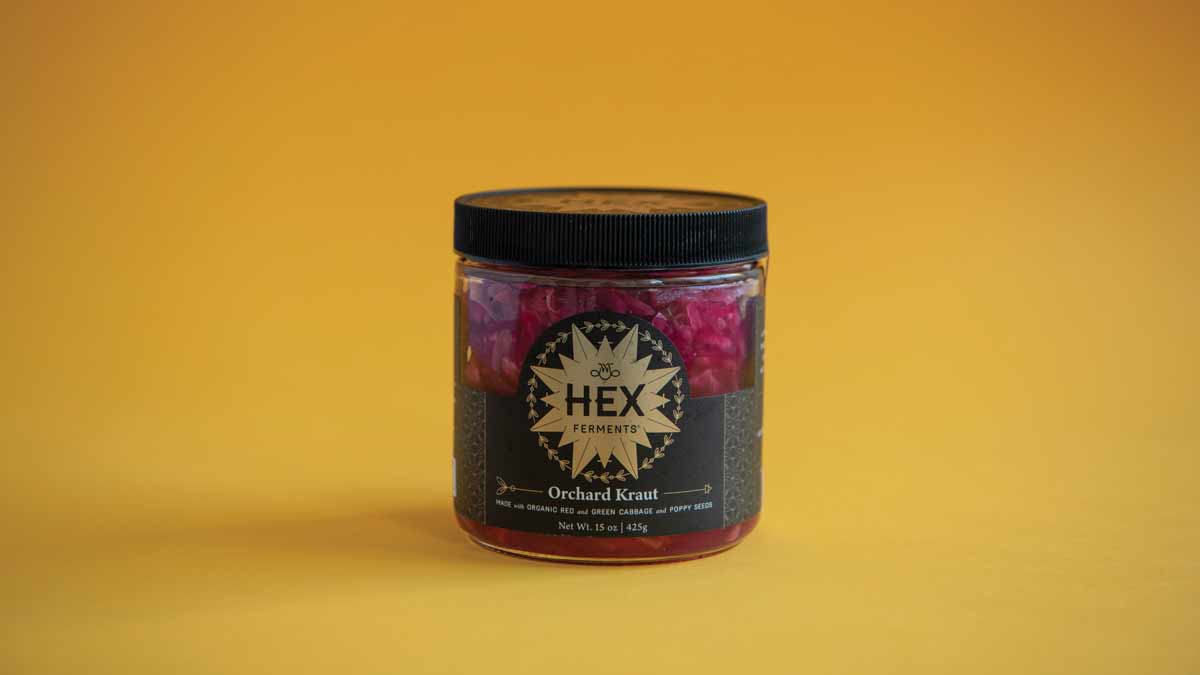
HEX brand Fermented Sauerkraut
Fermented foods have shown up for thousands of years in almost every culture in the world.  Historically they have been a way to preserve the harvest and make foods more digestible. We now understand that fermentation transforms food —enhancing nutrients, while adding naturally occurring probiotics (healthy bacteria) to the diet. In recent years, naturally fermented foods have been getting a lot of attention because they help strengthen the gut microbiome —the “good bacteria,” or “gut bacteria,” that live in your digestive tract. These healthy bacteria impact our digestion, immune system, heart health and even our mental health.

To learn more I chatted with my friend Meaghan Carpenter, an honest to goodness “Food Alchemist,” and co-founder of Hex Ferments.

What are fermented foods?

Fermentation is a process of microbial transformation that can be achieved using sea salt for vegetable ferments, a culture (like kombucha and kefir), an active starter like sourdough or yogurt, or inoculated and left to grow like koji spores on rice for miso.” What is created is a “living food,” which contains live, healthy bacteria or probiotics.

The fermentation process for veggies involves cutting or shredding to create surface area, and adding salt, “which releases water and exposes the sugars and nutrients that the lactobacillus bacteria need to grow and thrive. In a short time the vegetables transform into tangy, nutrient-dense and probiotic-rich sauerkraut, kimchi or pickles.

Why are fermented foods important?

They make anything you are eating instantly more bioavailable. There is a reason why you get a pickle with your sandwich or kraut on a hot dog. Fermented vegetables help our bodies to break down fats, nutrients and coat our digestive organs with beneficial bacteria that will make digestion and assimilation quicker and more efficient.

They are important for healthy gut bacteria, which is important for a healthy immune system, and even impacts mood. “90% of our immune system and serotonin is produced in our gut. Both are impacted by our gut bacteria. The more of a diverse bacterial environment you have in your body, the stronger your immune system. And it will help keep you happy! (Serotonin is the ‘feel good’ brain chemical.)

And they add fiber, vitamins and minerals that are already pre-digested. Think of your gut as a lush rainforest that you need to keep in balance with daily doses of delicious sauerkrauts, kimchi and kombucha tea. The more lush your forest the better you feel. So when you are feeling over-indulged, bloated, hungover etc. reach for a bite of sauerkraut or kombucha.

Not all fermented foods are created equal

To get the benefits of “living food” look for fermented vegetables that have been made using just sea salt and left unpasteurized. This ensures that the process has been done traditionally and not using a shortcut like vinegar. Look for the words “naturally fermented” on the label, and for telltale bubbles in the liquid when you open the jar.

Or make your own! Here’s a recipe from Hex Ferments for a quick Local Winter Kraut:

INGREDIENTS:

  • 5 pounds green cabbage
  • 2 pounds napa cabbage
  • 3 medium carrots
  • 5 small red turnips
  • 1 small onion
  • 1 Bosc pear or apple
  • 5 cloves garlic, minced
  • 2 tablespoons grated ginger with skin
  • 1 orange juiced, approximately ¼ cup
  • 1 to 2 teaspoons dried pepper or to taste (Espelette, cayenne, or jalapeño)
  • 4 to 6 tablespoons coarse sea salt (taste after 4, then salt to taste)


DIRECTIONS:

  1. Wash produce well, and remove any bad parts. Reserve 5 to 6 outer cabbage leaves, set aside. Cut cabbage into 4 sections, and remove the core. Slice produce into thin, bite-sized pieces.
  2. Place everything in a large bowl, add salt, spices (wear gloves if adding hot pepper!) and orange juice. Mix and massage with your hands. Squeeze! Work those veggies! Work salt into the produce well to release the water and create a brine.
  3. Once a nice pool of brine has collected in the bottom of the bowl, approximately 2 to 3 cups, pack vegetables into a clean, 2-gallon crock or wide-mouth glass container. Be sure to push down with your hands to remove air pockets. After all vegetables are packed in to the jar, press down well so that the brine covers the surface, creating an anaerobic environment. Layer reserved cabbage leaves onto the surface of the kraut. Place a weight (a plate topped with a jar filled with water works well) over the surface, cover the top of the vessel with a clean towel and secure with a rubber band. Kraut should be covered in its brine with room at the top of the vessel to allow for expansion over the first few days of active fermentation.
  4. Date outside of the vessel and place in a location that is away from direct sunlight, and maintains a relatively even temperature; 64-72 degrees is ideal, higher temperatures will speed up fermentation, cooler temperatures will slow it down.
  5. After 5 to 10 days, active fermentation will slow as lactic acid bacteria begin to take up residence. Kraut will continue to ferment vegetables into sour, tangy Winter Kraut. At this point, jar up kraut into smaller portions and refrigerate or take what you want from crock and enjoy its flavorful changes until it’s all gone.


Different types of fermented foods

Kombucha: a fermented sweetened black or green tea drink

Kvass: fermented sauerkraut or beet juice.  In slavic cultures it is made from rye bread.

Yogurt/Kefir: milk fermented by added bacterias

Kimchi: Korean salted and fermented vegetables (usually napa cabbage and Korean radish)

Sauerkraut: finely-cut raw cabbage fermented by lactic acid bacteria.

Miso/Tempeh/Natt: fermented soybean products

Sourdough: bread made with fermented dough using naturally occurring lactobacilli and yeast

Olives: brine cured and naturally fermented

Pickles: vegetables fermented in brine (not vinegar)


Meaghan Carpenter is a “Food Alchemist” and Co-Founder of HEX Ferments, an award-winning, Baltimore-based fermented foods company. HEX Ferments specializes in creating living foods (sauerkrauts, kimchi, pickles and Kombucha) from local-organic and sustainably grown ingredients. HEX Ferments was born from a performance art piece that was a collaboration with her photographer husband. The concept of the art-piece touched on her pursuits of (re)creating gut-healthy communities centered on local food and delicious edible art. HEX Ferments has been nationally and internationally recognized for its creations, sustainability practices, fermentation education and advancing the frontier of the fermented arts.

Find them at  https://www.hexferments.com/pages/find-us