JEN THE YOGA LAWYER

JEN THE YOGA LAWYER

JEN THE YOGA LAWYER

ABOUT:

Jennifer Mohamed, Esq.
Experienced Business Lawyer and Yoga Teacher

Jennifer Mohamed is an experienced lawyer who draws from her deep knowledge of the law and yoga to provide tailored legal support to yoga teachers, studios, schools, and wellness entrepreneurs.

The Law Office of Jennifer Mohamed is a full service law firm.

ABOUT JEN:

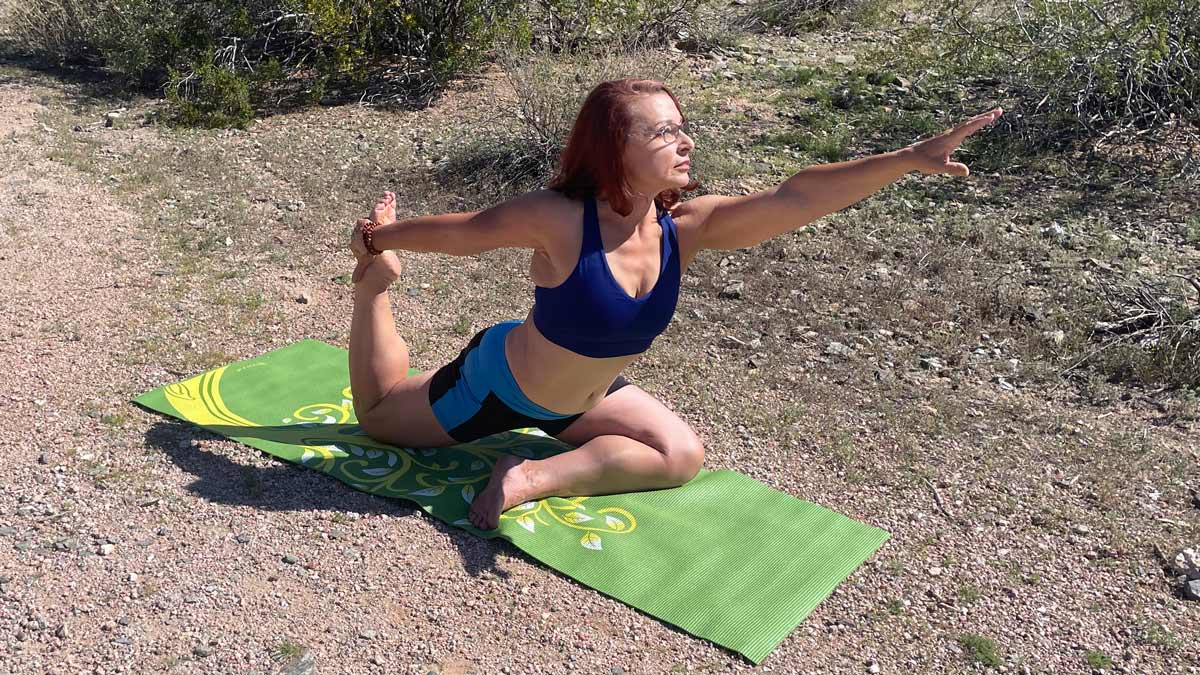
With over 25 years as a lawyer and 14 years as a yoga teacher, I bring a unique blend of legal knowledge and mindful perspective to the yoga business community.

My journey has taken me from government and Big Law to in-house counsel and boutique practice, culminating in the launch of my own firm in 2025. Along the way, I’ve helped small and mid-cap companies navigate their legal needs, and I’m passionate about making legal support accessible and affordable for the yoga community.

As Past President and current Trustee of the Princeton Bar Association, Pro Bono Counsel to the Hunterdon Land Trust, and Member-Benefit Attorney to the American Yoga Council, I’m deeply committed to both the legal and wellness worlds.

Whether I’m leading a yoga class or guiding clients through legal challenges, my goal is to help you find clarity, confidence, and peace of mind that you are exactly where you are supposed to be.

PHOTO CREDIT: WANDA BOGACKA-PLUCINSKI
JEN THE YOGA LAWYER
YOGA ALLIANCE

YOGA ALLIANCE

YOGA ALLIANCE

ilaStrate Yoga - logo

WEBSITE:

YOGAALLIANCE.ORG

COMMUNITY ISSUE SPONSOR:

ABOUT:

More Yoga,
Better World

Our vision is a better, bolder, more compassionate world grounded in yoga.

By advocating for both yoga in its wholeness and the well-being of all individuals, we work toward a world where:

  • Yoga is accessible to all, regardless of background, identity, or ability.
  • Yoga teachers and schools receive the resources they need to thrive.
  • Communities are strengthened through the practice of yoga.

Every credential issued, barrier removed, and connection fostered brings us closer to this vision—one breath, one practice, one community at a time.

PHOTO CREDIT: WANDA BOGACKA-PLUCINSKI

ANCIENT PRACTICE, MODERN IMPACT: HOW MORE YOGA CAN BUILD A BETTER WORLD

Content from our sponsors at Yoga Alliance

YOGA
BEN CLARK INTERVIEW
Age is often measured in years, but in the yoga community, we measure it in impact. Just as a practitioner’s understanding deepens, time has given us clarity into a single truth - yoga is for everyone.

At Yoga Alliance, our mission is rooted in service: to support the yoga community in advancing high-quality, accessible, and equitable yoga over the past 27 years. We believe meaningful change happens when we listen deeply and collaborate with those who are already doing the work on the ground.

Across the globe, yoga professionals are partnering with their communities to create spaces of healing, resilience, and connection. Through providing funding, resources, and ongoing support, Yoga Alliance works alongside teachers and organizations expanding access to yoga in schools, shelters, hospitals, refugee camps, rural areas, and other underserved spaces.

The stories below reflect the many ways yoga becomes more than a practice; it becomes a pathway to empowerment, belonging, and collective well-being.

Building Bridges Through Yoga in Venezuela | Brirkellia Álvarez Franquiz

“Yoga has given me a greater awareness of myself, the cultivation of mindfulness, and inner harmony.”

Brirkellia Álvarez Franquiz is a lawyer and Hatha Vinyasa teacher (RYT 200), and the founder of Todos En Yoga in Caracas, Venezuela. Her journey began at a community event, where she was struck by the calm focus and grounded presence of the practitioners around her.

Growing up amid economic hardship, Brirkellia felt called to social justice work early in life. She has collaborated with international organizations advocating for human rights and views yoga as a complementary tool for resilience and empowerment.

Through Todos En Yoga, she brings accessible classes to communities navigating economic instability and chronic stress. Participants report reduced anxiety, relief from physical pain, and a strengthened sense of solidarity. What began as a physical practice has evolved into a network of support: neighbors connecting with neighbors, building empathy, and shared strength through yoga.

—----------------------------
 

Yoga as a Tool for Community Healing in Bangalore: Sowmya Ayyar

“Yoga gave me a calling—to develop myself through the capacity of yoga to serve in a multitude of ways in the world.”

Sowmya Ayyar is the Founder-Director of Prafull Oorja Charitable Foundation, a Bangalore-based NGO dedicated to training yoga therapists to serve vulnerable populations. With a background in social work, she witnessed firsthand the toll of trauma and systemic inequity and the profound potential of yoga as a tool for both individual and collective healing.

Introduced to yoga through her mother and great-grandmothers, Sowmya later returned to the practice during her own healing journey. Restorative yoga became a refuge, eventually leading her to pursue teacher training and therapeutic applications.

Through Prafull Oorja, yoga reaches children with special needs, incarcerated individuals, and women in rural communities. Programs support motor skill development, trauma recovery, and self-agency. Across each setting, yoga is offered not as a luxury, but as a practical tool for dignity, stability, and empowerment.

For Sowmya, the heart of the work is unity. By equipping communities with accessible therapeutic tools, she nurtures environments where compassion and resilience can take root.

—----------------------------
 

Making Yoga Accessible in Lebanon: Sandy Boutros

“Introducing yoga to the communities I work with is like an introduction to the Self. The hardships of life make us forget to embrace the body, breath, and mind. Yoga brings back self-awareness and self-love.”

Based in Beirut, Lebanon, Sandy Boutros is a yoga teacher and founder of Koun, an NGO committed to expanding access to yoga in underserved communities. Her initial curiosity about yoga emerged through her interest in psychology and philosophy, particularly the spiritual dimensions explored by Carl Jung.

After experiencing the transformative power of yoga on retreat, Sandy returned home with a renewed sense of purpose. She observed that yoga in Lebanon was often concentrated in affluent communities, leaving many without access. In response, she began volunteering in refugee camps and migrant centers, offering trauma-informed classes to individuals navigating displacement and economic hardship.

Through Koun, she partners with local organizations to provide sustainable programming in shelters and community centers. For her students, yoga becomes a way to reconnect with the body, regulate stress, and rebuild a sense of agency.

—----------------------------
 

Creating Space for Healing in Indigenous Communities: Roxanne Sanchez

“Yoga is a lifelong practice of deepening your connection to the breath to be fully present and aware—aware of your contribution to the present moment and how you choose to cultivate peace for all.”

Roxanne Sanchez, known by her native name Toh’tcho-OhLonē, Baby Hummingbird, Sister of WolfClan, Guardian of the North and Wisdom Keeper of the Earth, is a yoga teacher from New Mexico whose work bridges Indigenous traditions and yogic principles.

Yoga entered her life at age 21 while navigating chronic pain and injury. Breathwork and meditation became powerful tools for managing physical discomfort and deepening self-connection. Over time, her practice evolved into a lifelong path of healing and service.

Recognizing a need for accessible wellness spaces in her rural community—where poverty, addiction, and historical trauma are ongoing realities—Roxanne opened a studio rooted in cultural respect and inclusivity. She offers classes to Indigenous communities, people of color, and individuals seeking healing from intergenerational trauma.

Her studio serves as a safe, nonjudgmental space where movement, spirituality, and cultural identity coexist. For many, yoga becomes a bridge—honoring traditional healing practices while embracing contemporary tools for well-being.

Moving Forward, Together

These stories are just a glimpse at the teachers and organizations working every day to make yoga more accessible, inclusive, and responsive to community needs.

At Yoga Alliance, we remain committed to listening, learning, and collaborating with practitioners around the world who are using yoga as a force for connection and care. When yoga is rooted in community, it becomes more than individual transformation; it becomes collective impact.

To learn more about how yoga professionals worldwide are fostering healing and resilience, visit yogaalliance.org/love.

AYURVEDA AND AGE

AYURVEDA AND AGE

AYURVEDA AND AGE

By: Kate O’Donnell
Photo: Cara Brostrom

LIFESTYLE

BEN CLARK INTERVIEW

Ayurveda is India’s ancient system of medicine. I have been teaching, consulting, and writing about Ayurveda for over 20 years, and have studied in both India and the US. This system encourages us to catch imbalance before it begins to create disease. Through food, spices, herbs, natural oils, daily and seasonal rhythms, and gentle seasonal cleansing, the body, mind, soul, and senses are brought into balance — and maybe even bliss. Ayurvedic practices improve digestion, nourish the tissues, calm the mind, and discourage toxicity.

The science of Ayurveda links an intuitive understanding of the qualities of our world to how we are each affected by foods, lifestyle, and environment. When we try to live outside the laws of our universe (like sleeping in the daytime or eating foods out of season), we end up swimming against the current of nature, which drains our vital energies and results in low immunity, and eventually disease. The Ayurvedic system of medicine recommends changes, often simple ones, in diet, lifestyle, and environment to bring individuals into balance with the elements of their constitution, climate, and daily life.

The Ayurvedic Perspective on Aging

Ayurveda is a longevity science. Age is said to be a natural process of change, which has predictable effects on the body and mind. Longevity practices, a restorative diet and medicines can be applied to support the body through changes of aging.

The field of Ayurveda is constantly evolving and gifted teachers continue to apply the science to women’s health, and recently to menopause symptoms. When viewed inside the context of  lifestyle, climate, and stress levels, ayurvedic medicine can certainly also be applied.

What We Need More of as We Age 

Ayurveda recommends a class of foods and medicines called rasayana, which support juiciness and builds deep tissues like bones and nerves. Coupled with supporting digestive strength and metabolic fires, these foods are the basis of a longevity regimen. In addition, the application of warm oil to the skin regularly is said to “ward off old age” and is a large part of ayurvedic practice for aging.

What We Need Less of Overall

Less stress over the small stuff— make more space for contemplation, spirituality, and enjoyment. Processed foods (which require energy to digest, but give little) are also something to reduce in favor of whole foods.

Managing Change 

Staying focused on what we want, whether that’s good digestion, sleep, libido, or all of the above, is key. Keeping the mind on the goal in a world where we are often pulled in many directions holds our healing energies close to home. The older we get, the more important it is to direct our energies towards that which is important to us, and reduce the other stuff. This is a philosophical journey and a non-negotiable aspect of aging well.

Learn more: healwithkate.org

Moon Milk

makes one 4-oz serving

Imbuing milk with the energy of moonlight makes a targeted tonic for reducing excess heat and supporting reproductive tissue. Silver’s luminescence aligns with the moon, and using a silver vessel, if you can, provides added shakti. Natural, organic cow’s milk is the favored option if you have access to a trusted dairy. If this is not available, use Almond Milk or Coconut Milk.

  • 4 oz natural cow’s milk (or homemade plant milk)
  • pinch of ground cardamom
  • 3–5 dried rose petals

Pour the milk into a silver vessel, if you have one. If you don’t have something made of silver, use clear glass. Stir in the cardamom, and crush a few dried rose petals into the milk.

Place the vessel in direct moonlight for a few hours. You should be able to see the moon’s reflection on the surface of the milk.

This can be taken at night if the moon rises early enough. Or wait until morning and gently warm the mixture, but do not expose it to the sun. Slowly drink the Moon Milk while sitting down and doing nothing else. Visualize the tonic entering your generative tissues.

Cool-the-Flash Tea and Spritz with Rose & Sage 

makes 1 quart

I asked Brighid Doherty, founder of Solidago School of Herbalism, if she had a

most-recommended recipe for hot flashes. This was it! This infusion is composed of dried rose petals and sage leaves. Rose petals are energetically cooling and nourishing to women’s reproductive and nervous systems. They taste floral and divine. Sage leaves are cooling and drying. Sage is an astringent herb that is known to dry body secretions from sweat to breast milk, making it ideal for counteracting hot flashes and high pitta.

This tisane can be enjoyed in the evening before bed to cool night sweats or sipped throughout the day from a water bottle to help cool hot flashes. It’s most potent when made fresh daily,

but it will keep in the refrigerator for up to five days. To make a cooling face or body spritz, soak a washcloth with the tisane and rub it over the body, especially during night sweats, hot flashes, or reddening of the skin. Fill a spray bottle with the tisane and mist it on the face for cooling on the go.

  • 2 tbsp dried rose petals
  • 2 tbsp dried sage leaves
  • 1 qt boiling water

Place the herbs in a 1-qt mason jar or 4-cup teapot. Fill the jar or teapot with boiling water, and steep for 20 minutes.

Use a wire mesh tea strainer to strain the tisane into another jar. Enjoy it hot by the mugful or iced by the glassful, or carry it with you in a thermos—either hot or iced, depending on your preference—throughout the day. Store in the refrigerator for up to five days in a mason jar with a tight lid.

Working therapeutically with herbs for women’s health is surprisingly effective. I have witnessed herbal therapies heal all manner of imbalances—and been healed myself. Many people have affinities with certain plants. Once you discover the ones that work for you, the relationship between self and plant only grows stronger. Keep in mind that herbs are precious resources, and use them judiciously. Do not overbuy and waste them or let them languish. Start small, buy half a pound at most, and establish a consistent herbal practice before procuring more.

Recipes from Everyday Ayurveda for Women’s Health  ©2024 by Kate O’Donnell

Photographs ©2024 by Cara Brostrom.
Reprinted in arrangement with Shambhala Publications, Inc. Boulder, CO shambhala.com

BLESSINGS BALANCE BREATH YOGA

BLESSINGS BALANCE BREATH YOGA

PARTNER

BLESSINGS BALANCE BREATH YOGA

BLESSINGSBALANCEBREATHYOGA.COM

501c3 nonprofit organization dedicated to bringing yoga to underserved, underrepresented, marginalized, and system/justice-impacted populations. Providing the healing practice of yoga to reclaim empowerment and harmony. Restoring self-esteem, self-efficacy, and individualism. Founder Dr. Donna Jagielski is RYT-500, RCYT-95, R-YFMT-500.

BLESSINGS BALANCE BREATHE YOGA

3961 East Chandler Blvd
Suite 111 PMB #183
Phoenix, AZ 85048
3961 East Chandler Blvd
Suite 111 PMB #183
Phoenix, AZ 85048

PARTNER LOVE: BLESSINGS BALANCE BREATH YOGA

KAMRA KIDS LOGO - SOCIAL
Yoga Plus magazine Teacher bio photo - Shari Vilchez-Blatt

CHAKRAS LEADING THE WAY

By Dr. Donna Jagielski, Founder & CEO of Blessings Balance Breath Yoga

PROFILES

BEN CLARK INTERVIEW

Yoga practitioners are already aware of chakras, the energy centers, each one representing a different area that helps us to live a fruitful and balanced life on and off the mat. Based on life circumstances, chakras may become out of balance, and the strengths any individual exhibits will result in one or two chakras being more predominant. Many times people of faith may feel conflicted believing in chakras, whereas in fact during my in-depth work and practice of Christ-centered yoga, chakras are referred to as “our God-given energy centers.” These powerful energy centers are a gift to perform impactful work, especially off the mat.

During both the practice of yoga and yoga therapy approaches, discussion can be given to how the strength and predominance of particular chakras can be witnessed in one another, especially among both secular and religious leaders throughout history. Here we will explore each chakra’s characteristics and the alignment of a historical leader. You are invited to reflect on the impactful work you do, and the subtle understanding of tapping into the strength of your chakras.

Root Chakra (Muladhara): Located at the base of the spine, it represents stability, security, and basic needs (grounding).

Historical alignment: Nelson Mandela, born in 1918, stands as a towering figure in the global struggle against oppression and apartheid and an example of cultivating characteristics of your Root Chakra. As a South African anti-apartheid revolutionary, political leader, and philanthropist, Mandela dedicated his life to fighting racial injustice and inequality. His unwavering commitment to peace and reconciliation led to his enduring legacy as a symbol of hope and resilience.

Sacral Chakra (Svadhishthana): Located in the lower abdomen, it is associated with creativity, emotions, and sexual energy.

Historical alignment: Cleopatra, born in 69 BCE in Alexandria, Egypt, was the last active ruler of the Ptolemaic Kingdom of Egypt and exemplifies a strong focus on tapping into the Sacral Chakra. Known for her beauty, intelligence, and political acumen, Cleopatra’s reign was marked by her strategic alliances and diplomatic prowess. She famously formed relationships with Julius Caesar and later Mark Antony, solidifying her position as a formidable leader in the ancient world.

Solar Plexus Chakra (Manipura): Located in the upper abdomen, this is the center of personal power, confidence, and self-esteem.

Historical alignment: Malala Yousafzai was born on July 12, 1997, in Mingora, Pakistan. She gained international attention as a young activist for girls’ education after surviving an assassination attempt by the Taliban in 2012. Malala’s advocacy work began at an early age when she wrote a blog for BBC Urdu under a pseudonym, detailing her life under Taliban rule and her fight for education exemplifies characteristics found in cultivating the Solar Plexus Chakra.

Heart Chakra (Anahata): Located in the center of the chest, it is the bridge between the lower and higher chakras, governing love, compassion, and connection.

Historical alignment: Jane Goodall was born on April 3rd, 1934, known as a remarkable primatologist and anthropologist. Equipped with little more than a notebook, binoculars, and her fascination with wildlife, Jane Goodall braved a realm of unknowns to give the world a remarkable window into humankind’s closest living relatives. Through nearly 60 years of groundbreaking work, Dr. Jane Goodall has not only shown us the urgent need to protect chimpanzees from extinction; she has also redefined species conservation to include the needs of local people and the environment.

Throat Chakra (Vishuddha): Located in the throat, it is responsible for communication, self-expression, and truth.

Historical alignment: Martin Luther King Jr., born in 1929, was a towering figure in the American Civil Rights Movement. As a Baptist minister and activist, King dedicated his life to advocating for racial equality, nonviolent resistance, and social justice. His eloquent and extremely articulate speeches are etched in the history books forever.

Third-Eye Chakra (Ajna): Located between the eyebrows, it governs intuition, imagination, and wisdom.

Historical alignment: Joan of Arc, born in 1412, was a pious peasant in medieval France who believed that God had chosen her to lead France to victory in its long-running war with England. With no military training, Joan convinced Crown Prince Charles of Valois to allow her to lead a French army to the besieged city of Orléans, where they achieved a stunning victory. After seeing the prince crowned King Charles VII, Joan was captured by enemy forces, tried for witchcraft, and burned at the stake at the age of 19. By the time she was canonized in 1920, Joan of Arc was considered one of history’s greatest martyrs and the patron saint of France.

Crown Chakra (Sahasrara): Located at the top of the head, it represents spiritual connection, enlightenment, and unity with the divine.

Historical alignment: Mother Teresa, born Agnes Gonxha Bojaxhiu in 1910, dedicated her life to serving the poorest of the poor in Calcutta, India, and around the world. Renowned for her compassion, humility, and unwavering commitment to helping the destitute, she founded the Missionaries of Charity, a religious congregation that provided care for those suffering from poverty, disease, and neglect.

Another historical figure that celebrates a powerful Crown Chakra center is Mahatma Gandhi, born in 1869, remains one of the most revered figures in the history of India and the world. Renowned for his philosophy of nonviolent resistance, Gandhi led India’s struggle for independence from British colonial rule, employing methods of civil disobedience, fasting, and peaceful protest.

No matter where any one is during that path and journey in life, each person has received their gifts through the energy centers. Using free will, it is a choice to either harness and use those gifts and strengths or let them lay dormant. Just imagine a world if each of the above leaders noted here had ignored their gifts and the strength within their predominant energy centers. Heed the invitation to lead with yours and make your impact.


Dr. Donna Jagielski is the Founder & CEO of Blessings Balance Breath Yoga, RYT-500, RCYT-95, R-YFMT- 500, R-CYAMT. Dr. Jagielski is dedicated to bringing yoga and yoga therapy to underserved, underrepresented, marginalized, and system/justice-impacted populations. Providing the healing practice of yoga to reclaim empowerment and harmony. Restoring self-esteem, self-efficacy, and individualism.

LEELA FLOW STUDIO

LEELA FLOW STUDIO

PARTNER

LEELA FLOW STUDIO

LEELAFLOWSTUDIO.COM

We aimed to create a welcoming and inclusive space where you can connect mind, body, and spirit through the practice of yoga. We strive to inspire personal growth, foster inner peace, and cultivate a sense of community. Through mindful movement and breath, we empower our students to find balance, strength, and well-being both on and off the mat.

Leela Flow Studio

400 38th Street, Suite #405,
Union City, NJ, 07087
400 38th Street, Suite #405,
Union City, NJ, 07087

info@leelaflowstudio.com

IG live with Olia founder of Leela flow